Saturday, June 15, 2013

Images of the Fantastic in La Belle Époque

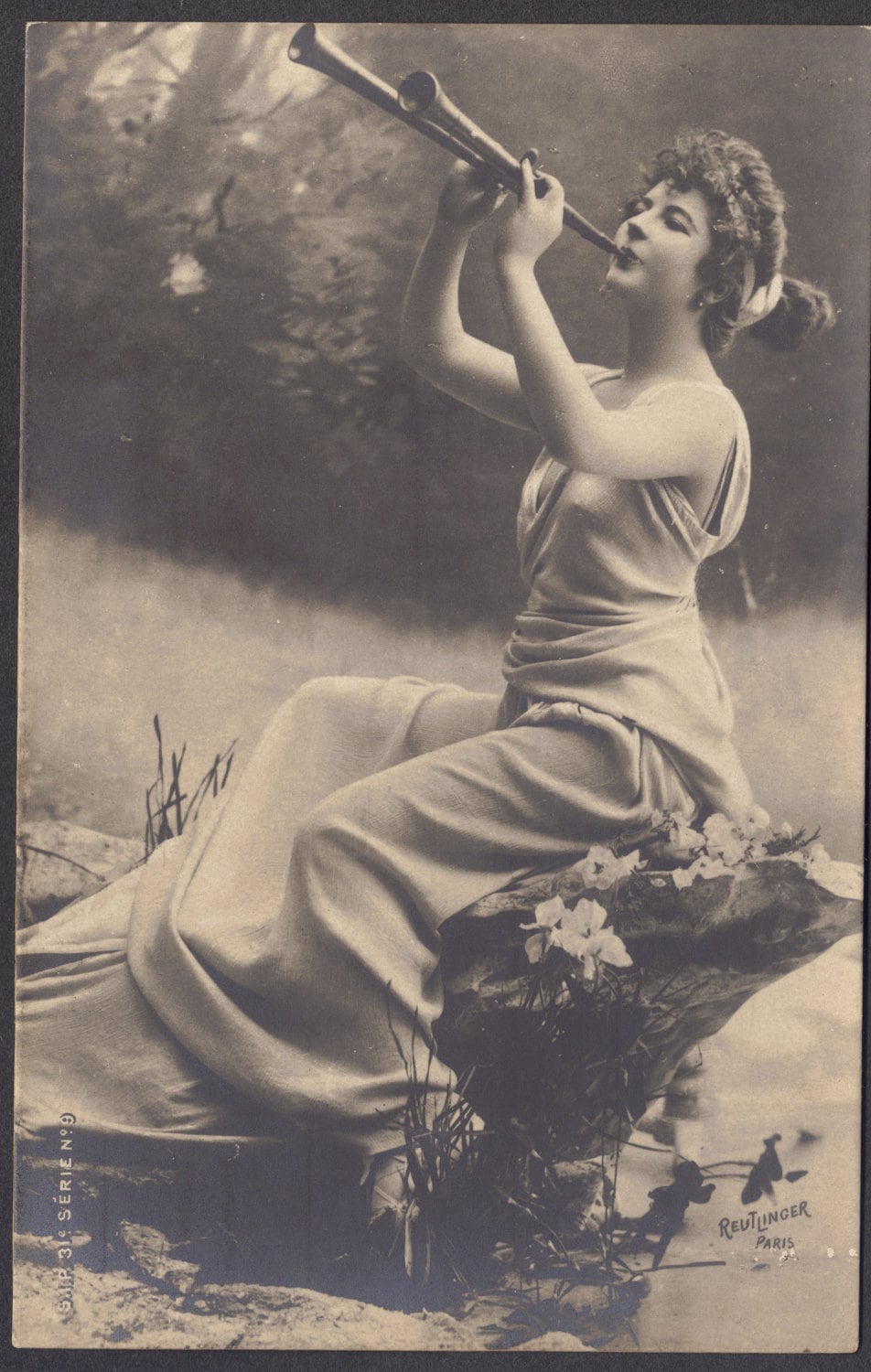
One aspect of La Belle Époque, not just in France either, was a very palpable embrace of antiquity, and though often in a rather naive fashion by today's standards, one gets the sense that people were turning away from the onslaught of the industrial explosion and towards the real, and imagined, simplicity of earlier times. With this came a sense of the possibility of magic, and the ubiquity of images like this one, in which we wouldn't be terribly surprised to see faeries or woodland sprites cavorting about.

SOLD Wood Nymph at the Well
Or, perhaps we expect at any moment to see a faun, satyr, or even Bacchus, himself!

SOLD Nymph Calling Forth the Woodland Sprites circa 1905

We love the way in which the magical is suggested in these images, without the introduction of a single truly fantastic element. These images make us feel much as we might when reading a fairy tale, that at any moment something truly marvelous will happen.

Nymphs, Naiads, Dryads, and Faerie folk so often cropped up in La Belle Époque. Found throughout the period from popular entertainment to commercial advertising, these images reflected a blossoming of Western occult experimentation and a yearning for magic, for myth made manifest. We've written before of our fondness for images depicting the Marvelous Maenad, which is not only a subgenre of the "Lovely Lady" category, but of fantasy postcards, as well.

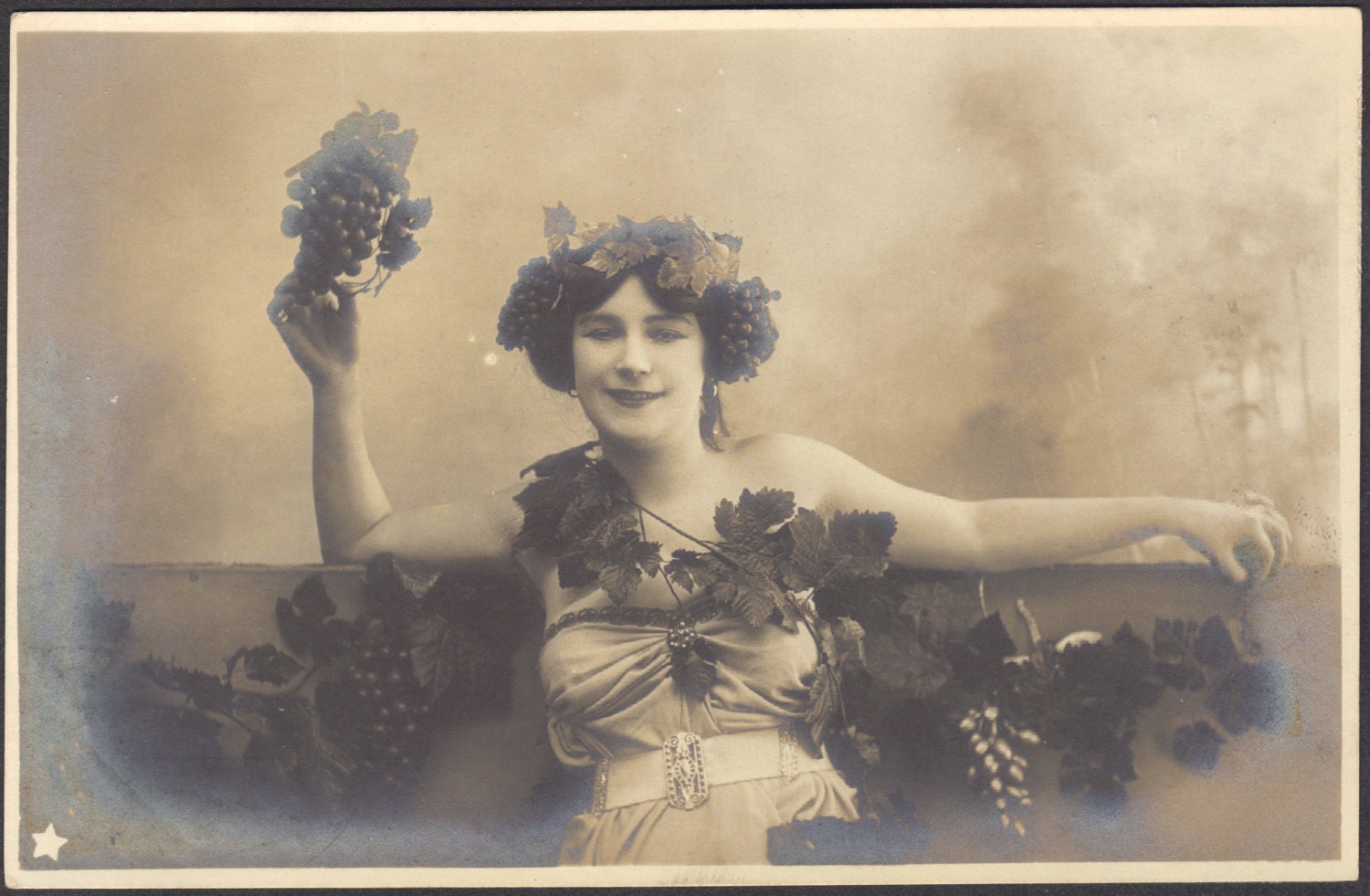
AVAILABLE FOR PURCHASE Maenad at the Garden Wall, circa 1900
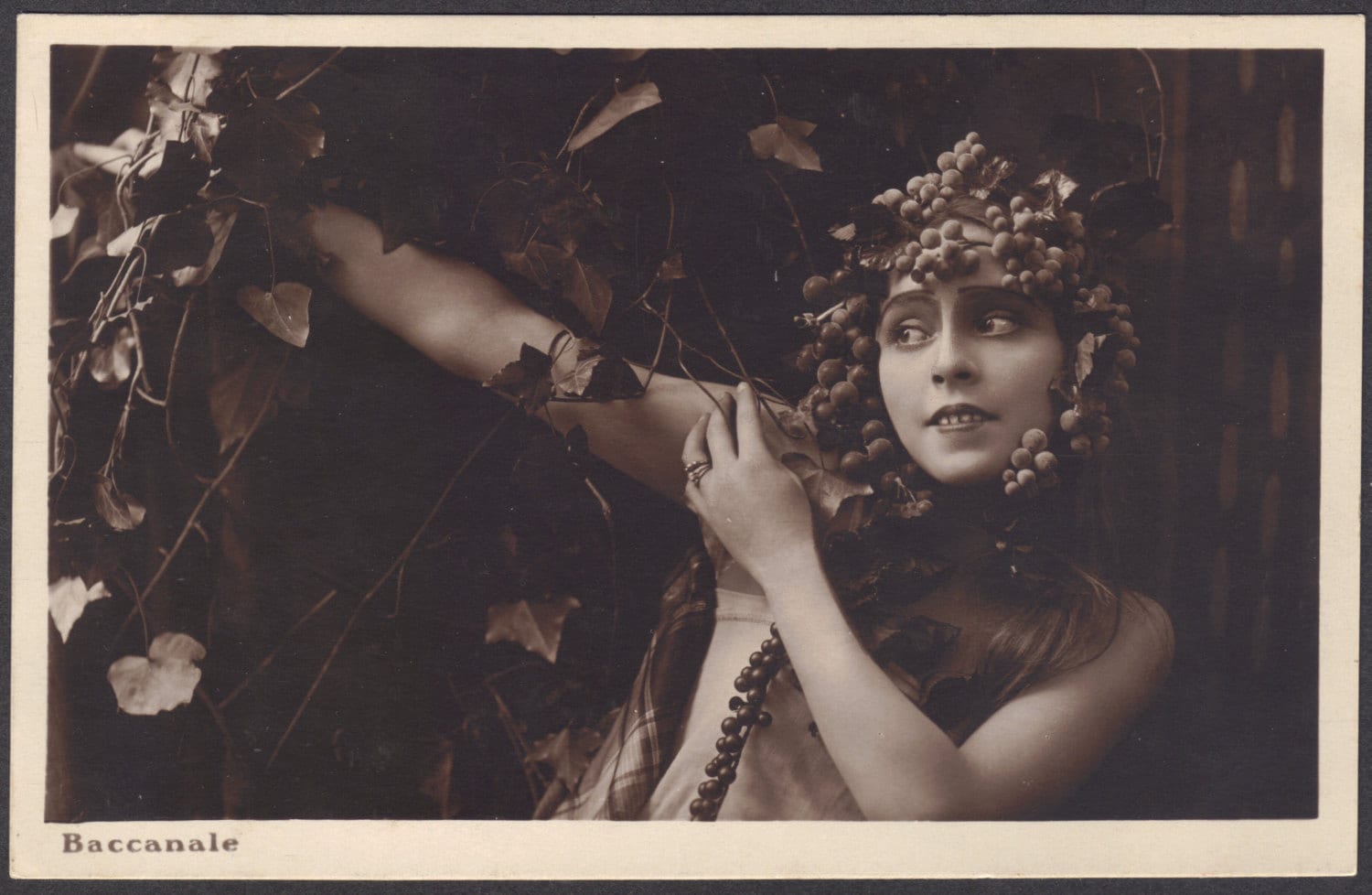
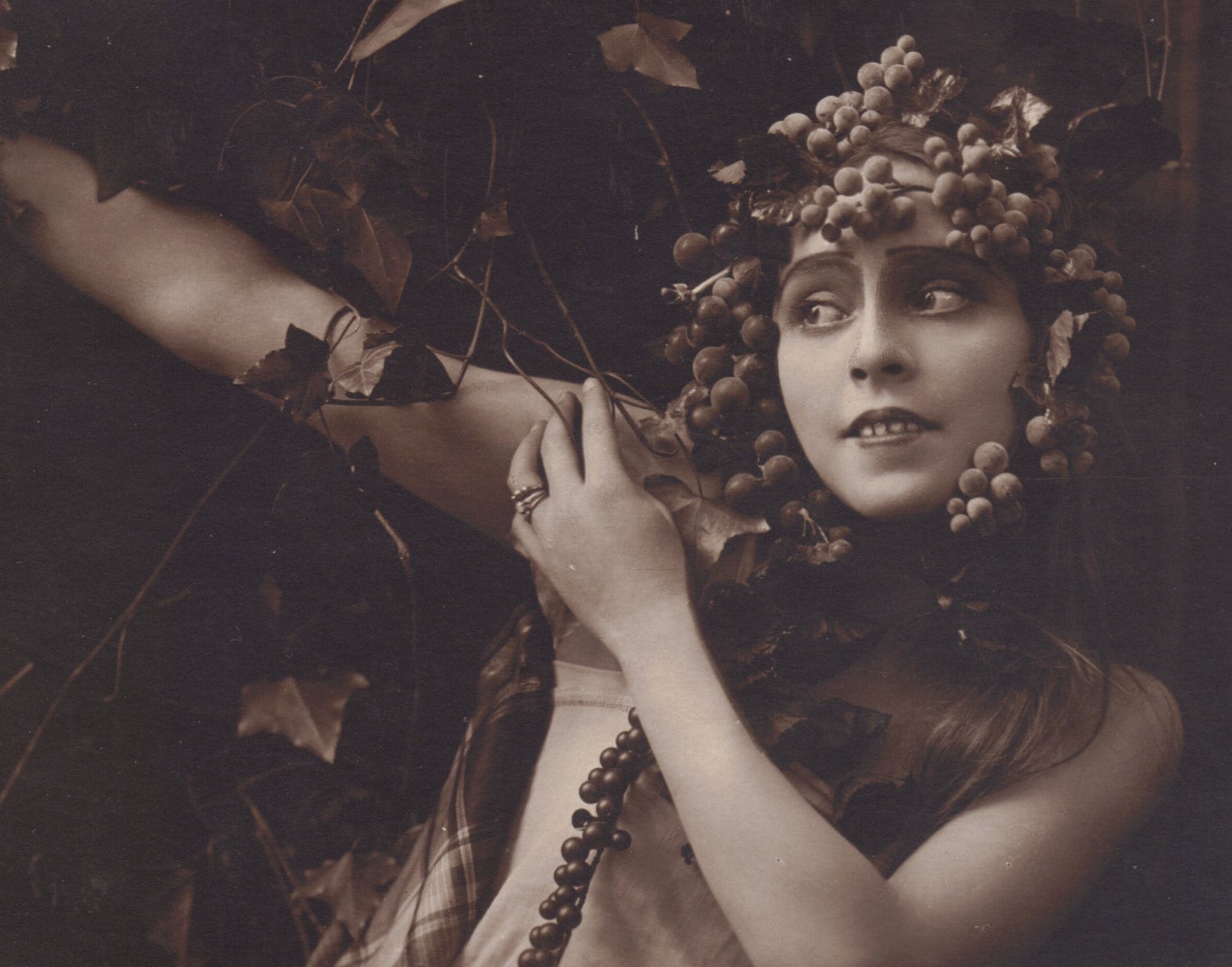
Maenads could be seductive, inviting the viewer to join them in the Bacchanal, as in the previous image, but they could also be depicted as shy and elusive creatures of the wilderness, emerging from a tangle of vines, perhaps looking back with a mixture of amusement and discomfiture at a pursuer.

AVAILABLE FOR PURCHASE Maenad Peering Through the Trees, circa 1910s/20s
Even more interesting, we think, is the fact that this new medium, the picture postcard, made available to anyone with a penny or two the possibility of possessing such an image, one in which an obviously very real human being is pictured in a fairyland setting. We take photographs for granted today, of course, but think about it for just a moment—at the turn of the 20th century, this was all entirely new. Prior to this time, fantastic photo images of human beings were seldom accessible to the common man, woman or child, and we cannot take lightly the effect of "likeness" on the human psyche, and it's worth considering the effect this mass phenomenon had on society. Mass phenomenon, you wonder? Really? Absolutely. Just as an example, in the United States alone, "the official figures from the U.S. Post Office for their fiscal year ending June 30, 1908, cite 677,777,798 postcards mailed. At that time the total population of the United States was only 88,700,000!" (Thanks to emotionscards.com for their fascinating article that provided us with that factoid.)

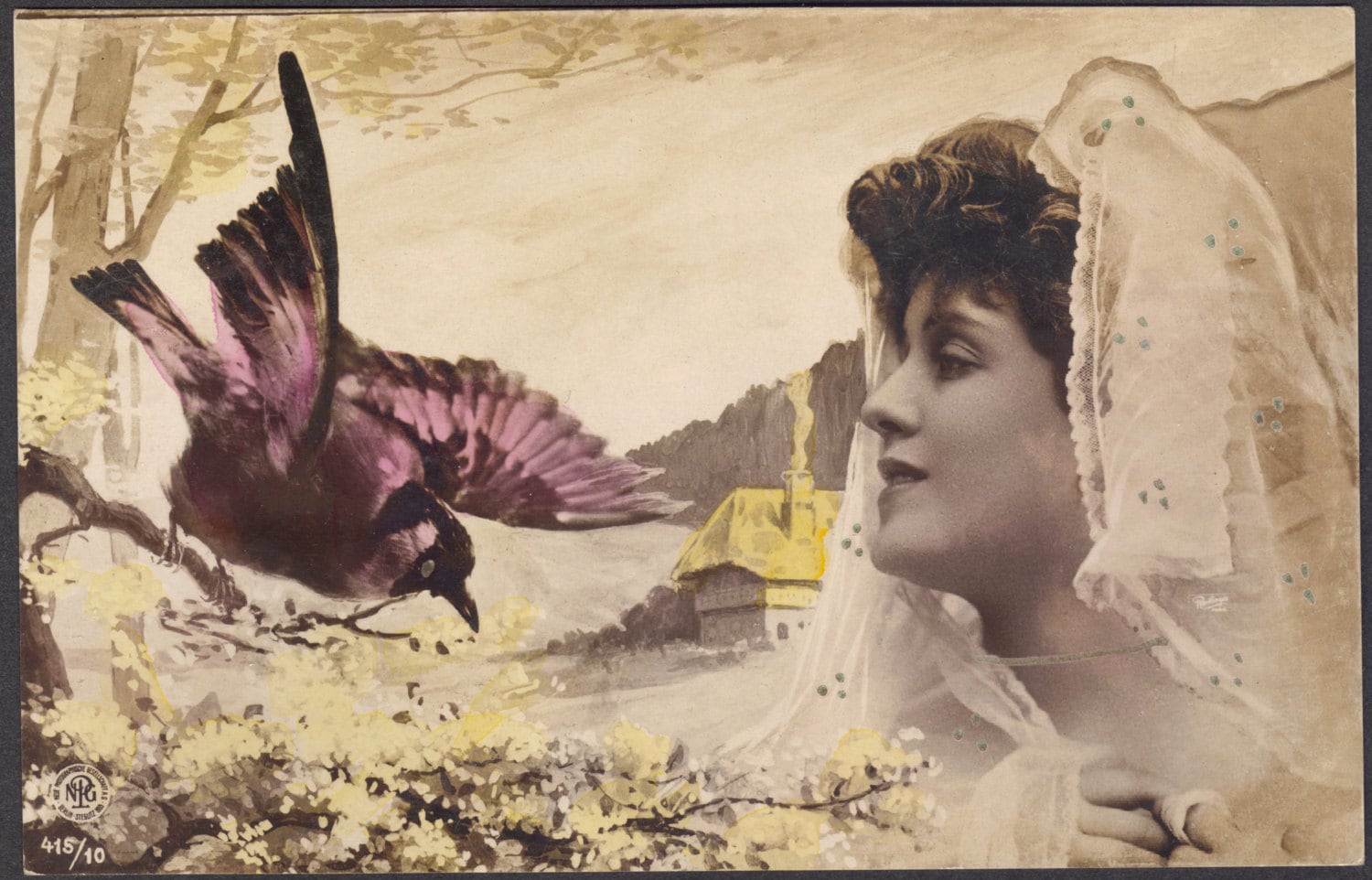
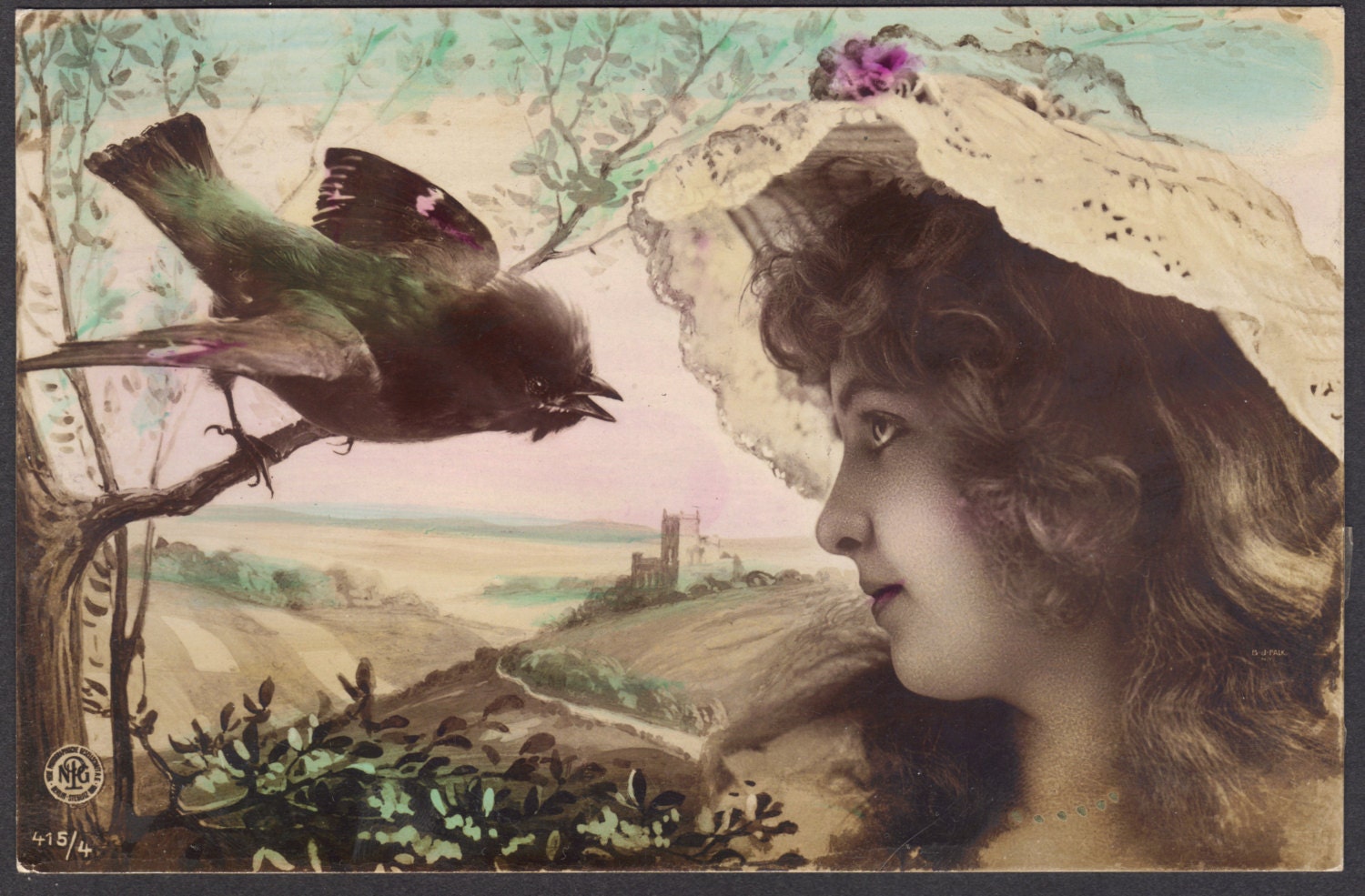
Leopold Reutlinger, the Belle Époque photographer, took thousands of photographs of famous Parisian actresses. These were published in black and white, cropped to close up and republished, hand tinted, glittered, sequined, published again, and when every imaginable possibility had been explored, he superimposed these images onto wonderfully fantastic, often surreal backgrounds. The "Artiste with Bird" series is one of our favorites and quite collectible. As of this writing, we have two such images, both by Reutlinger and in unusually fine condition.

AVAILABLE FOR PURCHASE Marguerite Brezil, Belle Epoque French Actress, Interspecial Romance Image by Reutlinger


AVAILABLE FOR PURCHASE Avian Romance Fantaisie by Leopold Reutlinger of Paris, circa 1905
Can't you just imagine these lovely ladies as heroines in fairy tales, in which for their kindness they have been rewarded the ability to speak the language of the birds? Or, perhaps the bird in the picture is actually an enchanted prince, in need of saving by the brave young woman.

One of the issues with Reutlingers "fantaisies," is that although the artiste's name was usually printed on the face of the card in its early incarnations, by the time they got to these dramatic creations, the name would often be left off. This was fine at the time, since their faces were very well known, but not today. We've been able to identify the first of these two beauties as Marguerite Brezil, but the identity of the second remains a mystery and we would welcome any clues that might shed some light on this.

These wonderful fantasy-inspired photographic images quite clearly reflect the same underlying ideals found in Victorian fairy paintings and Victorian attempts to portray fairies in photographs, a connection which ties them in with the Romanticism of the late 18th and early 19th centuries. In his examination of fairy paintings, Jeremy Mass identifies "the turn to mythological and fantasy elements, and in particular to the fairy's world, [ as allowing] an escape from these demands. 'No other type of painting concentrates so many of the opposing elements of the Victorian psyche: the desire to escape the drear hardships of daily existence; the stirrings of new attitudes toward sex, stifled by religious dogma; a passion for the unseen; the birth of psychoanalysis; the latent revulsion against the exactitude of the new invention of photography.'" That photographs, emblematic in some eyes of the science and technology that was displacing many traditional beliefs and occupations, could be manipulated to portray the longed-for simplicity and magic of a bygone (never-was) era was marvelously ironic and ironically marvelous. Photographs, which Jeremy Mass, and many others!, fuse with conformity to a hard and unforgiving realism have, from almost the very moment they came into existence, been used to portray the world in ways the eyes are rarely able to see, providing us with visual evidence of the magic we all long to see.

Sunday, May 5, 2013

Happy Mother's Day

Second Sunday in May is coming up in just one week! Happy Mother's Day! We thought we'd feature four cards this week with images either directly relating to motherhood, or close enough. :)

We hope it's a wonderful day for all moms and their children, and wish you all the very best. Please feel welcome to take advantage of a 25% discount on any item in the shop by using the coupon code THANKSMOM, at check out. This discount will be good only through May 12th, so make sure you hurry!

Belle Epoque Mother and Daughter by Heinrich Traut, circa 1905
Charming Portrait of Mother and Child, circa 1910
Lovely Early 1900s Mother and Daughter RPPC

Wednesday, April 3, 2013

Guest Blogger Mayra Esquivel: Biography of Jeanne Lanvin, Fashion Designer, 1867 – 1946

Every now and then, we come across someone who is able to share a new perspective on a subject of interest to our readers. Mayra Esquivel is such an individual. A student studying Fashion Design at Pima Community College, Mayra's interest in the fashion designers whose work adorned the fashionable women of the late nineteenth and early twentieth centuries has led to this biography of Jeanne Lanvin. We hope you enjoy Mayra's article as much as we have.

Jeanne Lanvin, Fashion Designer, 1867 – 1946
by Mayra Esquivel, Fashion Student, Pima Community College


Jeanne Lanvin. Photograph by Talbot.
Jeanne-Marie Lanvin was born in Brittany, France. She was the oldest of 11 children, since her family was really poor she didn’t have much education. When she turned 13, she was employed as an apprentice by a hat maker. Although she was spending more time cleaning the workshop and delivering the hats, she learned well how to make hats, so she started to make and sell dolls hats on her own in the toy stores of the neighborhood. In 1885, at the age of 18, with good business experience and enough savings she opened her own hat company. In the beginning it was difficult, but later on her business was successful, and she was able to expand and move to Rue du Faubourg Saint Honoré, where the company remains.

Jeanne Lanvin got married in 1896 and divorced in 1903. Born of this union was her only daughter, Marguerite. For Lanvin, being a single mother had a negative effect on her business. In 1907 she married a journalist, Xavier Melèt, but it was not a happy marriage; it was considered an arrangement of convenience. They remained married until 1953 when Melèt died.

Lanvin was the first to design children’s clothes. She designed for her daughter, using her as a model, and creating scaled-down versions of clothing for adults. Her hat clients loved her designs and the fact that mother and daughter could wear similar clothes. In 1909, Jeanne began making dresses for sale. She made no distinction between women’s and children’s wear; her designs were youthful, sophisticated, and featured exquisite handmade detail. The demand for her designs persuaded Jeanne to open a couture house selling mother-daughter garments and, thus, started her career as “Grand Couturier.” Since Marguerite was the unofficial model, as she was growing, Jeanne’s collections grew to target additional clients matching her daughter’s age.

Marie Blanche Polignac, née Lanvin
Her designs were easy to recognize for her skilful use of embroidery, fine craftsmanship, and a particular shade of blue, “Lanvin Blue”. The inspirations in her embroidery patterns were influenced by other cultures: from the Middle East, the geometric shapes, vertical rows, and horizontal border patterns; from China, the traditional symbol of longevity. Her designs used silk, taffeta, velvet, silk chiffon, organza, lace, tulle, and included a lot of free-flowing ribbons, ruffles, flowers, and linked ornaments like appliqué, couching, quilting, parallel stitching, and her main touch, the embroidery. Her creations were considered ultra-feminine, with fitted bodices and long, full skirts. The “robe de style” was one of the well-known collections. Features often found in her designs included scooped-necks, drop waists, cap sleeves, or sleeveless bodices, and full skirts with volume at the hips. These designs were comfortable and classic, appropriate for all ages of women. In order to keep the “robe de style” interesting from season to season she updated her designs. In the mid-1920’s they were abundant, including double silhouettes, and three-quarter-length skirts. In the mid-1930’s they came full circle, with floor-length skirts. Even though Lanvin’s designs were not always contemporary, she was an advocate of modernity. She was a designer who didn’t drape or sketch her ideas, and her inspirations came from many art movements.

"It's still raining", fashion plate from La Gazette du Bon Ton, 1915, showing (left to right) tailored suits by Paquin, Lanvin, and Doeuillet and a coat by Paquin.
In 1926, Lanvin added a menswear division, becoming the first couturier that dressed whole families. For the men’s collection, Jeanne hired her nephew Yves and they succeed among ambassadors, members of the Academie Francaise, and aristocrats. Later she launched an interior-design branch, run by designer Armand-Albert Reteau. She created dozens of perfumes, but none of them were commercially successful until she designed Arpège. The perfume was introduced on the 30th birthday of her daughter and it became the most successful perfume. It had the house’s logo on the bottle: Jeanne in a flowing evening dress holding Marguerite’s hands.

The key of her successful career was that she knew her clientele. Jeanne Lanvin was one of the first
designers who created a true empire; her legacy has proven timeless and is one of the oldest surviving
couture houses. In 1946, Jeanne Lanvin died and her daughter, now known as Marie-Blanced, took over the company until 1958 when she died. Now Lanvin is headed by Alber Elbaz. Elbaz is not reinventing the House of Lanvin, he is following and developing the same environment Lanvin did. His sophisticated and delicate designs create a sublime silhouette suitable and flattering for various types of bodies. He is keeping the style of youth, femininity, and beauty, the same as Jeanne Lanvin’s.

Lanvin’s client list includes celebrities as Nicole Kidman, Kate Moss, Chloé Sevigny, Sofia Coppola, First Lady Michelle Obama, Queens of Italy, Roumania and English princesses House of Lanvin has numerous international locations, several in the United States. In 2011 three boutiques were opened in Moscow. They are traditional boutiques making clothes for both mothers and daughters, in honor of Jeanne Lanvin.

Copyright 2013, Mayra Esquivel. Published with the permission of the author. All rights remain with the author.

Sunday, March 24, 2013

Dramatically Tinted Images from La Belle Époque

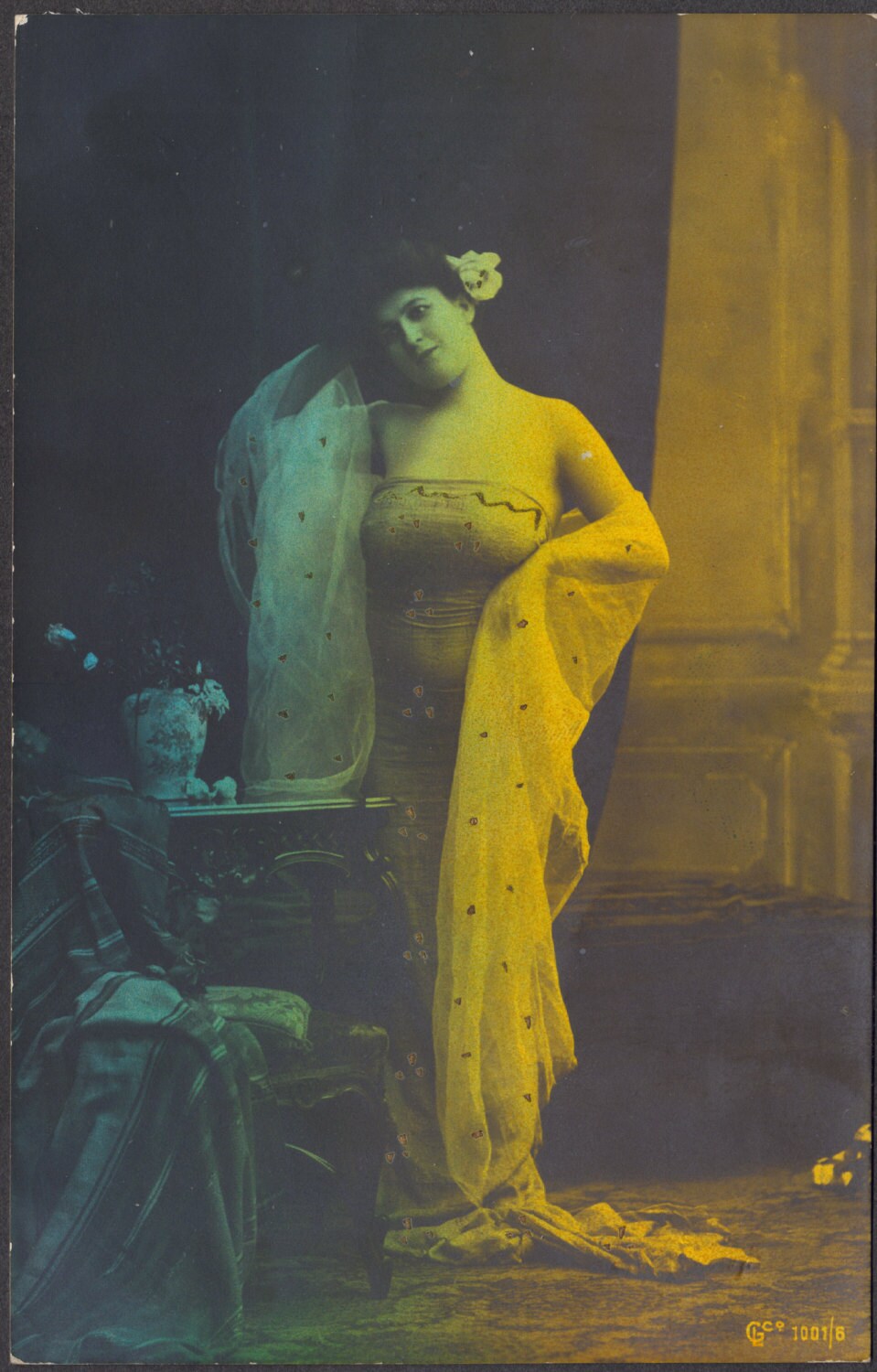
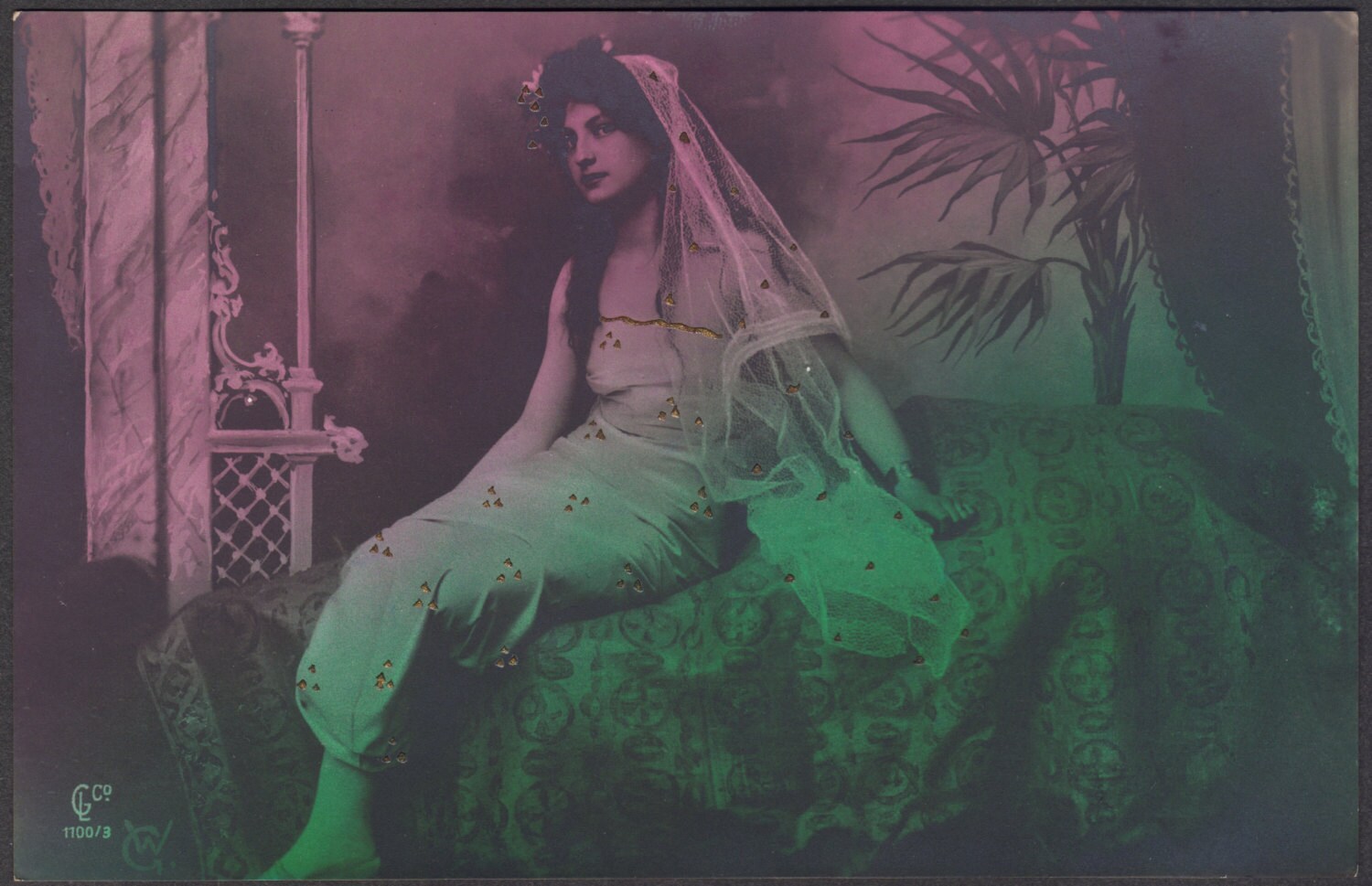
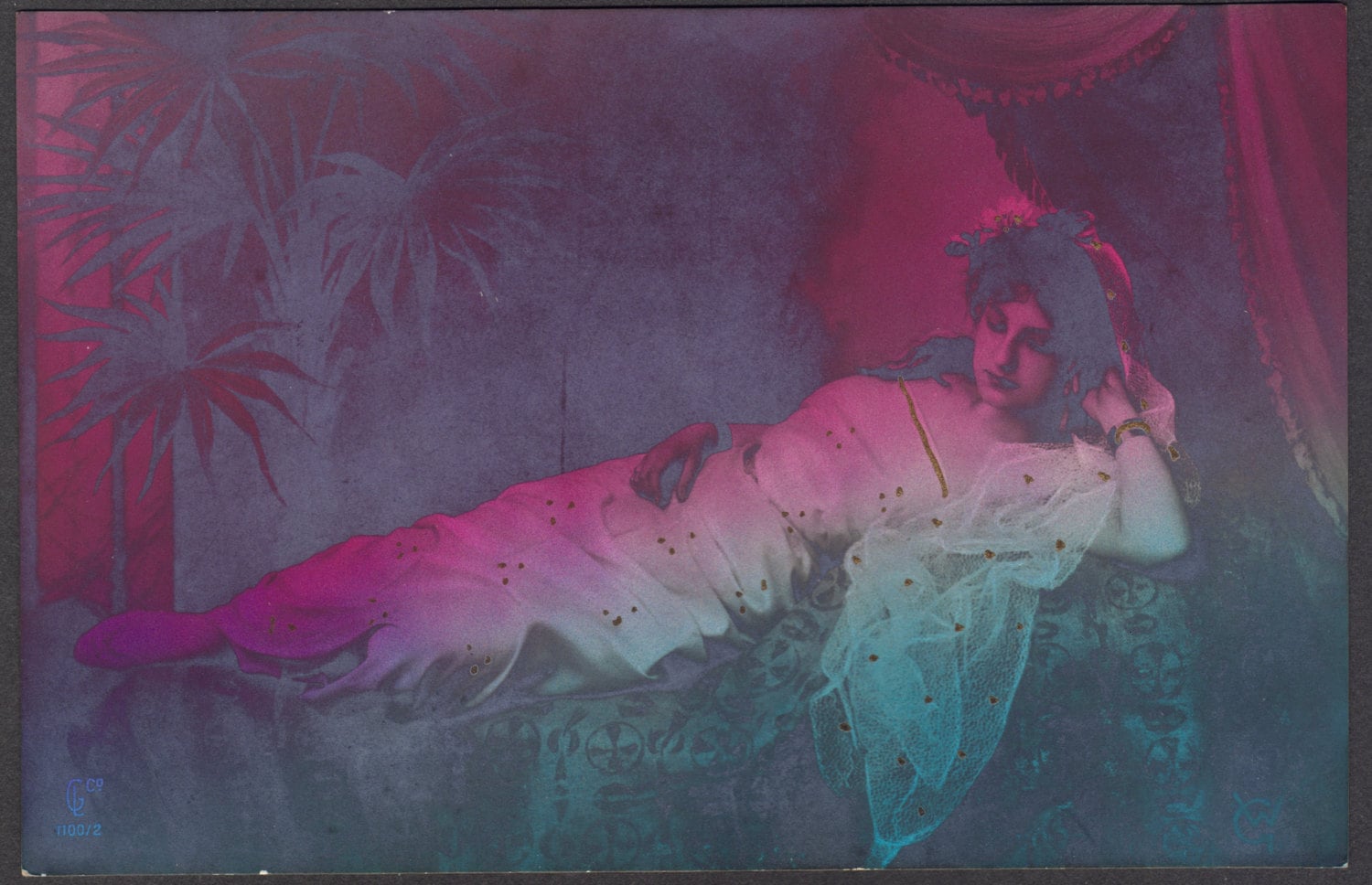
These gorgeous and weirdly ethereal images were accomplished using a type of coloration that was briefly popular during the early part of the twentieth century and which sometimes achieved amazing results. We know their vivid shades resulted from early experimentation with color tinting, but we simply can't find any credible information about the process used to create these fantastically tinted images. Over and over again, while researching hand-tinting of vintage photographs, we stumble across the sentiment that color was added to black and white photographs due to a desire to create images that more accurately mimicked life, but these images show that there were often other, more artistic, aesthetics at work.

The first of these images uses shades of blue fading into yellow. This enhances the impression that the woman in the picture is standing just on the border between shadow and illumination. While there are many possible interpretations of the symbolism in standing on the verge of both darkness and light, our favorite is that of standing with one foot in the mundane world and the other in Faerie, and such perception would be very in keeping with the sentiments of the era.

AVAILABLE FOR PURCHASE Dramatically Tinted Belle Epoque Image of Young Woman, circa 1905
The following two images seem to be from a single photo shoot and were produced by the same studio as the first, although with a different model. Here, the coloration helps to lend an air of mystery and romance to the young woman, while her filmy gown and scarf, the draped couch upon which she reclines, and the decor, complete with potted palm, all contribute the sense that one has been given a rare glimpse into the Sultan's palace. The rich colors in the two images create very different moods: the seated figure could almost be a mermaid under the sea, while the deep fuchsia lends a sultry sensuality to the image of the reclining woman.

SOLD Dramatically Tinted Belle Epoque Boudoir Image, circa 1905
SOLD Dramatically Tinted Belle Epoque Harem Image, circa 1905
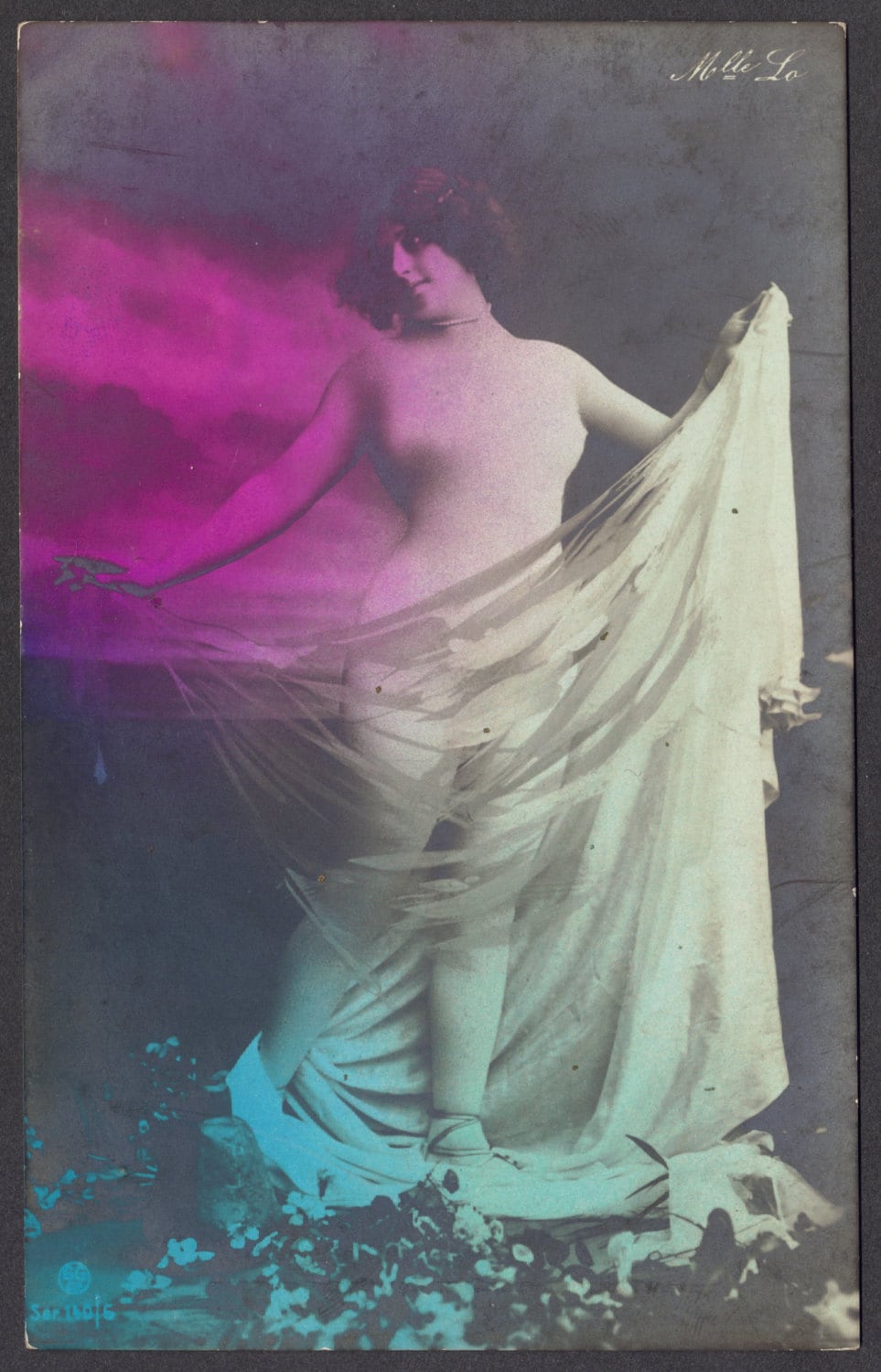
The last of our featured items is a postcard in which Mademoiselle Lo appears in a body stocking and veil. Body stockings were used for a short time at the turn of the century in an attempt to avoid prosecution for violation of decency laws discouraging onstage and photographic nudity, but the intended effect was that the actress appeared to be nude, or very nearly so. In this image, the cloudy sky on the left side of the image, along with Mlle. Lo's arm, face, and a bit of her torso, have been shaded with a deep rose, hinting perhaps of some impending storm or doom. Below the horizon, the shade used is a deep blue, suggestive of water, so that we may imagine that Mlle. Lo has just stepped from the sea onto land. Perchance she portrays some magical being of the sea, come to air herself for a short time before returning to her watery home. Or, maybe she is depicting a character in a play whose reasons for standing on this lonely beach are more tragic, or more playful. We may never know the full story behind this image, but we find its beauty and mystery haunting.

AVAILABLE FOR PURCHASE Mademoiselle Lo, French Artiste Nude en Voile, Fantaisie, circa 1905

Tuesday, March 19, 2013

Grete Wolfram, Woman Athlete, circa 1910

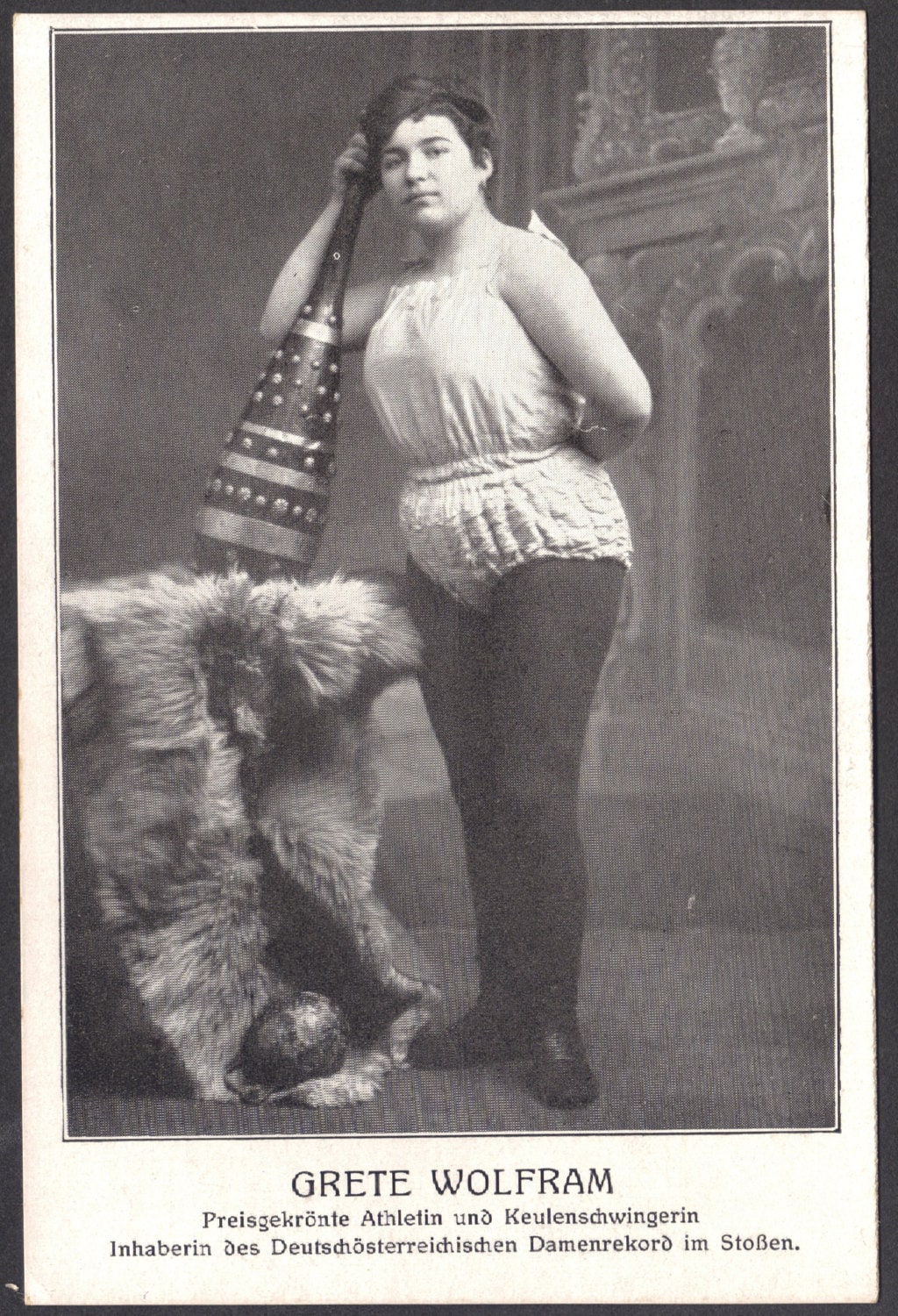
At first glance, this photo of a young woman with a large club may look a bit silly to us, but it's actually an iconic image, representing the triumph of a young female athlete in a time when the phrase "female athlete" was seen by many as a contradiction in terms. Beyond that, there is the strong possibility, explained in greater detail in the listing on Etsy, that this young woman went on to gain a higher education, to advocate for the equality of women, and to survive Hitler's concentration camps.

AVAILABLE FOR PURCHASE Grete Wolfram
Fraulein Grete Wolfram was a young Austrian woman, who became the German-Austrian women's club swinging champion sometime around 1910. Club swinging, also known as Indian clubs, is a former Olympic competitive event which involved gymnastic, sometimes free form, movement while manipulating (often at high speeds), weighted clubs. This sport is actually making a comeback, and we may someday see it again in the Olympic games!

In the process of researching this card, we came across some very interesting, though tragic, information.

There was a Margarethe Wolfram, who used the shortened name Grete, born in Vienna in 1890. So, the name, geographical location, and approximate age add up well.

Even later in life, after marriage to a Dr. Hans Kernegg, and having herself earned a PhD., or having become a doctor of some kind, she called herself Dr. Margarethe (Grete) Wolfram Kernegg, keeping her earlier name intact, just as someone might who had earned some prominence before marriage and for whom the rite of marriage did not mean the abandonment of individuality.

In the early 1930s, this "Grete" wrote articles for a Sunday newspaper called "Das Wort Der Frau," or "The Woman's Word," "an independent Sunday newspaper for the cultural, social and economic interests of women [offering] practical advice for house, home and kitchen, health, socializing, sports and fashion." This magazine was closely associated with activist women's organizations throughout the world, at a time when women were struggling hard for equality, and quite frankly, it is our feeling that a young woman who became the women's club swinging champion of Austria and Germany, in those days, was already in some respects, in the vanguard of the women's movement. So here we have another point of likely connection.

Dr. Grete Wolfram Kernegg was an Austrian Jew. Her husband was also an Austrian Jew. Dr. Hans Kernegg's name appears in numerous references as being associated with Jewish activist organizations who agitated for Jewish rights against 1930s Nazi policies in Hitler's Germany, (something about which one hears very little!), and Grete Wolfram Kernegg's newspaper, Das Wort der Frau, is also mentioned in articles concerning Hitler's policies and attitudes regarding the rights of women in Europe during this period.

Our research indicates that at some time, probably in the mid to late 1930s, Grete and Hans fled Austria or Germany and settled in Nice, France.

Later in the war, Germany actively occupied that part of France, and as part of their "Jewish policies" arrested, or caused to be arrested, French Jews, and other Jews, who had taken refuge there.

It was in 1944, in the closing days of the war, that Grete and Hans were arrested and deported to Poland, to the death camp at Auschwitz, where Dr. Hans Kernegg (according to Grete's later testimony), was immediately murdered in a gas chamber.

Grete managed to survive the camp, and later emigrated to Australia, where she passed away, in Sidney, in 1981.

We have not yet been able to, and may never, definitively show that these two women are the same person, but no other Grete Wolfram appears in our researches, and it feels very likely that they are one and the same person.

We love what we do here at Red Poulaine. We love the romance, the excitement, and the strange that sometimes surrounds the images we find, research, and exhibit for sale. But we cannot say that we loved this particular experience. To see the pride of success, born of great effort, courage and ability, in this old fashioned and in some ways amusing image of this vital young woman, and to think that as a result of ignorance, greed, hatred and prejudice, she might have suffered so tragically later in life, is terribly unpleasant, but, for us, makes the image all the more meaningful.

Saturday, March 16, 2013

Marvelous Maenads

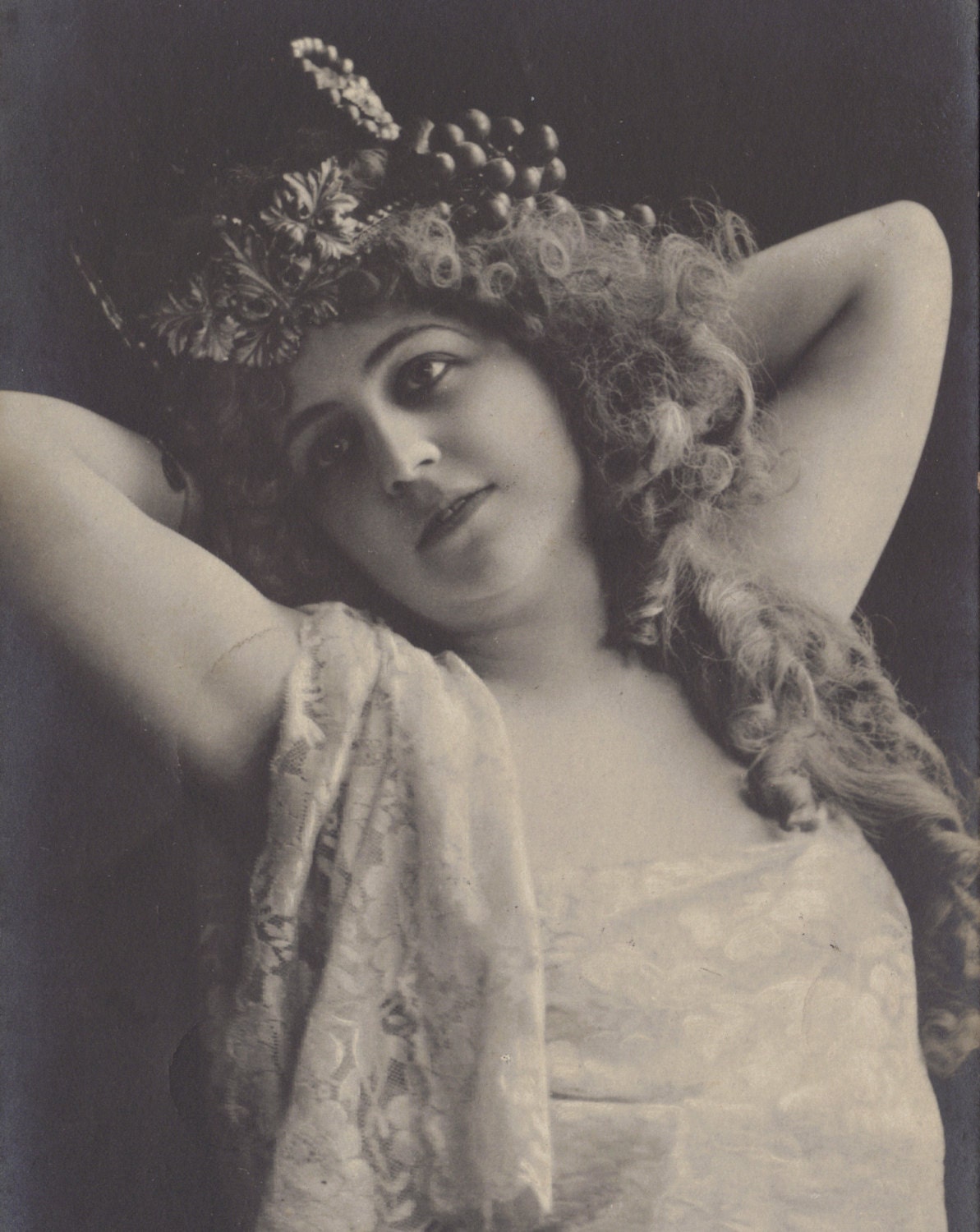
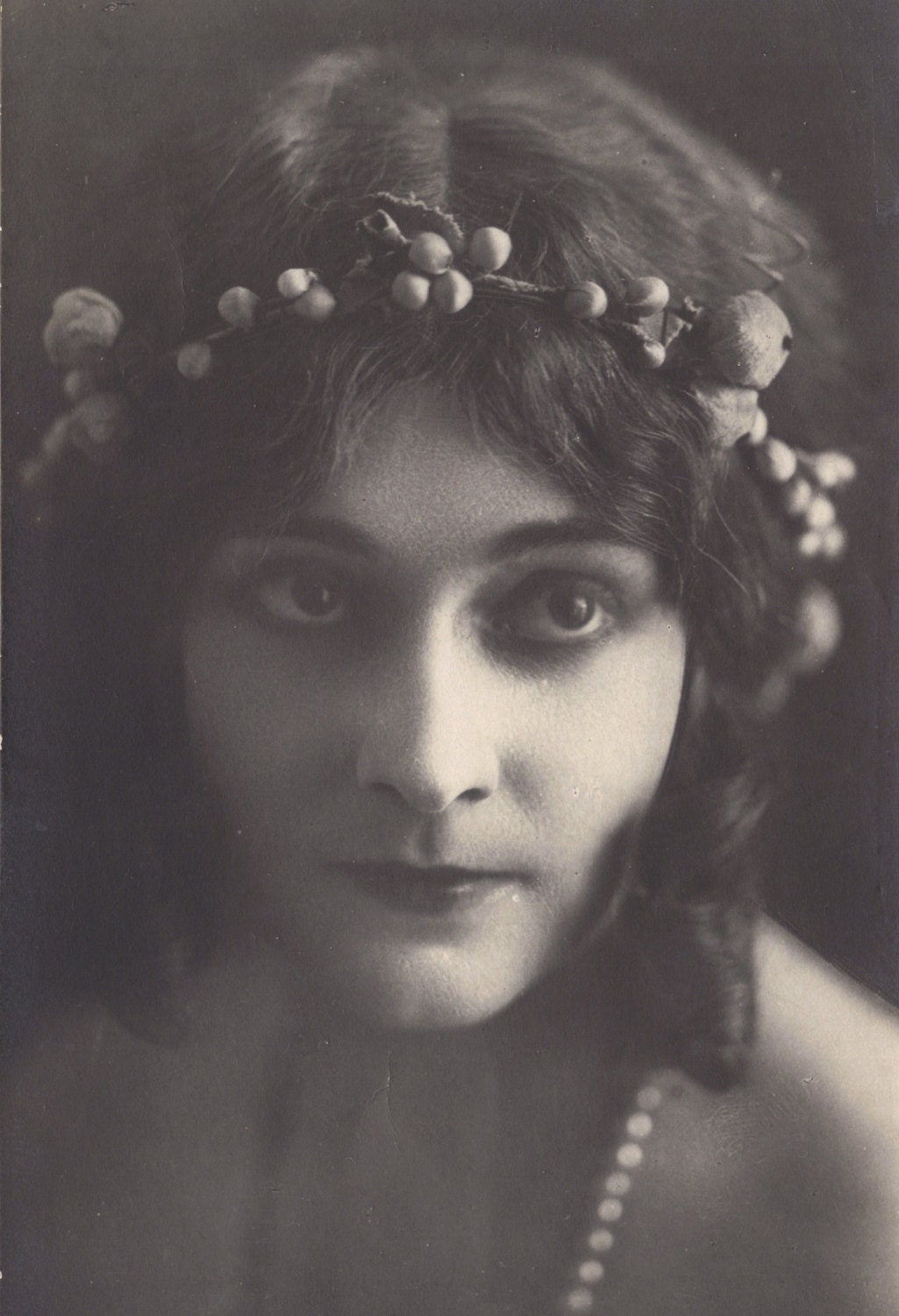
One of our favorite, and most magical, subgenres of "Lovely Lady" postcards has to be that of the Marvelous Maenads. These are somewhat idealized, and presumably toned down, versions of those wild maidens of ancient Greece, who in their worship of Dionysus, the god of wine and sensual abandon, got up to all kinds of mischief. The maenad, as an image, was practically the poster girl of La Belle Époque, expressing that rich, earthy, "joie de vivre," which has come to be seen as so expressive of that era. In our Marvelous Maenad section, we're not all that particular about whether the model is depicted as a woodland sprite, a pagan priestess, or if they're just a couple of Belle Époque chorus girls unwinding after a tough dress rehearsal. The images we list in this section might have been published anytime between the 1890s and the 1930s. Basically, if they're wearing grapes, grapevines, animal skins, or any of the other accoutrements no self-respecting maenad could do without, this is the section they'll end up in. Welcome to the Bacchanal!!! :)

AVAILABLE FOR PURCHASE Maenad in the Morning, Jugendstil Epoche Stage Performer, circa 1903
AVAILABLE FOR PURCHASE Ileana Leonidoff, Dancer and Silent Film Star, Wears Crown of Bacchus, circa 1920
AVAILABLE FOR PURCHASE Maenad Peering Through the Trees, circa 1910s/20s
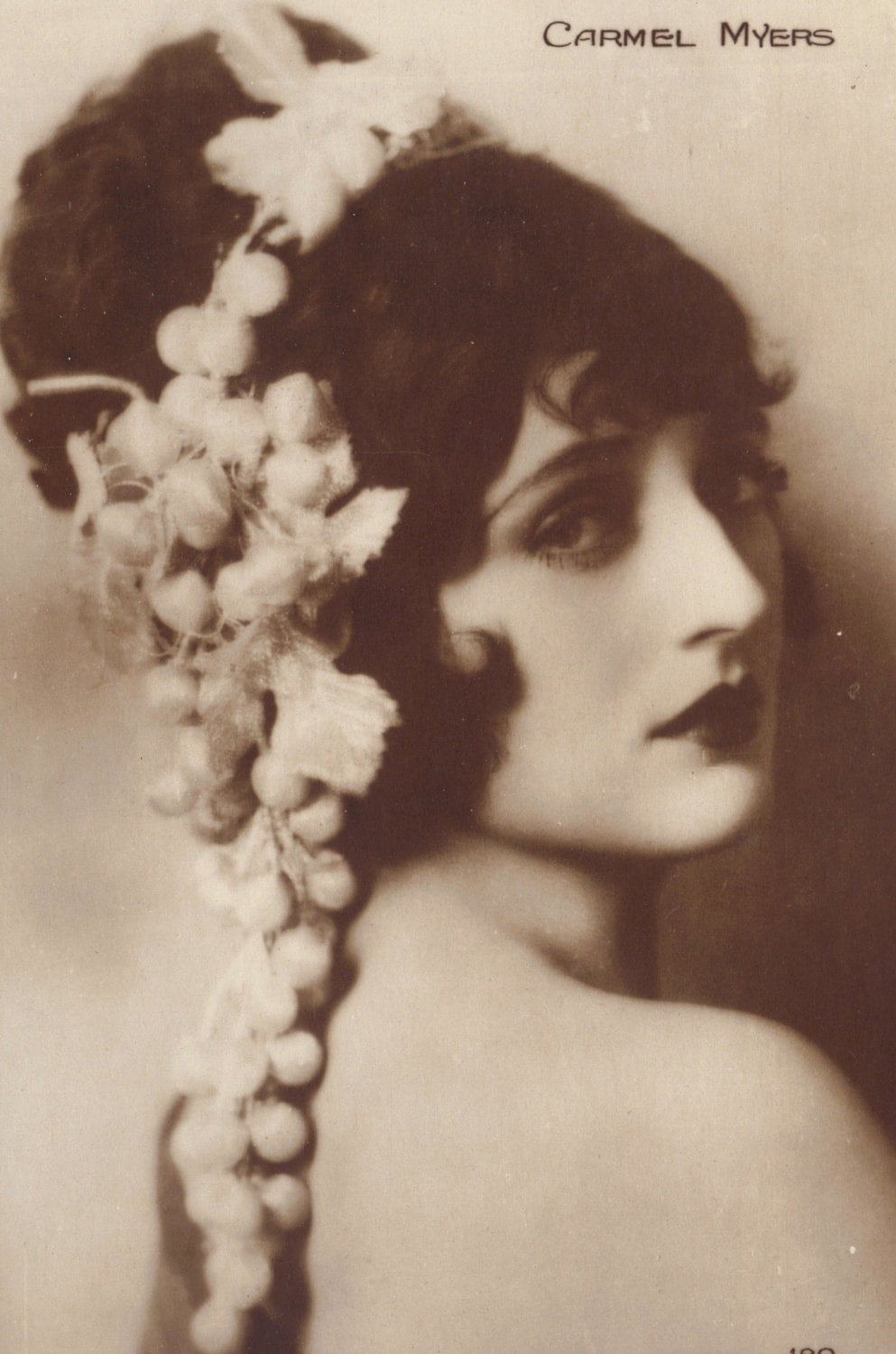
SOLD Carmel Myers with Decorative Grape Headdress
The marvelous maenads featured in this post are just the first of many. We hope that you will be as enchanted with these beauties as we are.

Wednesday, March 13, 2013

Shellhunter365's World of Whimsy and Wonder

Here at Red Poulaine, we always delighted to learn of the artistic ways in which so many of our wonderful customers make use of the cards and photographs we sell. Some of them use the images they buy from us as inspiration (muses, if you will), for writing projects, others in connection with their music, and of course the graphic arts possibilities are endless. One of our customers, shellhunter365 on Etsy, is one of these graphic artists. Her works can be found at La Sirena Antiques and Skatter, both in Santa Cruz, California. As you will see, shellhunter365 has a wonderful eye for magic and whimsy. She uses vintage images, many of which she has purchased from Red Poulaine, as the basis for some of her pieces, and has been kind enough to share with us some of her art, as well as her process:
I use . . . alcohol tints, often mixing them, make a copy of the original and tint that (I like to leave the originals alone; they survived this long without adulteration...), then I apply everything from vintage ribbon, flowers, glitter, even shells around the image which is mounted on mat board, and hang them from more vintage ribbon.
In the side-by-side that follows, we have a before and after shot, showing the first step in the process. The image on the left is a postcard shellhunter365 purchased from us, of Mlle. Santori wearing a remarkable headdress. (You can read more about this image in the original listing in our shop.) The image to the right shows shellhunter365's copy after she had applied her hand-tinting. We love the wonderful earthy tones she used to enhance this image, emphasizing the woodland spirit motif created by the headdress that is the focal point of the image.

Mlle. Santori, before and after hand-tinting by shellhunter365
Here's another side-by-side comparison of an image, showing shellhunter365's tinting, this time of a mermaid from Reutlinger's Les Ondines series:

Les Ondines, before and after hand-tinting by shellhunter365

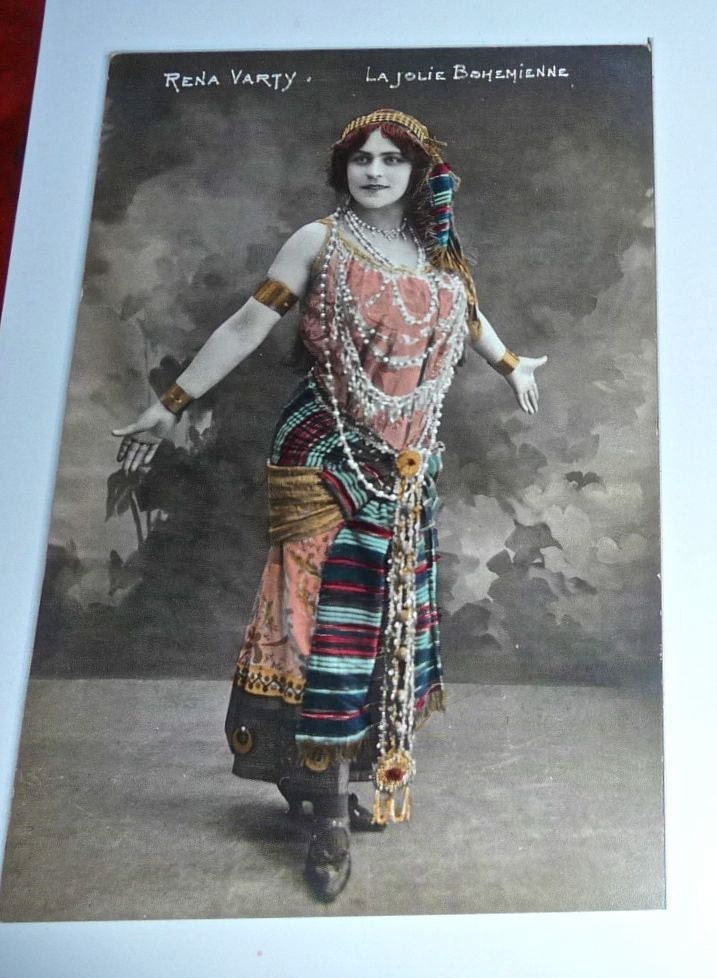
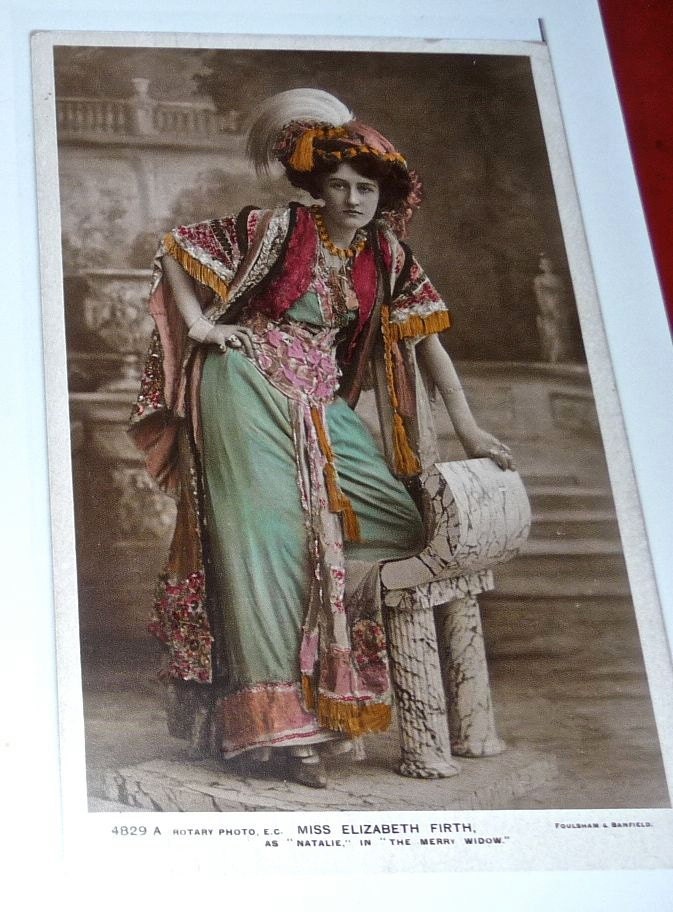
The following three images are all based on postcards shellhunter365 purchased from our shop, but have yet to receive their decorative frames. Where possible, each is linked back to the original postcard from our shop.

Rena Varty — La Jolie Bohemienne
Elizabeth Firth as Natalie in the Original English Production of the Merry Widow, 1907

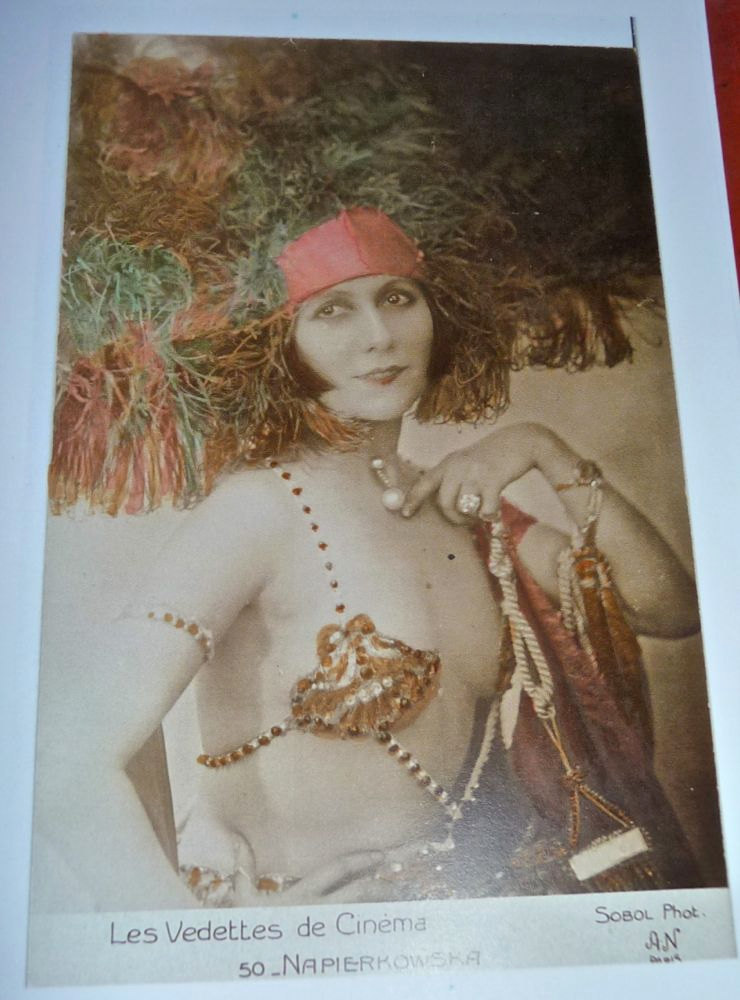
Stacia Napierkowska Russian Star of French Silent Film circa 1910s/20s

Of course, shellhunter365 doesn't stop with merely hand-coloring and mounting her artwork. After each piece is mounted, she adds a number of decorative embellishments to complete the work. Following are a few of the pieces she has shared with us:

Cute Flag-Bearer on Rocking Horse
Q is for Queen of the Dancers
Gisèle Gravier in Art Nouveau Egyptian-Inspired Headdress and Necklace

Sea Nymph Asleep in a Clam Shell Cradle

YES! You Are a Moon Goddess

Enchanting Child with Ribbons and Flowers