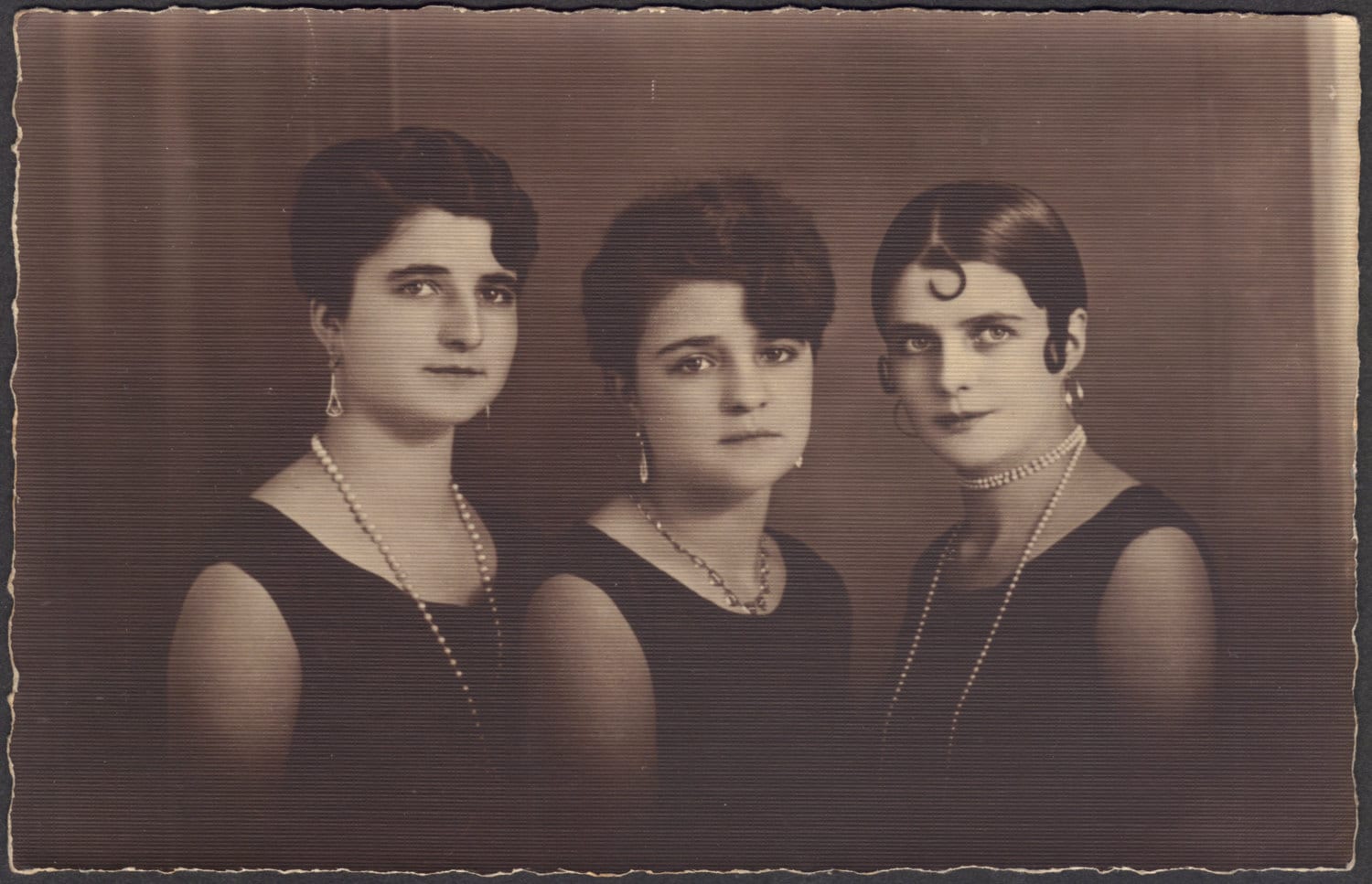
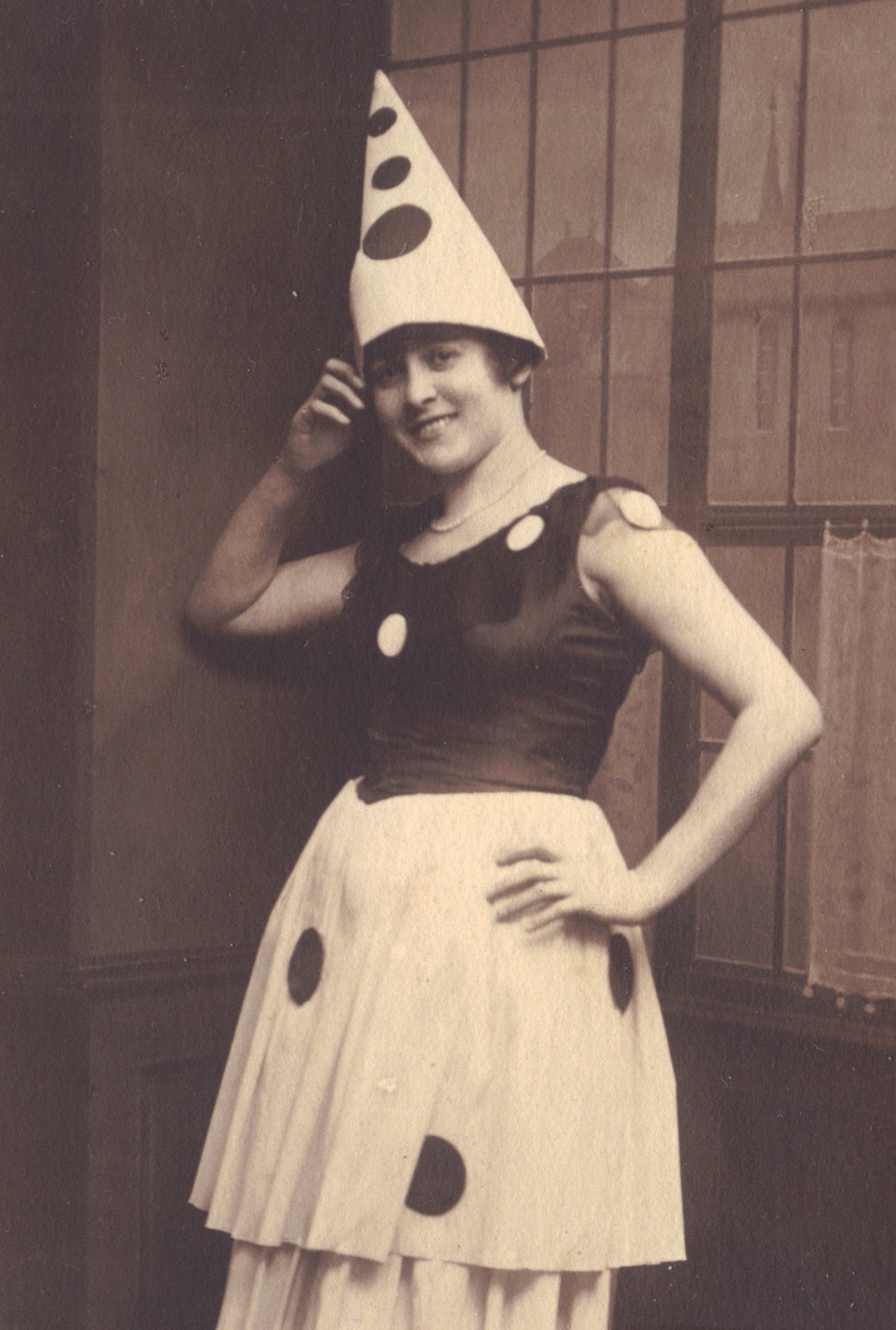
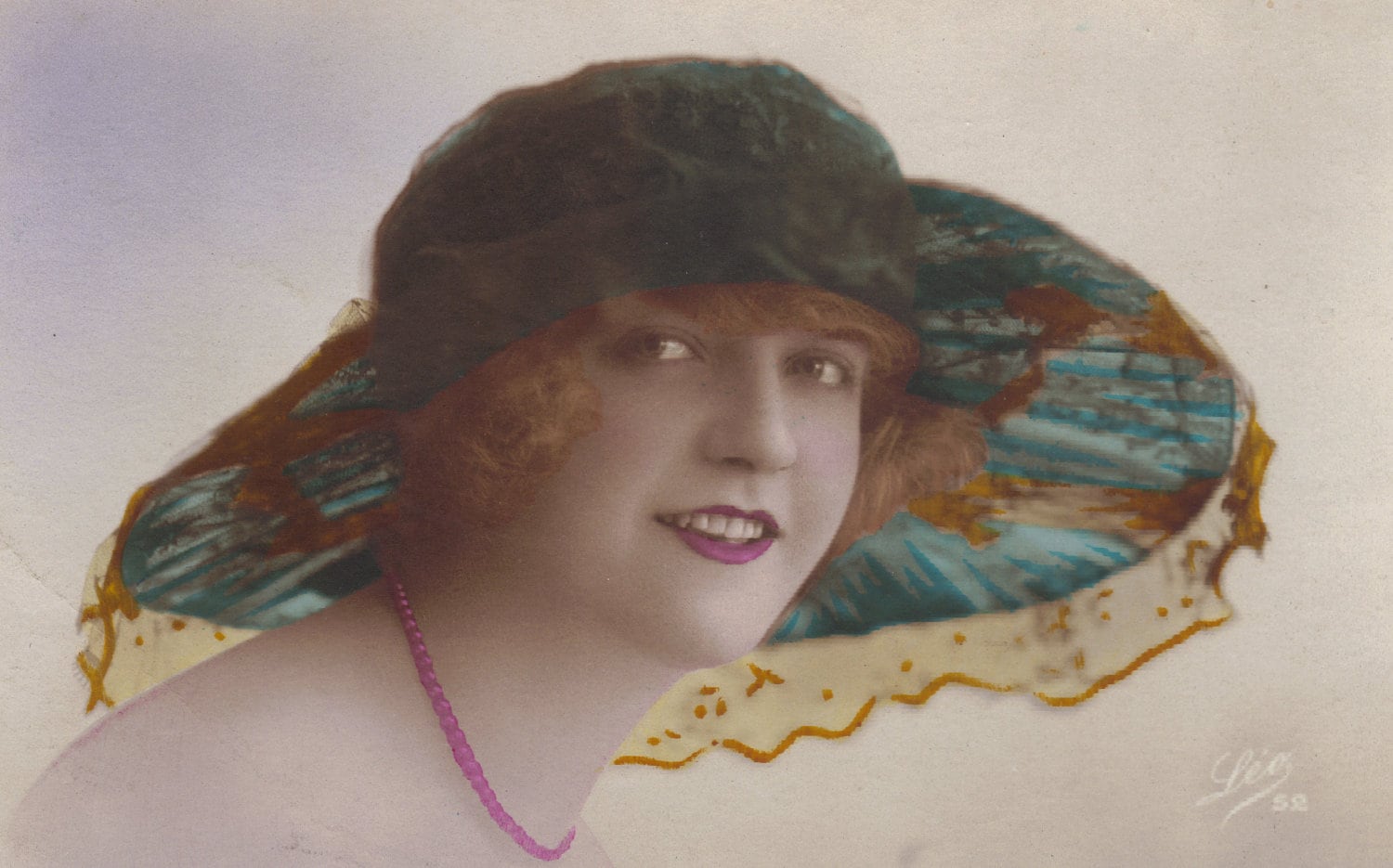
This RPPC (Real Photo Post Card) was produced at the Atelier Wollner in
Prozega, Croatia (what was then Yugoslavia), a small Eastern European
city whose history stretches back a thousand, or so, years.
 |
$22.00 USD by Red Poulain via Etsy:
|
There
was a C. Wollner there, making photographic portraits on cartes de
visites in the late 19th century, and quite possibly this is the same
Wollner, or another member of the family, the name of the studio having
changed over time from C. Wollner, to Atelier (workshop, or studio)
Wollner, as additional family members, or business partners joined in.
Was
the photographer a man or a woman? We don't know, but it might surprise
you to find out just how many photographic studios were actually
operated by women. According to an
article we found on Wikipedia, prior
to World War II in Vienna, Austria, most of the photo studios were in
fact operated by women, and most of these were Jewish women! This
implies that at least 25% of photo studios in Vienna at that time were
operated by Jewish women. Why does this matter? Because it gives us a
valuable perspective on the images we love.
Way back in the
1850s, in the early days of photography, both women, and Jews, flocked
to the profession. Let's remember that in those days, society placed all
kinds of roadblocks in the path of those two groups of people (among
others, of course), limiting their potential involvement in industry,
business, and the arts. But photography was new! It was not broadly
accepted in the well established arts community, and so there were no
centuries-old guilds that had established rules (often legislated)
restricting the professional participation of people who were so often
limited in their choices of work and creative expression.
These
opportunities carried forward into the 20th century, and into the
publication of picture postcards, where all across Europe, and in the
USA as well, a very large percentage of the people involved with the
cards we sell were Jewish, and a much larger percentage than we might
have imagined, women.
The Wollners of Prozega, for example, were
probably Jewish. We know of at least one, an Else Wollner, born in 1902,
who was a Jew, and who was murdered while in her early forties, by the
fascists at Auschwitz in 1944. Many members of the Wollner family
(unnamed in the records we accessed) perished in the holocaust, though
we were unable to find any records concerning a C. Wollner, or a Wollner
who was a photographer.
We apologize for letting some of the
dark into this listing. We honestly feel that our images are not merely
flat photographic prints, but that they live in a way, and are imbued
with their original environment and with the life experiences, not only
of their subjects, but of their makers too. So, knowing a little more
about these ephemeral elements of their make up helps to round out, and
add depth, lending, for example, a poignance to this wonderful image
that takes us back to what was still a kinder time, filled with the joy
of this group of lovely young ladies, taking pleasure in what was
perhaps a recent, and triumphant performance.