Showing posts with label 1890s. Show all posts

Tuesday, July 23, 2013

Chrysanthèmes and Dragonfly by Henri Manuel, circa 1905

Unlike Leopold Reutlinger and Count Ostorog, aka Walery, who seemed to specialize in "entertainment" photography, Henri Manuel, who with his brother, Gaston, operated the largest photography studio in Paris, covered a very broad array of subjects. That is not to say that Walery and Reutlinger didn't ever step out of the showgirl portrait genre, we know they did, but Manuel was the official photographer for the French government between 1914 and 1944, established one of the earliest "news" photo services, and was well known for his architectural studies.

Henri Manuel's photograph of Auguste Rodin and the Duchesse de Choiseul at the Hôtel Biron. Wikipedia

He did not, however, shy away from "eye candy;" far from it! He was quite adept at risque images, and managed to bring a very artful feel to many of his "artiste" portraits.

AVAILABLE FOR PURCHASE Chrysanthèmes by Henri Manuel
This card offers a fine example of this, we think. Without question, la Belle Epoque, in France, was the era of the chrysanthemum. In images of pretty young dancers, mothers with their little girls in tow, opera divas, etc., the use of the chrysanthemum as a hair decoration was ubiquitous. Most often, they are seen worn at the temples, and here Manuel positions the flowers in their accustomed location, but without removing them from the stem, creating a thoughtful study with a feel of nature, and the placement of the dragonfly is wonderful. Really a gorgeous image.

***Note*** It might be of some interest to collectors that during WWII almost all of the photographic plates housed in the Manuel studio were destroyed, making images by H. Manuel all but irreplaceable.

Thanks to Wikipedia for most of the historical information in this posting.


Saturday, June 15, 2013

Images of the Fantastic in La Belle Époque

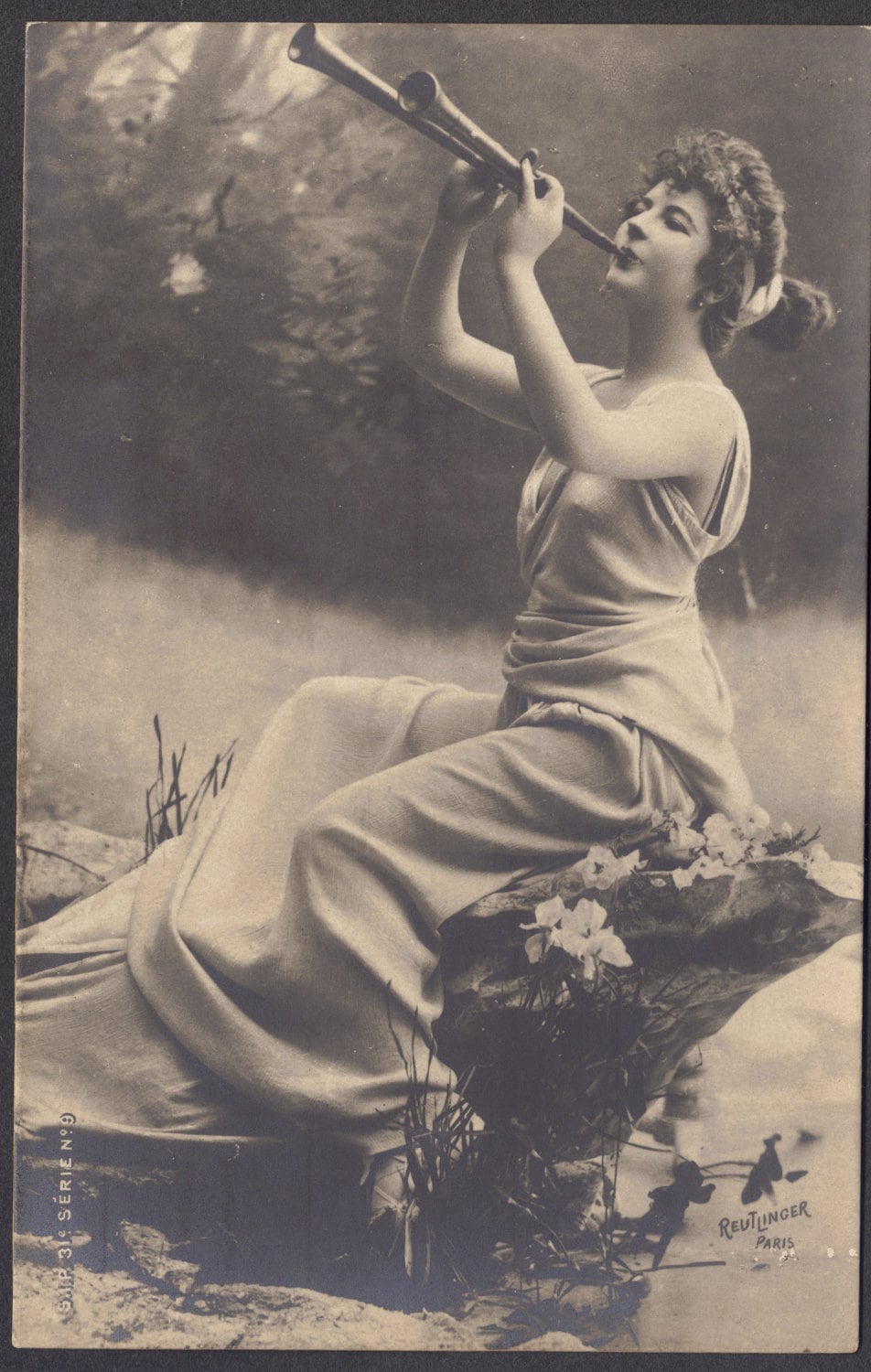
One aspect of La Belle Époque, not just in France either, was a very palpable embrace of antiquity, and though often in a rather naive fashion by today's standards, one gets the sense that people were turning away from the onslaught of the industrial explosion and towards the real, and imagined, simplicity of earlier times. With this came a sense of the possibility of magic, and the ubiquity of images like this one, in which we wouldn't be terribly surprised to see faeries or woodland sprites cavorting about.

SOLD Wood Nymph at the Well
Or, perhaps we expect at any moment to see a faun, satyr, or even Bacchus, himself!

SOLD Nymph Calling Forth the Woodland Sprites circa 1905

We love the way in which the magical is suggested in these images, without the introduction of a single truly fantastic element. These images make us feel much as we might when reading a fairy tale, that at any moment something truly marvelous will happen.

Nymphs, Naiads, Dryads, and Faerie folk so often cropped up in La Belle Époque. Found throughout the period from popular entertainment to commercial advertising, these images reflected a blossoming of Western occult experimentation and a yearning for magic, for myth made manifest. We've written before of our fondness for images depicting the Marvelous Maenad, which is not only a subgenre of the "Lovely Lady" category, but of fantasy postcards, as well.

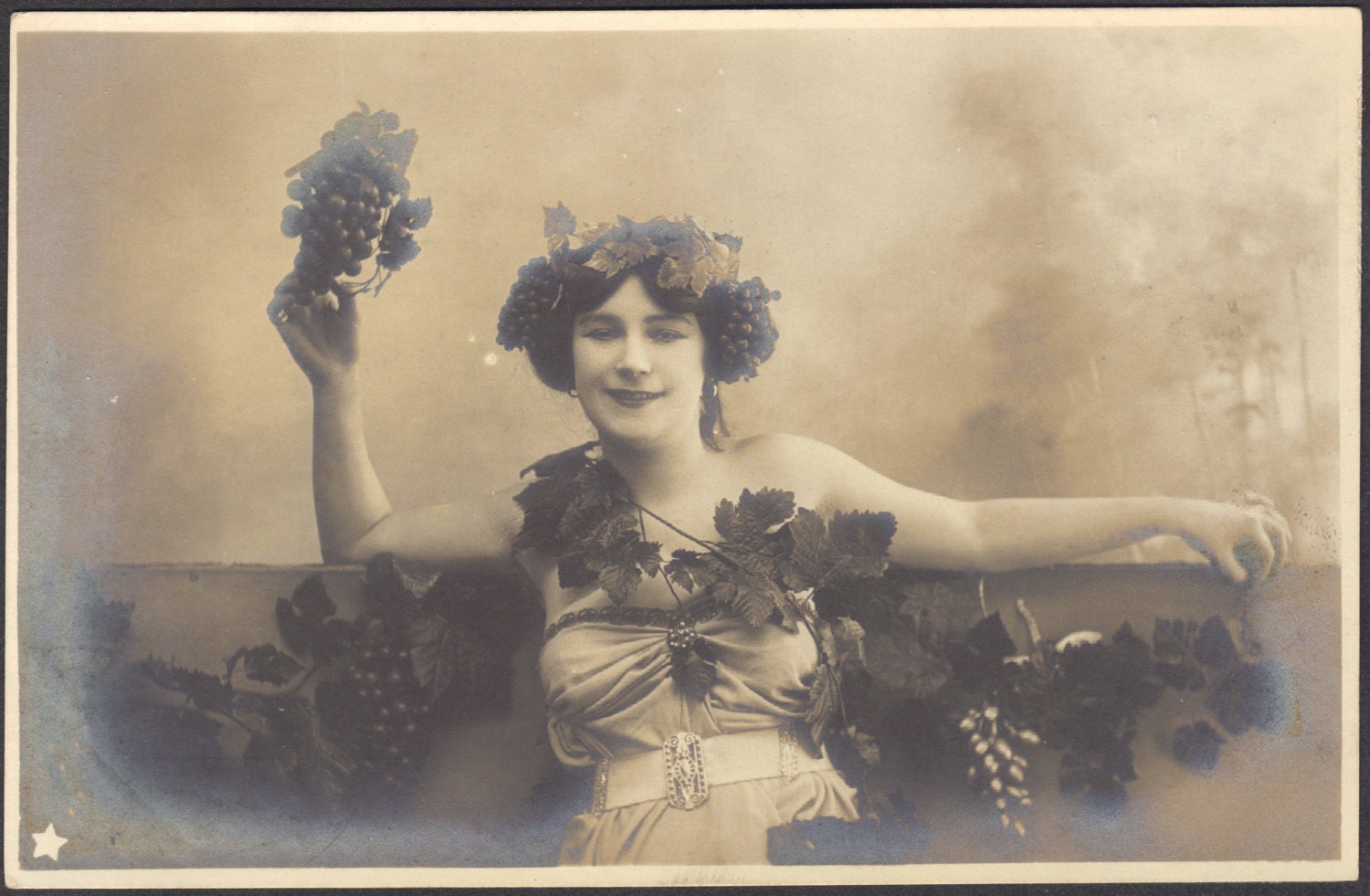
AVAILABLE FOR PURCHASE Maenad at the Garden Wall, circa 1900
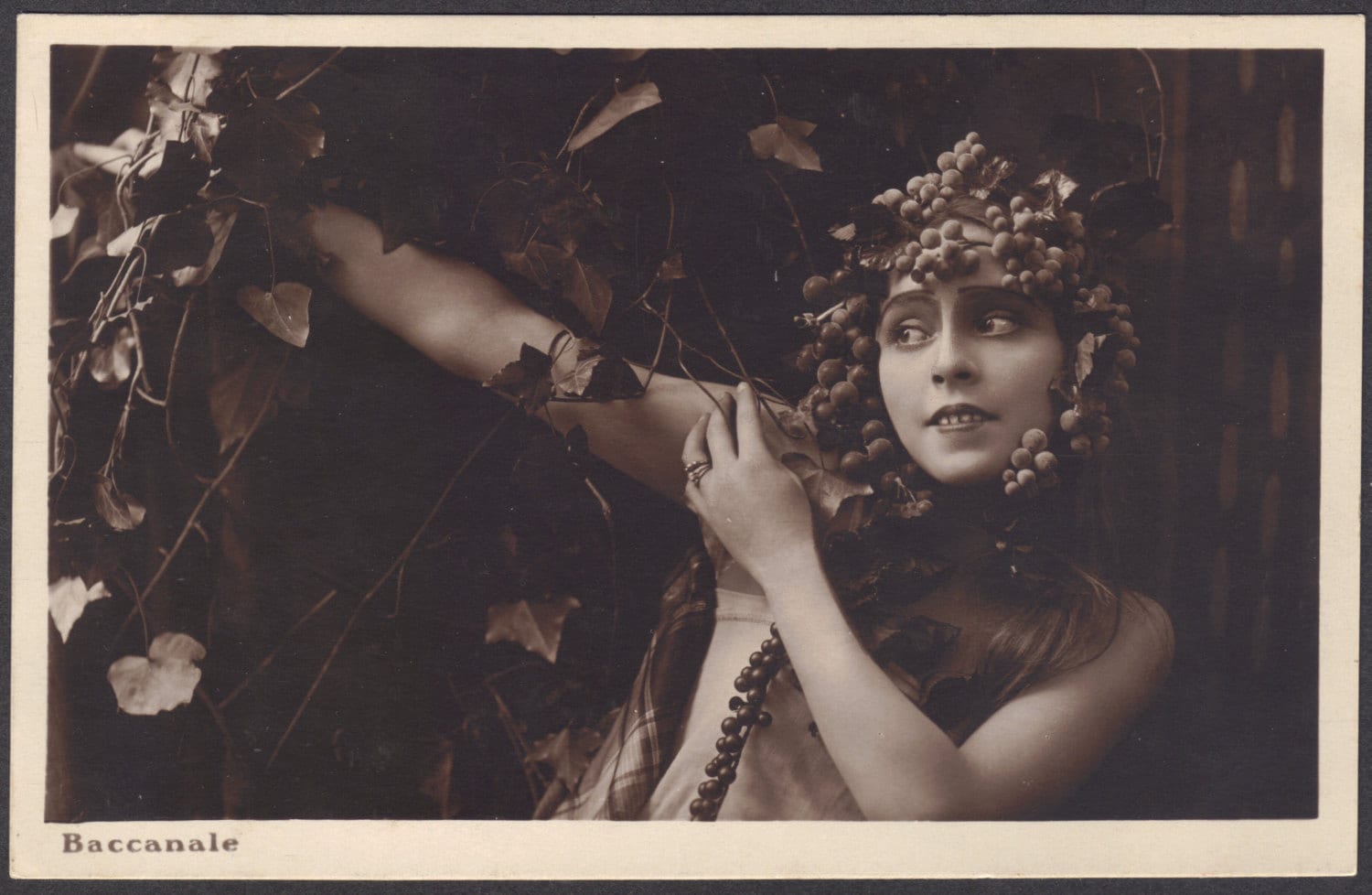
Maenads could be seductive, inviting the viewer to join them in the Bacchanal, as in the previous image, but they could also be depicted as shy and elusive creatures of the wilderness, emerging from a tangle of vines, perhaps looking back with a mixture of amusement and discomfiture at a pursuer.

AVAILABLE FOR PURCHASE Maenad Peering Through the Trees, circa 1910s/20s
Even more interesting, we think, is the fact that this new medium, the picture postcard, made available to anyone with a penny or two the possibility of possessing such an image, one in which an obviously very real human being is pictured in a fairyland setting. We take photographs for granted today, of course, but think about it for just a moment—at the turn of the 20th century, this was all entirely new. Prior to this time, fantastic photo images of human beings were seldom accessible to the common man, woman or child, and we cannot take lightly the effect of "likeness" on the human psyche, and it's worth considering the effect this mass phenomenon had on society. Mass phenomenon, you wonder? Really? Absolutely. Just as an example, in the United States alone, "the official figures from the U.S. Post Office for their fiscal year ending June 30, 1908, cite 677,777,798 postcards mailed. At that time the total population of the United States was only 88,700,000!" (Thanks to emotionscards.com for their fascinating article that provided us with that factoid.)

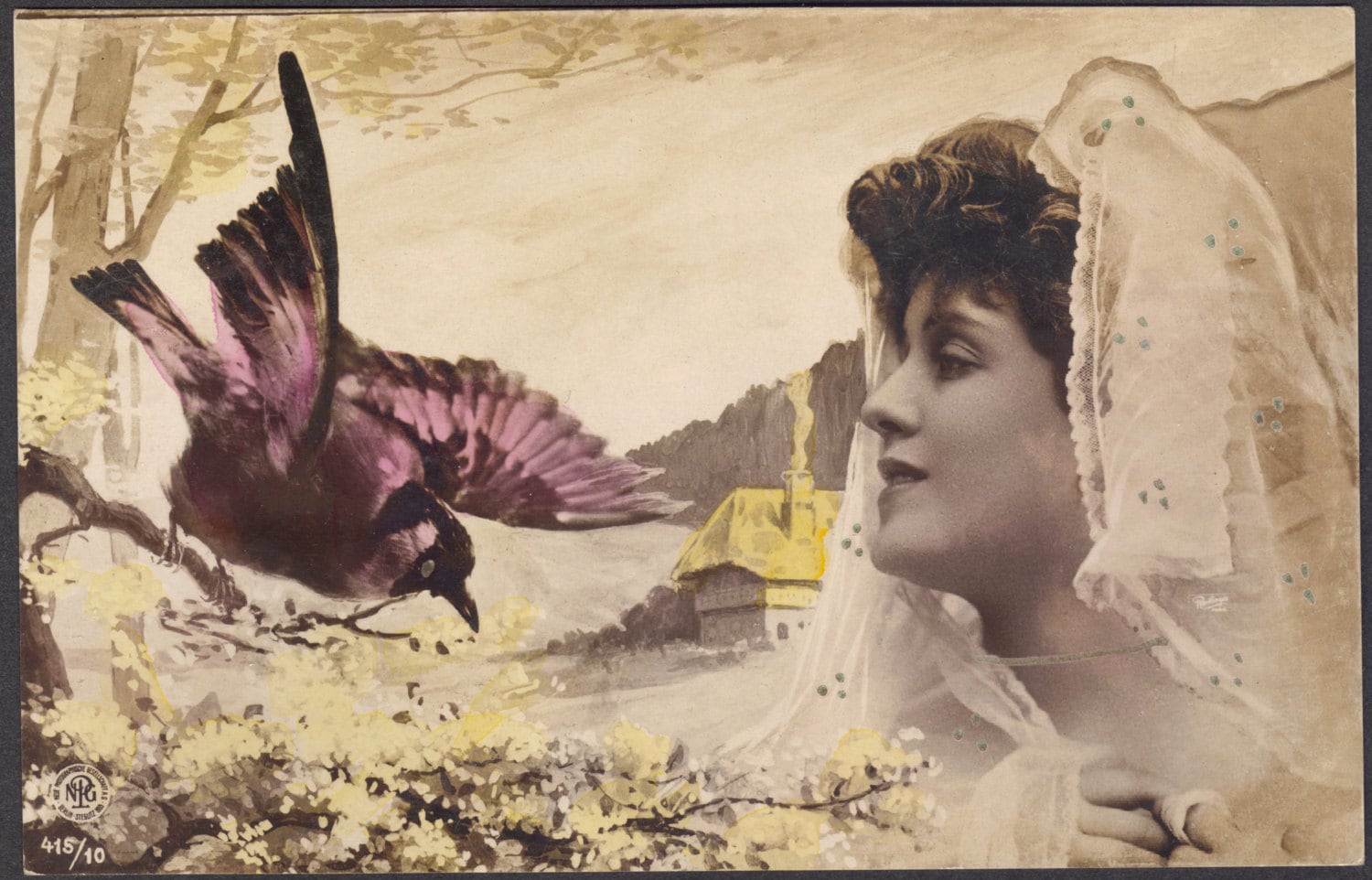
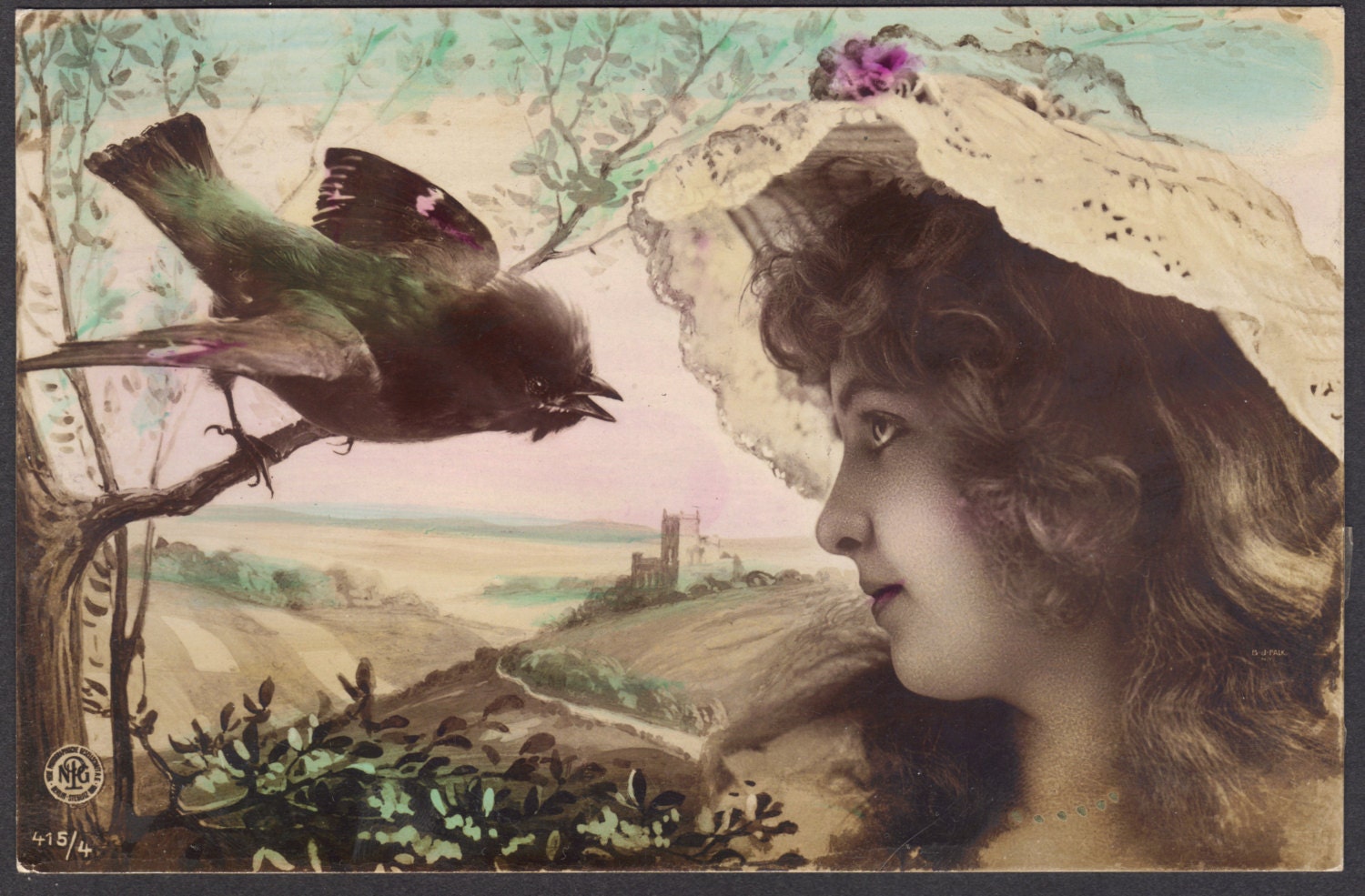
Leopold Reutlinger, the Belle Époque photographer, took thousands of photographs of famous Parisian actresses. These were published in black and white, cropped to close up and republished, hand tinted, glittered, sequined, published again, and when every imaginable possibility had been explored, he superimposed these images onto wonderfully fantastic, often surreal backgrounds. The "Artiste with Bird" series is one of our favorites and quite collectible. As of this writing, we have two such images, both by Reutlinger and in unusually fine condition.

AVAILABLE FOR PURCHASE Marguerite Brezil, Belle Epoque French Actress, Interspecial Romance Image by Reutlinger


AVAILABLE FOR PURCHASE Avian Romance Fantaisie by Leopold Reutlinger of Paris, circa 1905
Can't you just imagine these lovely ladies as heroines in fairy tales, in which for their kindness they have been rewarded the ability to speak the language of the birds? Or, perhaps the bird in the picture is actually an enchanted prince, in need of saving by the brave young woman.

One of the issues with Reutlingers "fantaisies," is that although the artiste's name was usually printed on the face of the card in its early incarnations, by the time they got to these dramatic creations, the name would often be left off. This was fine at the time, since their faces were very well known, but not today. We've been able to identify the first of these two beauties as Marguerite Brezil, but the identity of the second remains a mystery and we would welcome any clues that might shed some light on this.

These wonderful fantasy-inspired photographic images quite clearly reflect the same underlying ideals found in Victorian fairy paintings and Victorian attempts to portray fairies in photographs, a connection which ties them in with the Romanticism of the late 18th and early 19th centuries. In his examination of fairy paintings, Jeremy Mass identifies "the turn to mythological and fantasy elements, and in particular to the fairy's world, [ as allowing] an escape from these demands. 'No other type of painting concentrates so many of the opposing elements of the Victorian psyche: the desire to escape the drear hardships of daily existence; the stirrings of new attitudes toward sex, stifled by religious dogma; a passion for the unseen; the birth of psychoanalysis; the latent revulsion against the exactitude of the new invention of photography.'" That photographs, emblematic in some eyes of the science and technology that was displacing many traditional beliefs and occupations, could be manipulated to portray the longed-for simplicity and magic of a bygone (never-was) era was marvelously ironic and ironically marvelous. Photographs, which Jeremy Mass, and many others!, fuse with conformity to a hard and unforgiving realism have, from almost the very moment they came into existence, been used to portray the world in ways the eyes are rarely able to see, providing us with visual evidence of the magic we all long to see.
Saturday, March 16, 2013

Marvelous Maenads

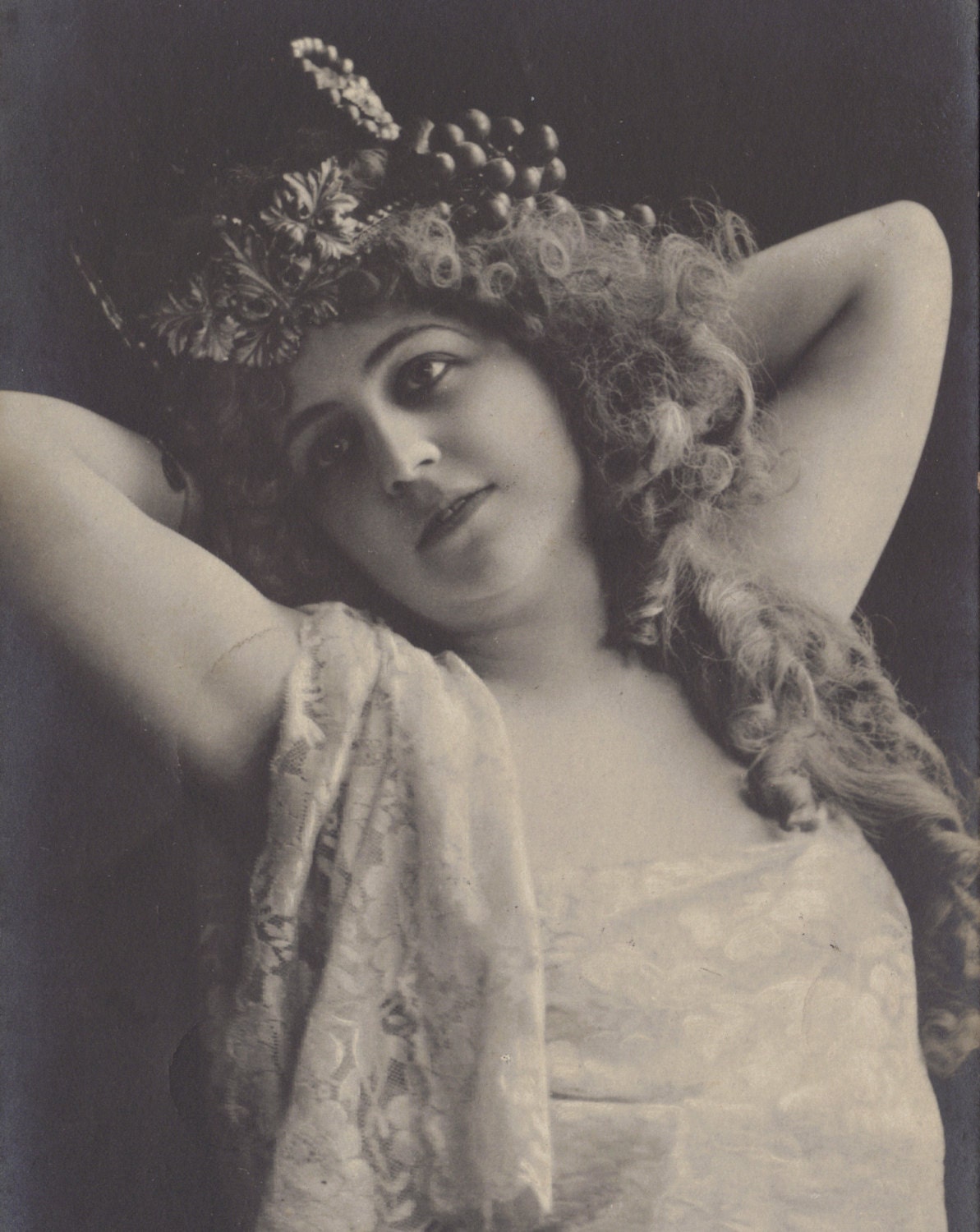
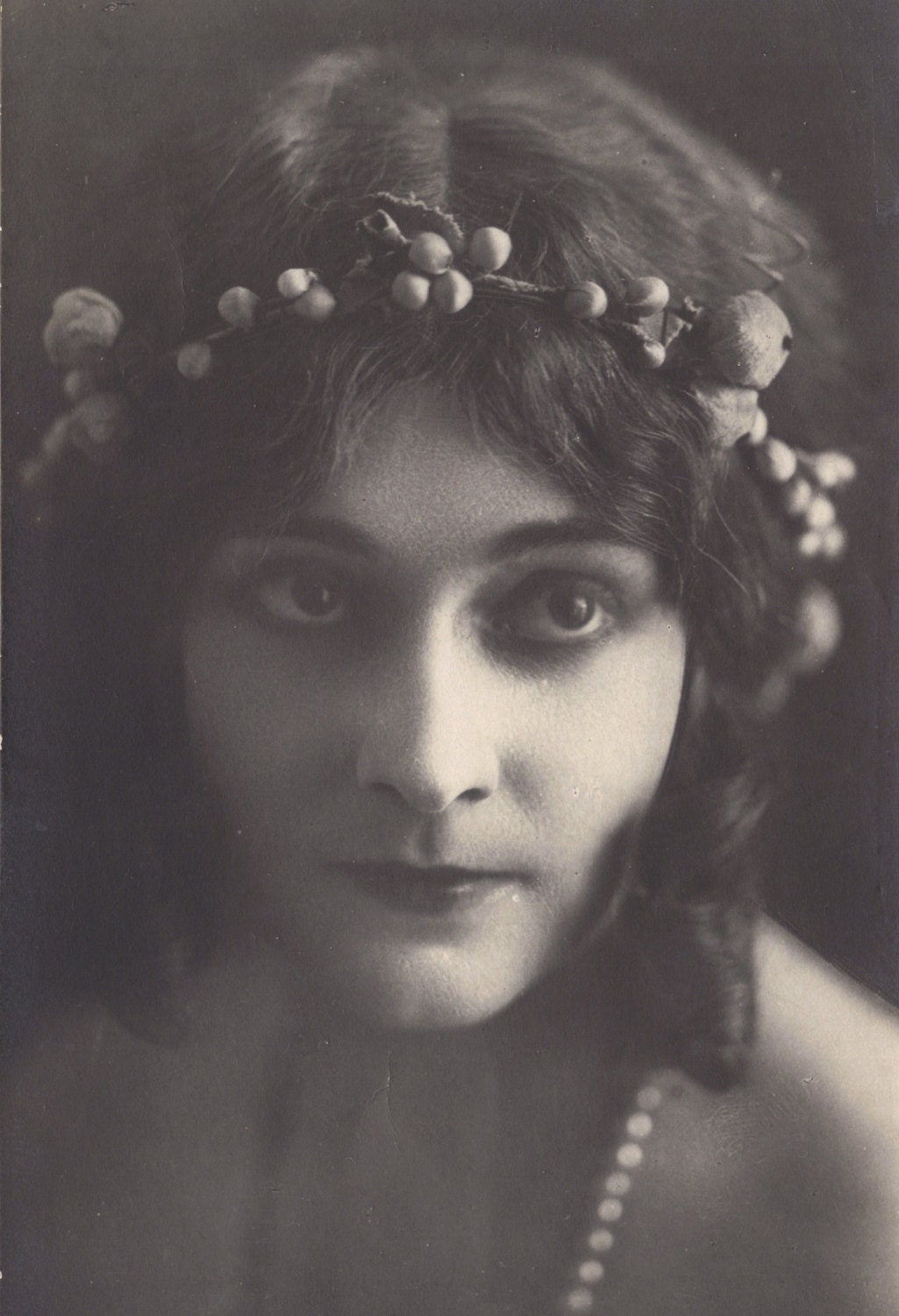
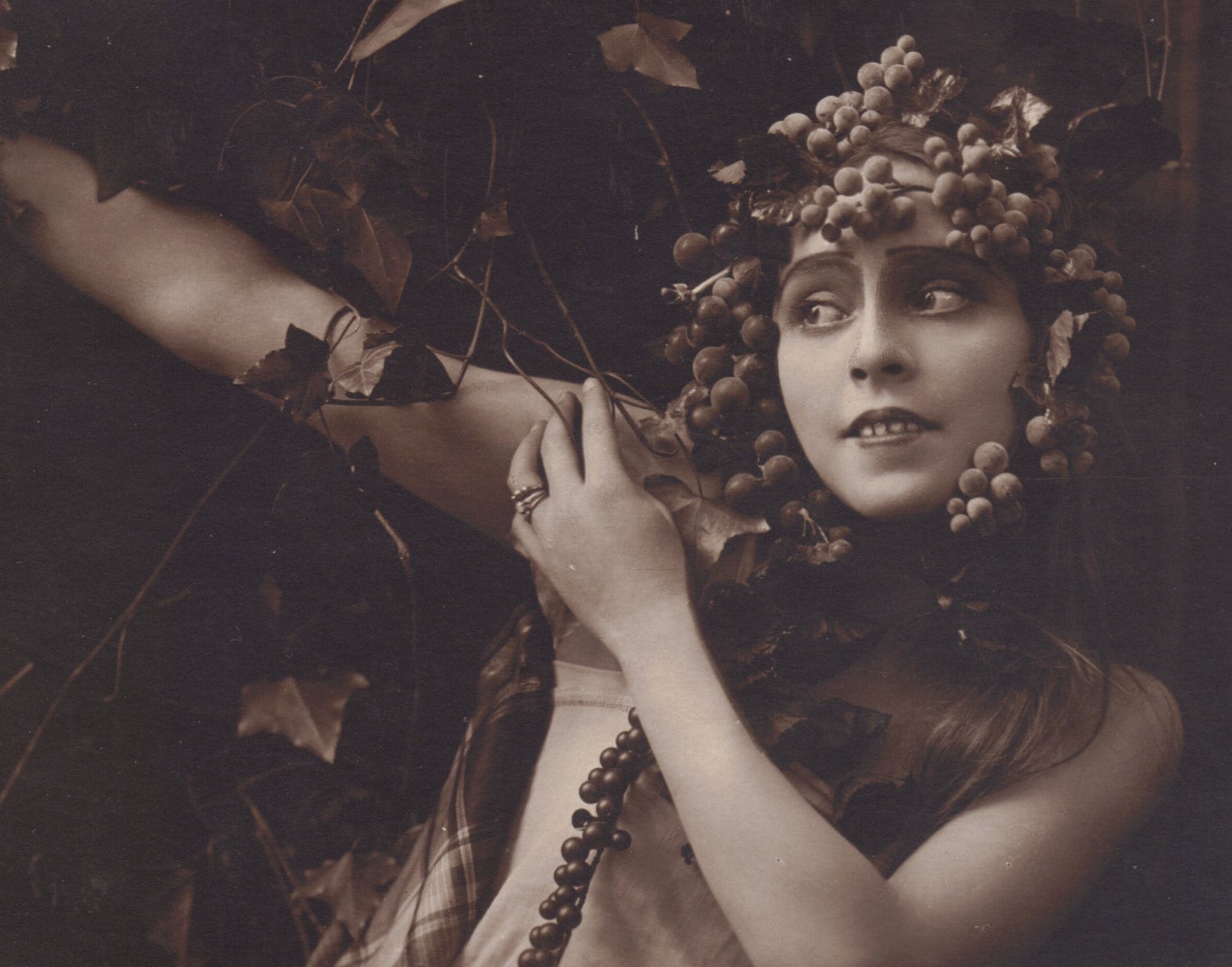
One of our favorite, and most magical, subgenres of "Lovely Lady" postcards has to be that of the Marvelous Maenads. These are somewhat idealized, and presumably toned down, versions of those wild maidens of ancient Greece, who in their worship of Dionysus, the god of wine and sensual abandon, got up to all kinds of mischief. The maenad, as an image, was practically the poster girl of La Belle Époque, expressing that rich, earthy, "joie de vivre," which has come to be seen as so expressive of that era. In our Marvelous Maenad section, we're not all that particular about whether the model is depicted as a woodland sprite, a pagan priestess, or if they're just a couple of Belle Époque chorus girls unwinding after a tough dress rehearsal. The images we list in this section might have been published anytime between the 1890s and the 1930s. Basically, if they're wearing grapes, grapevines, animal skins, or any of the other accoutrements no self-respecting maenad could do without, this is the section they'll end up in. Welcome to the Bacchanal!!! :)

AVAILABLE FOR PURCHASE Maenad in the Morning, Jugendstil Epoche Stage Performer, circa 1903
AVAILABLE FOR PURCHASE Ileana Leonidoff, Dancer and Silent Film Star, Wears Crown of Bacchus, circa 1920
AVAILABLE FOR PURCHASE Maenad Peering Through the Trees, circa 1910s/20s
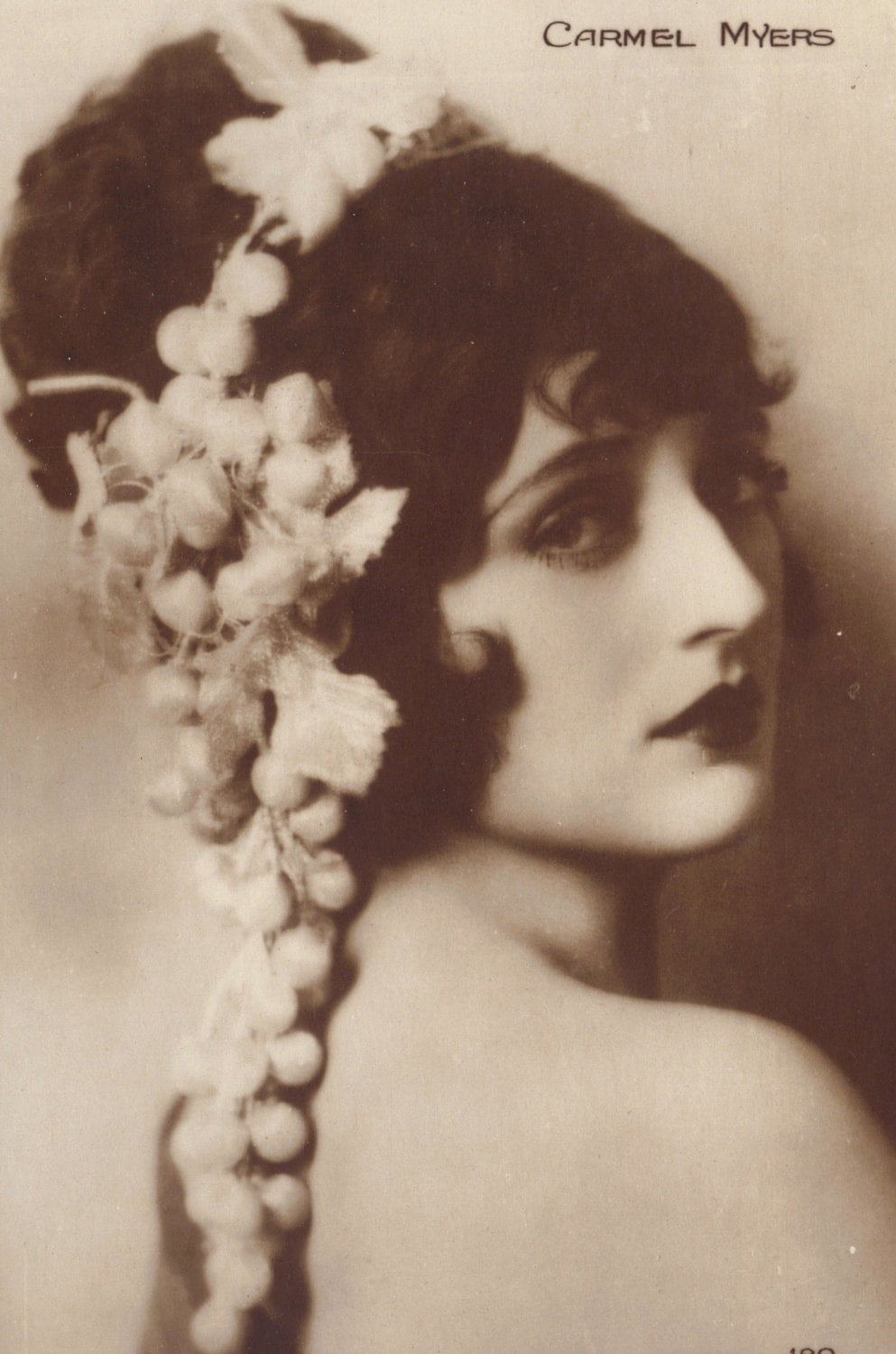
SOLD Carmel Myers with Decorative Grape Headdress
The marvelous maenads featured in this post are just the first of many. We hope that you will be as enchanted with these beauties as we are.

Saturday, December 15, 2012

Announcing the Songs of Salome Collection

Today, Red Poulaine is unveiling the Songs of Salome Collection. This stunning ensemble brings together a choice assortment of luscious vintage postcards featuring Art Nouveau headdresses, jewelry, and costumes, with a special emphasis on the depiction of dangerous female seductresses and dancers, of whom Salome is a prime example.

The 1904 Richard Strauss opera Salome, itself based on a German translation of the 1891 Oscar Wilde play, Salomé (written in French to side-step British censorship), has been identified, along with French colonial interests in Africa and Asia, as one possible influence in the development of the oriental dance costume of La Belle Époque.

We here at Red Poulaine have worked very hard to find the most stunning vintage images we can, often spending many hours on any given day in this search. The temptation to hoard the most beautiful images for ourselves was actually the start of this collection, but we find our need to share these images overwhelms that impulse. Lucky you! Because this means that we are opening up a collection that, although small, may just be the most concentrated grouping of Art Nouveau femme fatales inspired by the opera Salome currently available.

And now, for the first time all together on one stage, and with no further ado, we bring you: the Songs of Salome.

Hedwig Reicher as Salome, circa 1905

Mary-Hett with Tiger Skin, Belle Epoque Artiste in Art Nouveau Costume, circa 1900

Dina Van-Brandt, Belle Epoque Artise in Art Nouveau Costume, circa 1905

Les Bijoux, Decorative Art Nouveau Image from Popular French Series, circa 1905

Louise Mante in Art Nouveau Costume, circa 1900

French Dancer Margot Dervilliers in Costume Orientale, circa 1905

Margot Dervilliers in Sheer Art Nouveau Dance Costume

French Artiste Laparcerie in Classic Art Nouveau Headress circa 1900

Art Nouveau Flowered Headdress circa 1900

French Artiste D'Alencon in Fantastic Art Nouveau Headress circa 1900

Mata Hari's Arch Rival Suzy Deguez circa 1905 by Paul Boyer

Frau Von Hochenburger, Jugendstil Epoche German Artiste, circa 1900

French Artiste Girard in Classical Art Nouveau Costume with Cameo Headdress circa 1905
Gerda Walde, Viennese Opera Singer in flowered Jugenstil Epoche Headdress, circa 1905

Parisian Dancer Hagino in Costume Orientale, circa 1905
Gorgeous Art Nouveau Card Featuring Heglon and Madia in Headdresses circa 1905

Mme. Heglon, Opera Star in Gorgeous Art Nouveau Headdress, circa 1900

Opera Diva L. Preusser in Costume for Konig Niccolo, circa 1905

La Floramye and Partenaire, circa 1905

Walery Image of Charming French Dancer in Costume Orientale, circa 1905

Mlle Lippson at the Cigale, in Hand-Tinted Art Nouveau Costume, circa 1905

Lise Fleuron, French Stage Performer, circa 1900

Lise Fleuron, French Stage Performer in Costume, circa 1900

Lotte Sarrow, Actress of the Jugendstil Epoche, as Salome, circa 1905

Louise Blot at the Olympia Theater in Berlin, circa 1905

Lucy Gerard, French Stage Actress in Art Nouveau Costume, circa 1905

Mlle. Margyll, Belle Epoque Artiste in Fabulous Art Nouveau Headdress, circa 1905

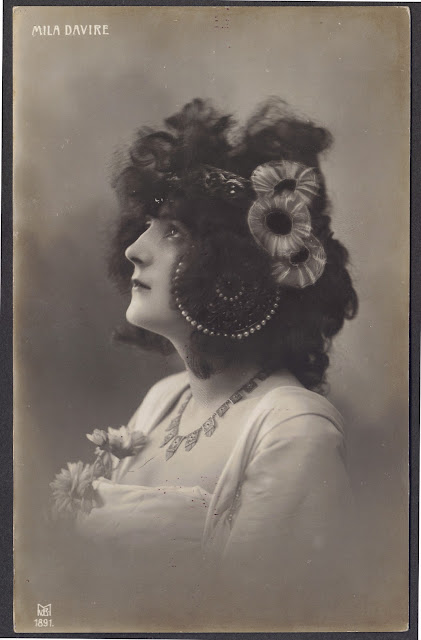
Mila Davire in Art Nouveau Headdress with Poppies, circa 1905

Miri Voclesca Danseuse Bohemienne circa 1905 by Louis Martin

Myrta Forenza in Classical Art Nouveau Costume, circa 1905

Stacia Napierkowska Russian Star of French Silent Film circa 1910s/20s

Nina Barkis in Wonderful Art Nouveau Costume Orientale, circa 1905

Very Cute Young Woman in Art Nouveau Dance Costume, circa 1905

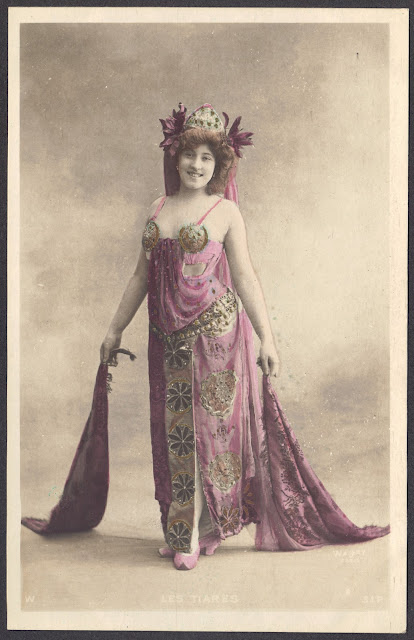
Lovely Artiste with Sweet Smile in Art Nouveau Dance Costume.

La Belle Otero in Danse Orientale Costume circa 1905

Image of Salome circa 1910

Head Shot of Opera Diva Louise Mante in Gorgeous Art Nouveau Jewelry, circa 1900

Regina Badet in Marvelous Belle Epoque Dance Costume, circa 1905

Hedwig Reicher as Salome in Hand-Colored Image circa 1905

Sjemile Fatme, Odalisque to the Sultan, circa 1910

Cecile Sorel in Art Nouveau Costume, circa 1905

Mlle. Spinelli in Art Nouveau Dance Costume circa 1905

Ruth St. Radhjah, Belle Epoque Dancer and Adventuress in Meditative Pose

Mlle. Suquez in Classical Art Nouveau Costume with Lyre

Hand-Tinted Image of Charming Young Artiste in Art Nouveau Headdress circa 1905

Cute Belle Epoque Artiste in the Ubiquitous Peacock Crown, circa 1900
All postcards in this post are available for sale in the Red Poulaine shop on Etsy.