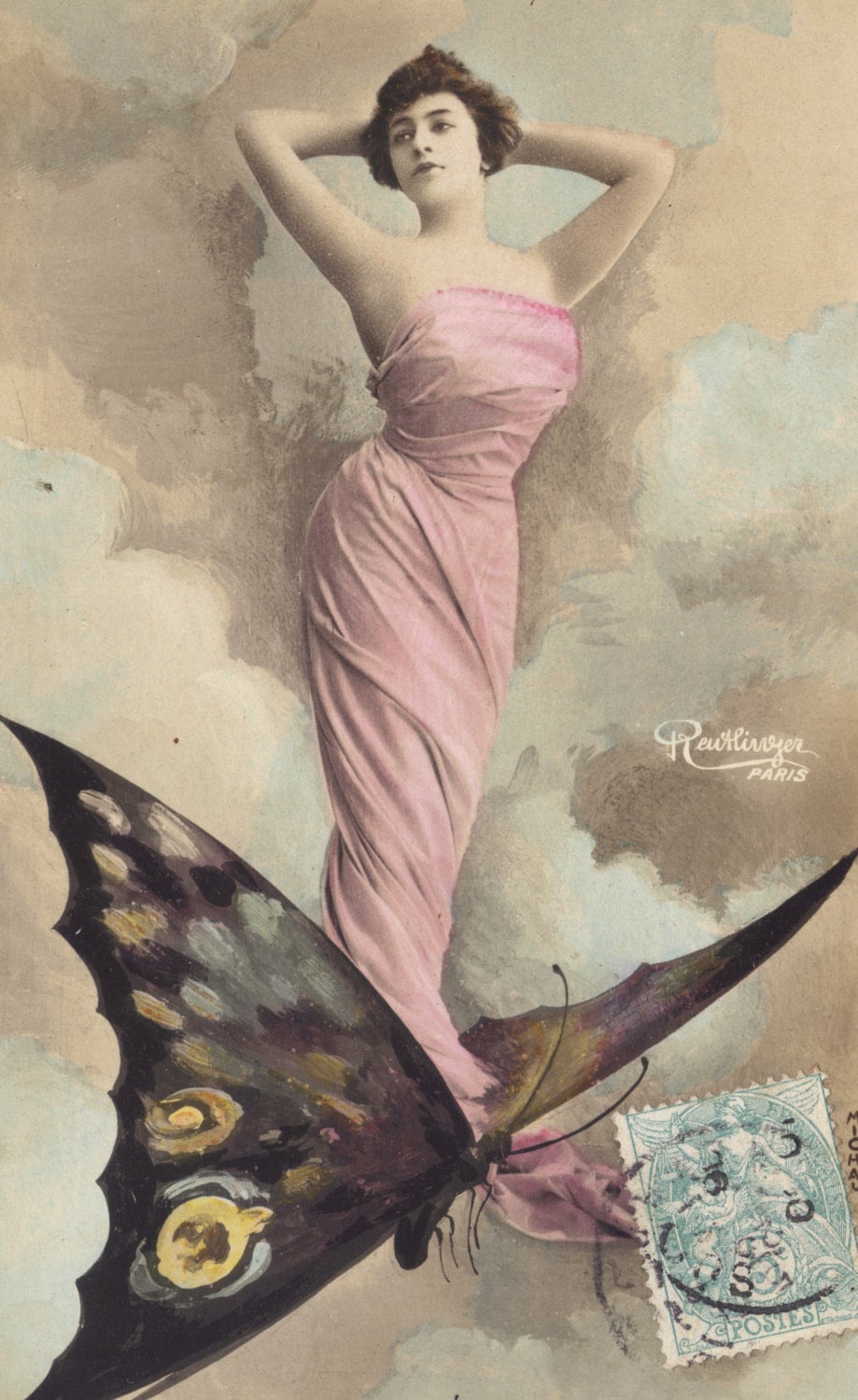
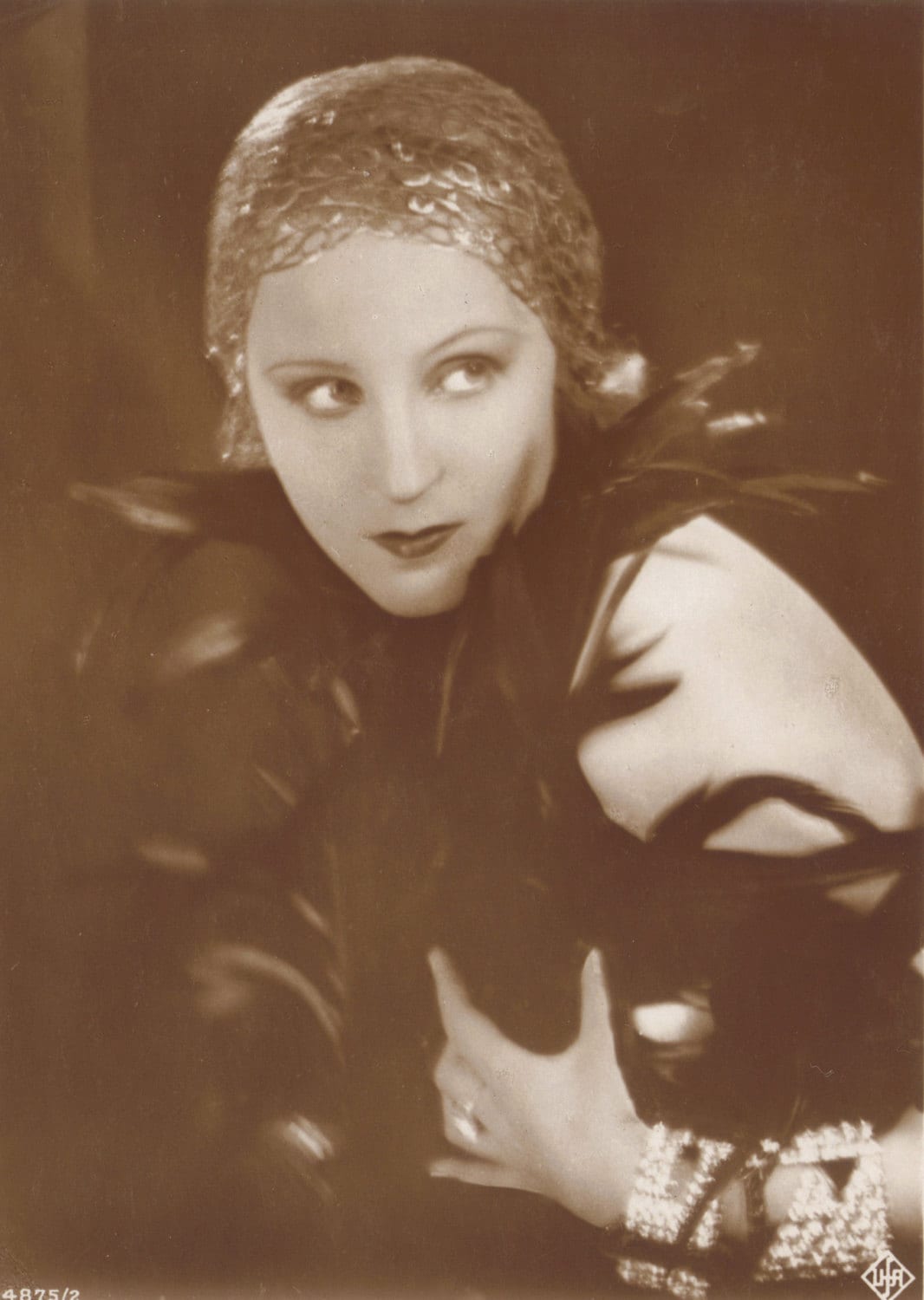
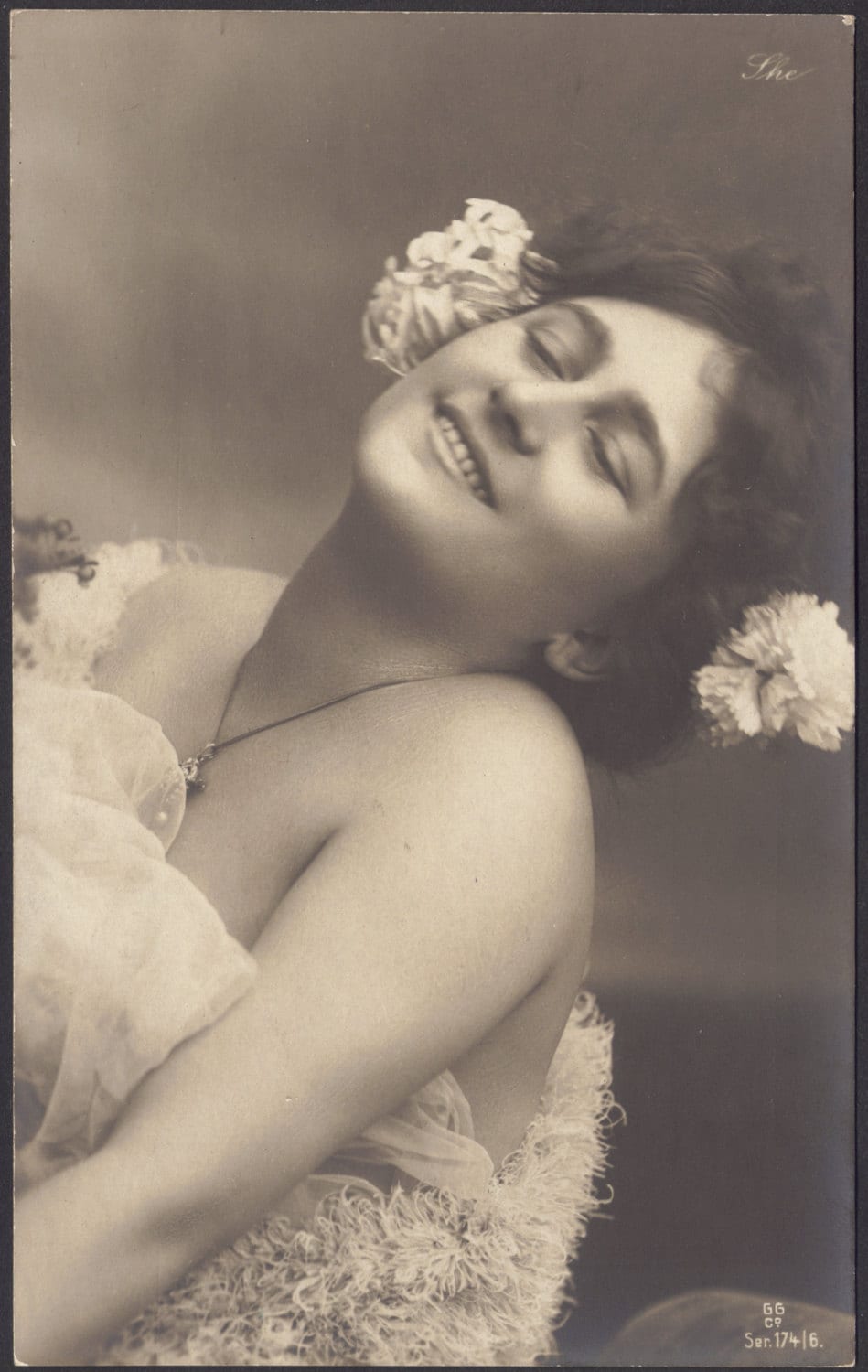
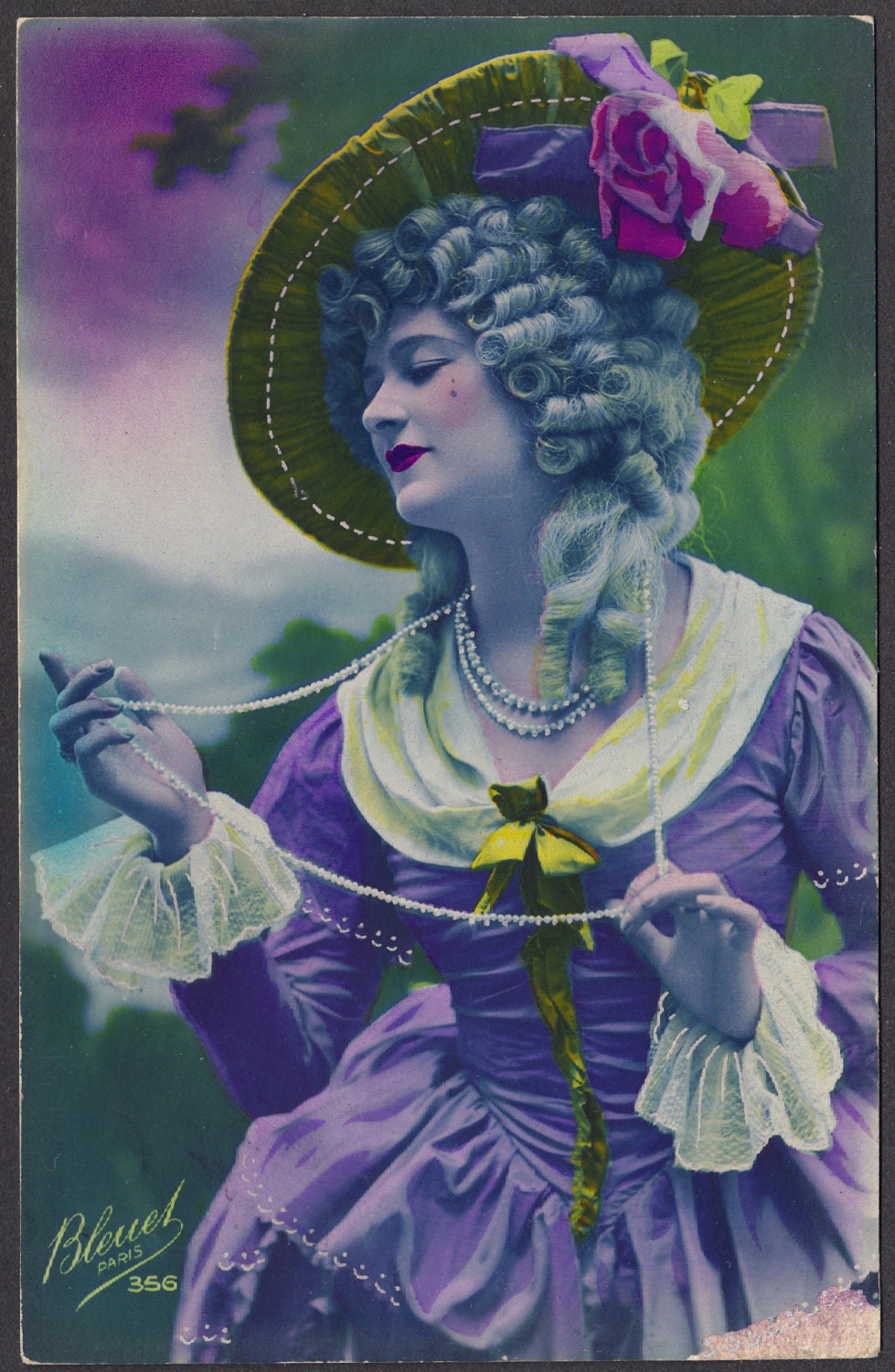
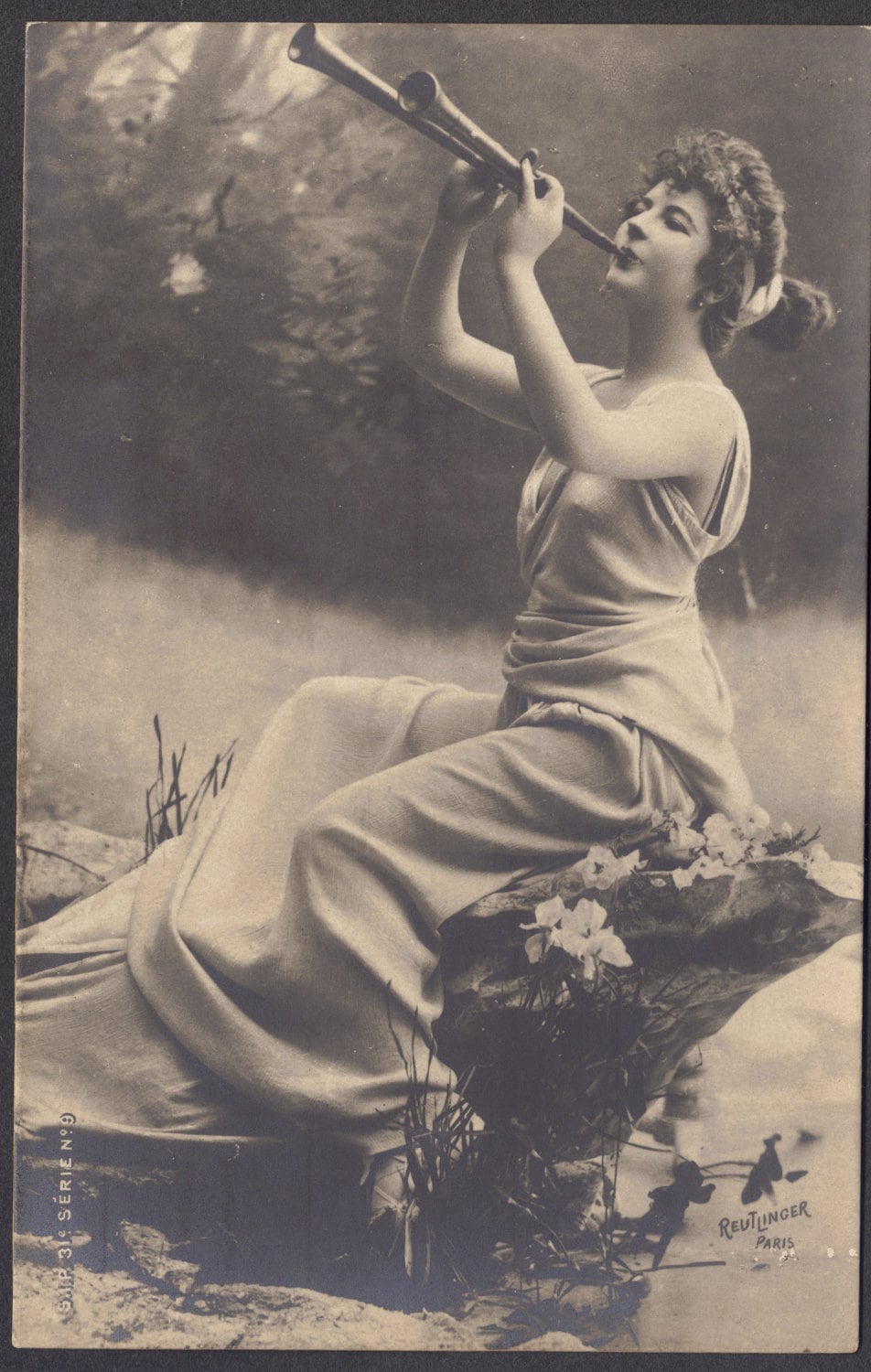
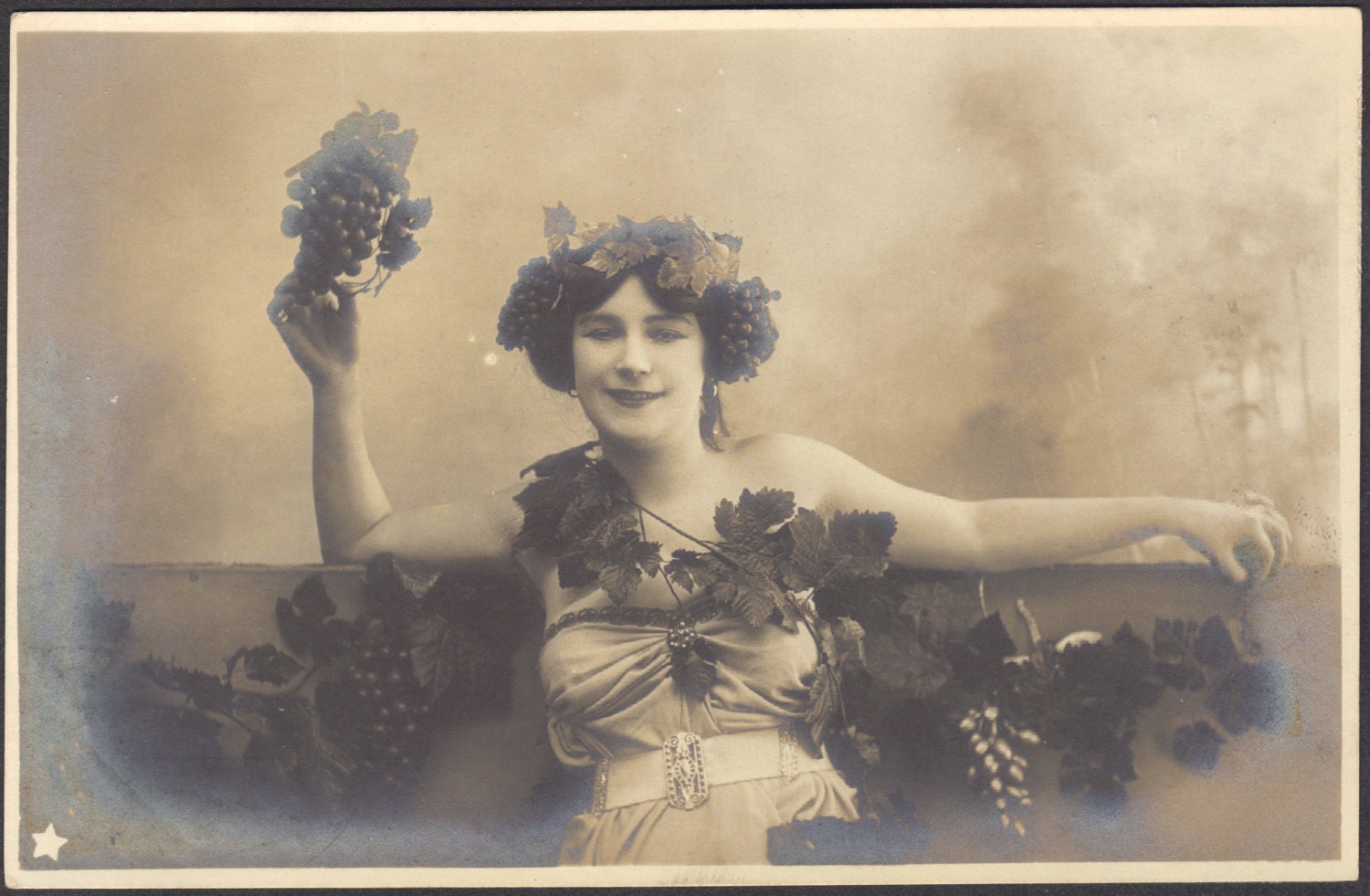
One aspect of La Belle Époque, not just in France either, was a very palpable embrace of antiquity, and though often in a rather naive fashion by today's standards, one gets the sense that people were turning away from the onslaught of the industrial explosion and towards the real, and imagined, simplicity of earlier times. With this came a sense of the possibility of magic, and the ubiquity of images like this one, in which we wouldn't be terribly surprised to see faeries or woodland sprites cavorting about.
Or, perhaps we expect at any moment to see a faun, satyr, or even Bacchus, himself!
We love the way in which the magical is suggested in these images, without the introduction of a single truly fantastic element. These images make us feel much as we might when reading a fairy tale, that at any moment something truly marvelous will happen.
Nymphs, Naiads, Dryads, and Faerie folk so often cropped up in La Belle Époque. Found throughout the period from popular entertainment to commercial advertising, these images reflected a blossoming of Western occult experimentation and a yearning for magic, for myth made manifest. We've
written before of our fondness for images depicting the
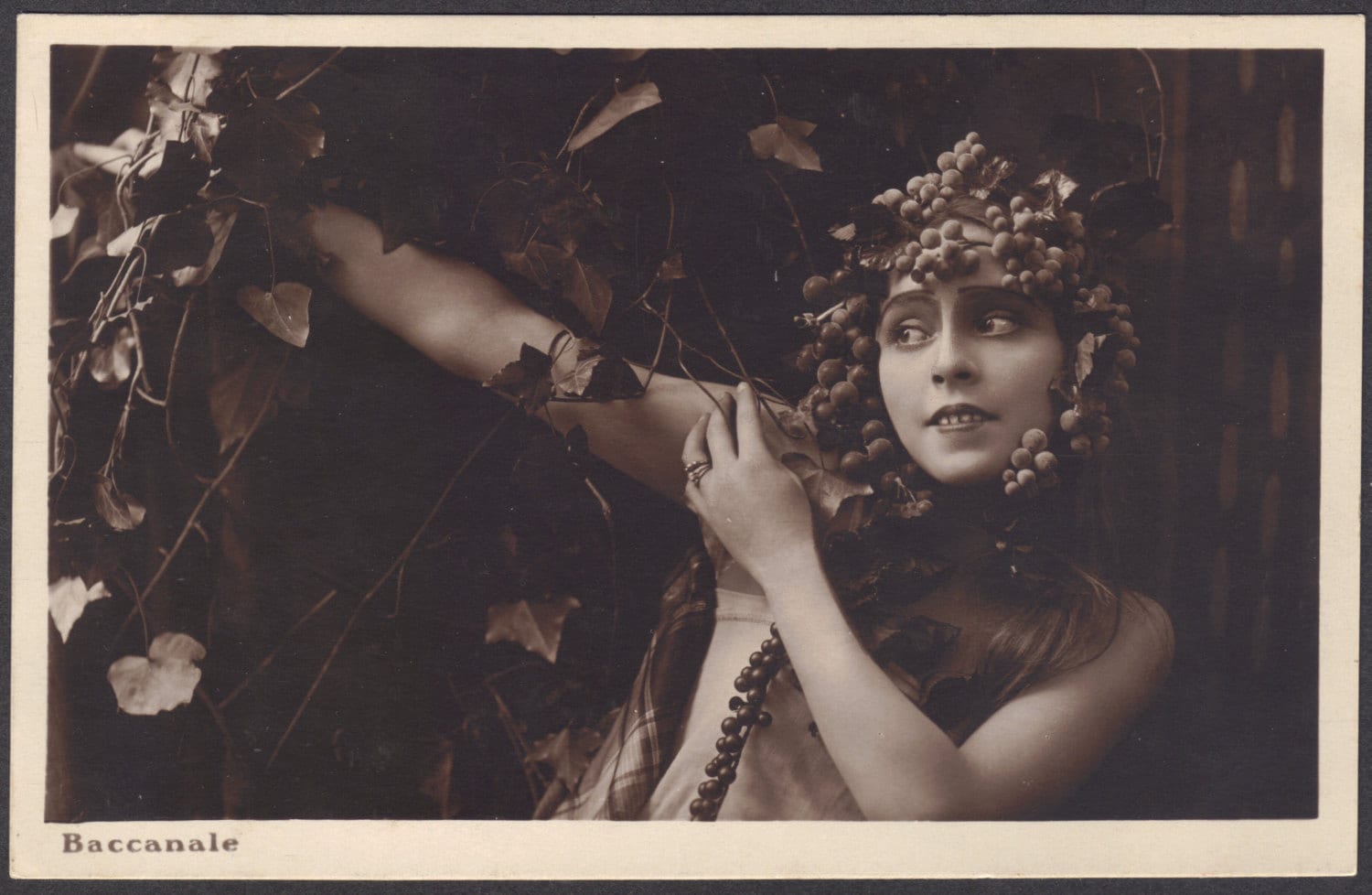
Marvelous Maenad, which is not only a subgenre of the "Lovely Lady" category, but of fantasy postcards, as well.
Maenads could be seductive, inviting the viewer to join them in the Bacchanal, as in the previous image, but they could also be depicted as shy and elusive creatures of the wilderness, emerging from a tangle of vines, perhaps looking back with a mixture of amusement and discomfiture at a pursuer.
Even more interesting, we think, is the fact that this new medium, the picture postcard, made available to anyone with a penny or two the possibility of possessing such an image, one in which an obviously very real human being is pictured in a fairyland setting. We take photographs for granted today, of course, but think about it for just a moment—at the turn of the 20th century, this was all entirely new. Prior to this time, fantastic photo images of human beings were seldom accessible to the common man, woman or child, and we cannot take lightly the effect of "likeness" on the human psyche, and it's worth considering the effect this mass phenomenon had on society. Mass phenomenon, you wonder? Really? Absolutely. Just as an example, in the United States alone, "the official figures from the U.S. Post Office for their fiscal year ending June 30, 1908, cite 677,777,798 postcards mailed. At that time the total population of the United States was only 88,700,000!" (Thanks to
emotionscards.com for their fascinating article that provided us with that factoid.)
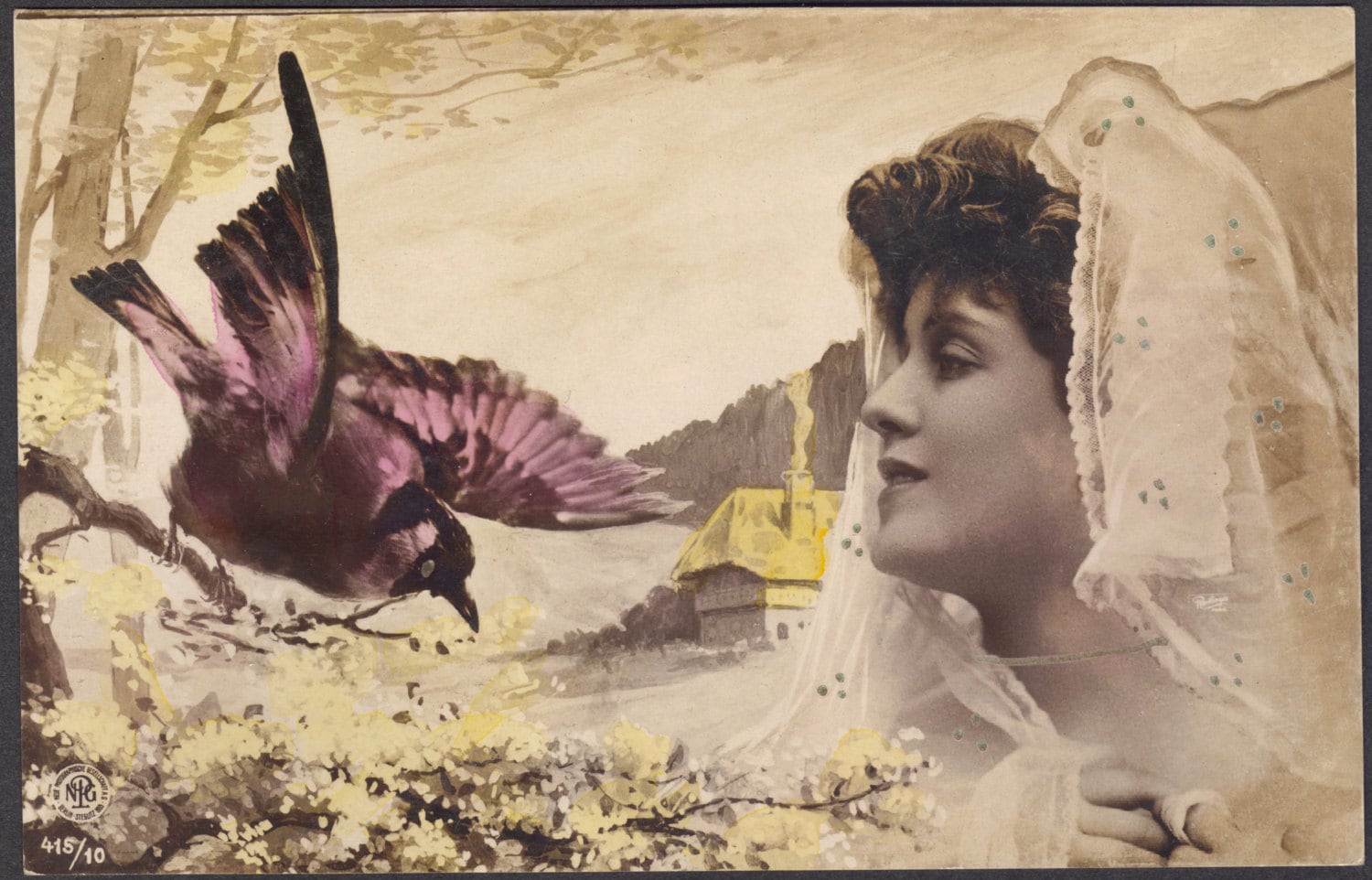
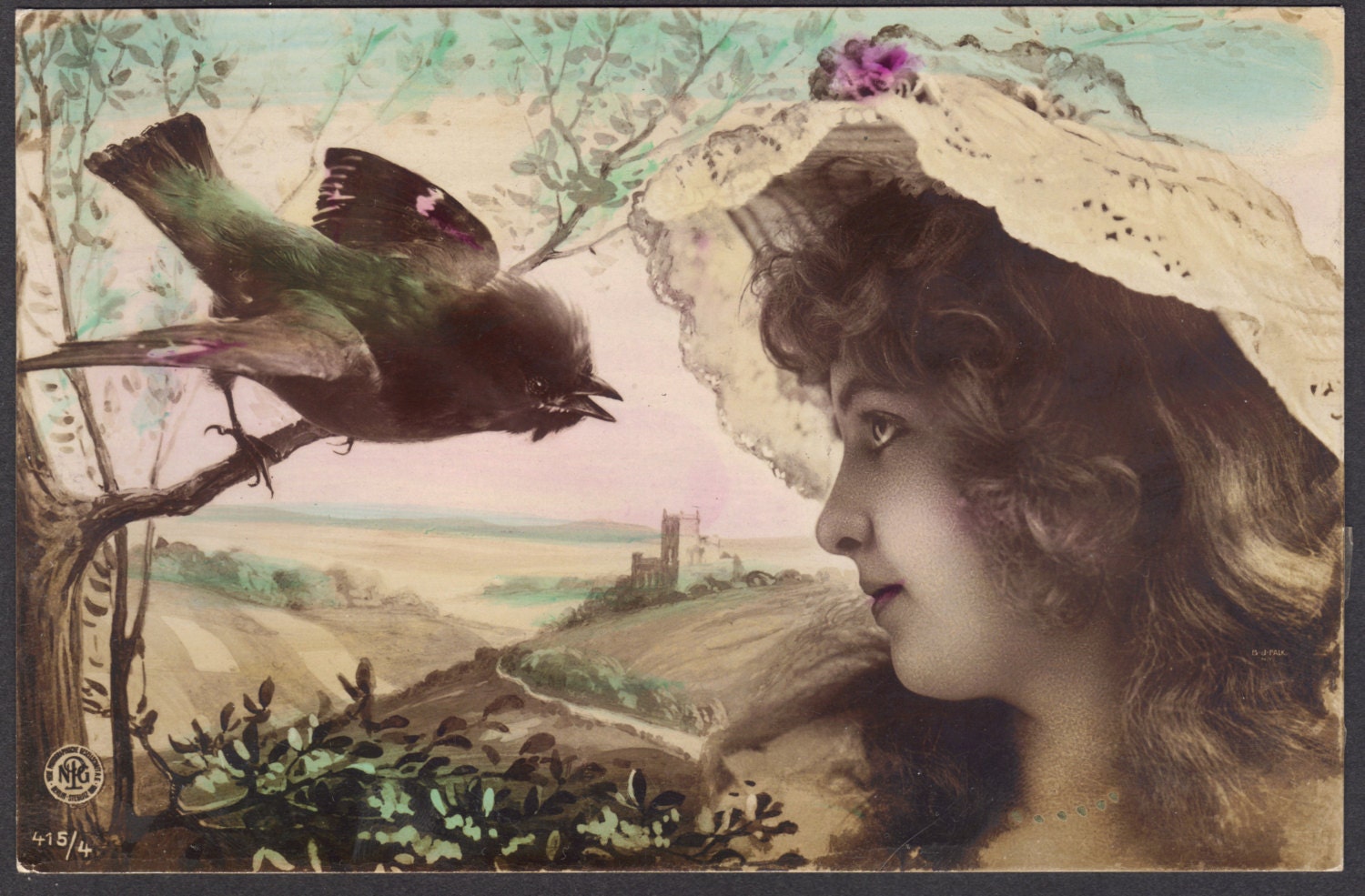
Leopold Reutlinger, the Belle Époque photographer, took thousands of photographs of famous Parisian actresses. These were published in black and white, cropped to close up and republished, hand tinted, glittered, sequined, published again, and when every imaginable possibility had been explored, he superimposed these images onto wonderfully fantastic, often surreal backgrounds. The "Artiste with Bird" series is one of our favorites and quite collectible. As of this writing, we have two such images, both by Reutlinger and in unusually fine condition.
Can't you just imagine these lovely ladies as heroines in fairy tales, in which for their kindness they have been rewarded the ability to speak the language of the birds? Or, perhaps the bird in the picture is actually an enchanted prince, in need of saving by the brave young woman.
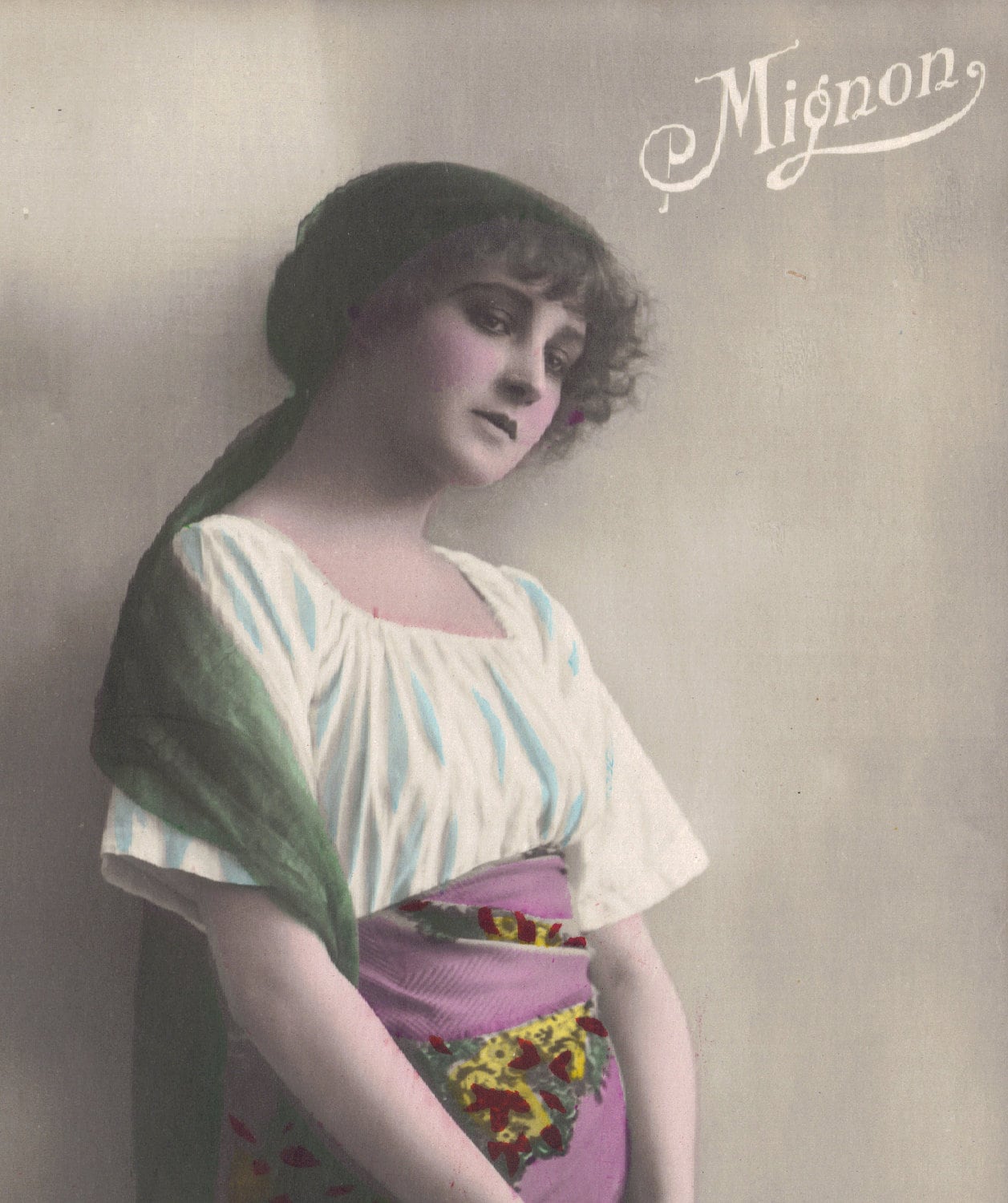
One of the issues with Reutlingers "fantaisies," is that although the artiste's name was usually printed on the face of the card in its early incarnations, by the time they got to these dramatic creations, the name would often be left off. This was fine at the time, since their faces were very well known, but not today. We've been able to identify the first of these two beauties as Marguerite Brezil, but the identity of the second remains a mystery and we would welcome any clues that might shed some light on this.
These wonderful fantasy-inspired photographic images quite clearly reflect the same underlying ideals found in Victorian
fairy paintings and Victorian attempts to portray fairies in photographs, a connection which ties them in with the
Romanticism of the late 18th and early 19th centuries. In his
examination of fairy paintings, Jeremy Mass identifies "
the turn to mythological and fantasy elements, and in particular to the fairy's world, [ as allowing] an escape from these demands. 'No other type of painting concentrates so many of the opposing elements of the Victorian psyche: the desire to escape the drear hardships of daily existence; the stirrings of new attitudes toward sex, stifled by religious dogma; a passion for the unseen; the birth of psychoanalysis; the latent revulsion against the exactitude of the new invention of photography.'" That photographs, emblematic in some eyes of the science and technology that was displacing many traditional beliefs and occupations, could be manipulated to portray the longed-for simplicity and magic of a bygone (never-was) era was marvelously ironic and ironically marvelous. Photographs, which Jeremy Mass, and many others!, fuse with conformity to a hard and unforgiving realism have, from almost the very moment they came into existence, been used to portray the world in ways the eyes are rarely able to see, providing us with visual evidence of the magic we all long to see.