Showing posts with label Parisian photography. Show all posts

Saturday, February 15, 2014

The Four Seasons, Personified by Famous Actresses of La Belle Époque, Circa 1905

Here we have a series of four very special cards, representing the four seasons. Each of the seasons is personified by one of four famous Belle Époque stage performers. Each of these four cards is in particularly fine condition, though posted in 1909.

The Four Seasons, photographed by Reutlinger and posted in 1909

They must have been kept very carefully and lovingly, because, by their appearance, they are practically brand new! They were all sent by the same person, Ninette, to M. Emile Jourdan-Brive, who was clearly someone dear to her. Each includes a brief message, such as,"a thousand kisses from Ninette," written in a nice hand on the back of the card. Our researches suggest that Emile may have been a member of the Jourdan-Brive family of Marseille, who were well-known exporters of truffles, capers, wines, and perfumes to England during the Victorian era.

The images themselves, appear to be photogravures, made from photographs taken by the famous theatrical portraitist Leopold Reutlinger of Paris, probably circa 1905. Deeply impressed in fine, ivory-toned stock, these images are truly precious.

Although we are merchants, and generally sell our wares on a piece by piece basis, we simply cannot bring ourselves to break up so lovingly cared for, and romantic, a set of cards as this one. Consequently, we are selling these four cards as a set.

Note: There will be another post reflecting this listing due to our use of an automatic posting system, which ensures that every time we post an item in our shop a post appears in the blog. We are offering this post to provide you with complete information about the set, including high-res scans of the front and back of each card, since we are limited to only 5 images in our listing on Etsy.

Le Printemps, Spring


Le Printemps (Spring), is represented by the breathtaking Arlette Dorgere. Surrounded by early blossoms, her hair in a woodland sprite's disarray, she tenderly cradles a nest of tiny bird's eggs.

Le Printemps, by Reutlinger

Mlle. Dorgere was a very popular artiste who performed at the Scala, and in many other venues in Paris and elsewhere. We have not been able to find any information about her early life, but we know that her image was captured by the famous poster artist Jules Cheret, and that at about the time the photograph for this card was taken (circa 1904), she was already so successful that she was able to purchase a lovely chateau, the Chateau Vigneus sur Seine, in a quiet neighborhood south of Paris. It was on a large wooded lot, with a pond, and when the pressures of her work grew heavy, she would ride in her chauffeur-driven limousine to this retreat. In 1929, she sold the chateau, which she had renamed Chateau Dorgere, and retired quietly to Morocco, which was then a colonial protectorate of France.
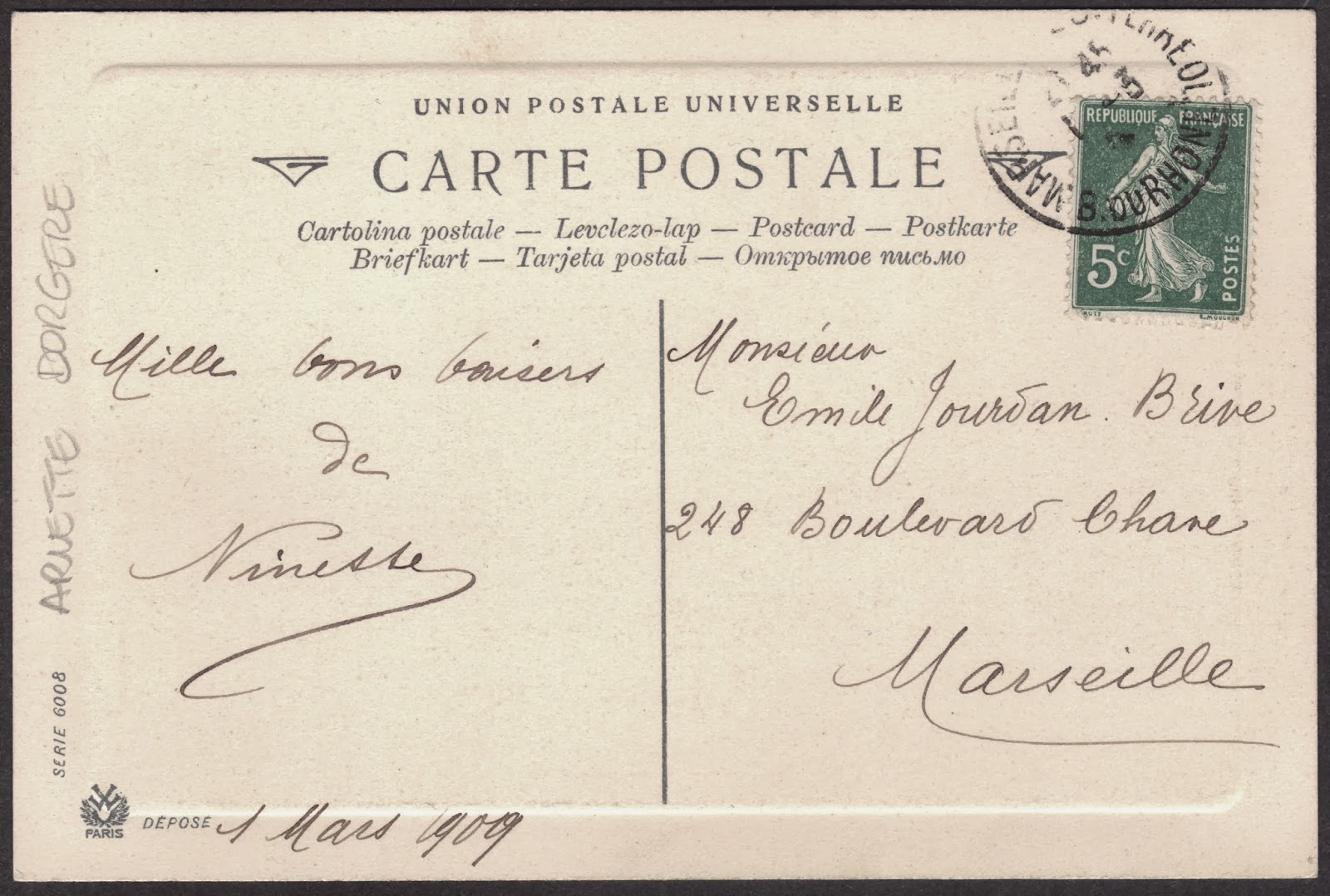
Reverse of Le Printemps
Translation: A thousand beautiful kisses from Ninette

L’ Eté, Summer


L’ Eté (Summer), is represented by Mlle. Marcelle Yrven. In this image, she clutches flowers to her breast, while smiling joyfully, a goddess of the season.

L' Eté, by Reutlinger

Mlle. Yrven (1877-1949) was a fascinating woman who was not only a wonderful stage performer, but also an author, a poet, and outspoken on the subject of women in society. She wrote a short book on feminism, "La Comedienne Et Le Feminisme," as it related to women in the theater, which was not only interesting politically, but historically, as it pertained to La Belle Époque theater, really fascinating. We don't think it is available in English online, but it is short enough that if you have a little French, and the online translator, you can work through it.

Reverse of L' Eté

Translation: Best kisses from Ninette

L' Automne, Autumn


L' Automne (Autumn), is the season during which the wine grapes are harvested, as depicted by the maenad Mlle. Renee Despres, wearing vines and fruit of the vine.

L' Automne, by Reutlinger

This is a wonderful image in which she smiles at us invitingly, offering us the celebration of the season. Unfortunately, we have no biographical information on her, apart from the fact that she did appear on the playbills of a number of theaters in Paris, and that, from other images we've seen, she was a most elegant lady of the Belle Époque theater.

Reverse of L' Automne

Translation: Embraces (or, perhaps, kisses) Fernand for me Ninette [We find this just a bit confusing, since these cards all were addressed to M. Emile Jourdan-Brive, but perhaps Fernand was his middle or nickname.]

L' Hiver, Winter


L' Hiver (Winter), is here pictured not so differently than it might be in England, or elsewhere in Europe or the United States. We have the yule logs, Holly, the evergreen tree, and is that a bit of mistletoe Miss Campton wears in her hair beneath her hood?

L' Hiver, by Reutlinger

Miss Campton, like many performers in the Paris of that time, was English; she was born Emily Straham Cager in Brighton, in April of 1882. Here, photographed by Reutlinger, she was also often found in stunning images produced by Professor Stebbing, another well-known and prolific Belle Époque photographer. She was apparently a very special friend of Paul Derval, who for many years directed the Folies Bergere, and though they did not, as far as we know, marry, when she died at a relatively young age of cancer, in Paris, she was interred in the Derval family tomb.

Reverse of L' Hiver

Translation: Another kiss from Ninette


As a complete set, these cards evoke the magical and celebratory relationship between people and nature that often seems the very essence of so much art during this period.

The listing for this set will be available within the next 24 hours.

Tuesday, July 23, 2013

Chrysanthèmes and Dragonfly by Henri Manuel, circa 1905

Unlike Leopold Reutlinger and Count Ostorog, aka Walery, who seemed to specialize in "entertainment" photography, Henri Manuel, who with his brother, Gaston, operated the largest photography studio in Paris, covered a very broad array of subjects. That is not to say that Walery and Reutlinger didn't ever step out of the showgirl portrait genre, we know they did, but Manuel was the official photographer for the French government between 1914 and 1944, established one of the earliest "news" photo services, and was well known for his architectural studies.

Henri Manuel's photograph of Auguste Rodin and the Duchesse de Choiseul at the Hôtel Biron. Wikipedia

He did not, however, shy away from "eye candy;" far from it! He was quite adept at risque images, and managed to bring a very artful feel to many of his "artiste" portraits.

AVAILABLE FOR PURCHASE Chrysanthèmes by Henri Manuel
This card offers a fine example of this, we think. Without question, la Belle Epoque, in France, was the era of the chrysanthemum. In images of pretty young dancers, mothers with their little girls in tow, opera divas, etc., the use of the chrysanthemum as a hair decoration was ubiquitous. Most often, they are seen worn at the temples, and here Manuel positions the flowers in their accustomed location, but without removing them from the stem, creating a thoughtful study with a feel of nature, and the placement of the dragonfly is wonderful. Really a gorgeous image.

***Note*** It might be of some interest to collectors that during WWII almost all of the photographic plates housed in the Manuel studio were destroyed, making images by H. Manuel all but irreplaceable.

Thanks to Wikipedia for most of the historical information in this posting.


Tuesday, July 2, 2013

Cléo de Mérode Giveaway Winner!

We are happy to announce that, as the happy purchaser of our 1,000th item on Etsy, Karen Donaldson (oneundonebird) will be receiving the very special Cléo de Mérode postcard featured in our Giveaway. Congratulations, Karen!

Exquisite Cleo De Merode Giveaway Card, circa 1900
We are currently getting our packages ready to ship, so Karen should be receiving her gift in just a few short days.

Many thanks to all of our wonderful customers who have helped us to reach this milestone! We are grateful to each and every one of you.

Saturday, March 16, 2013

Marvelous Maenads

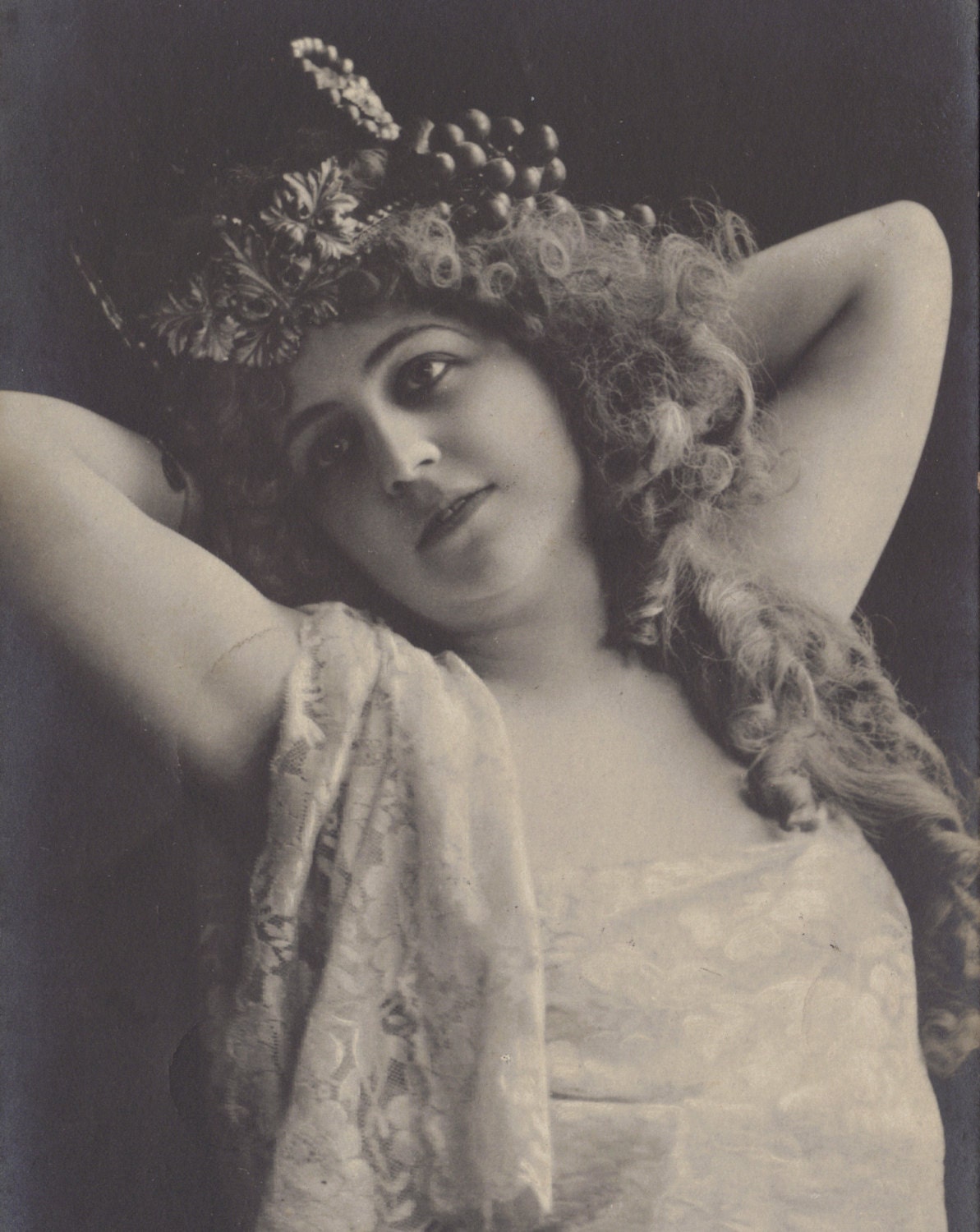
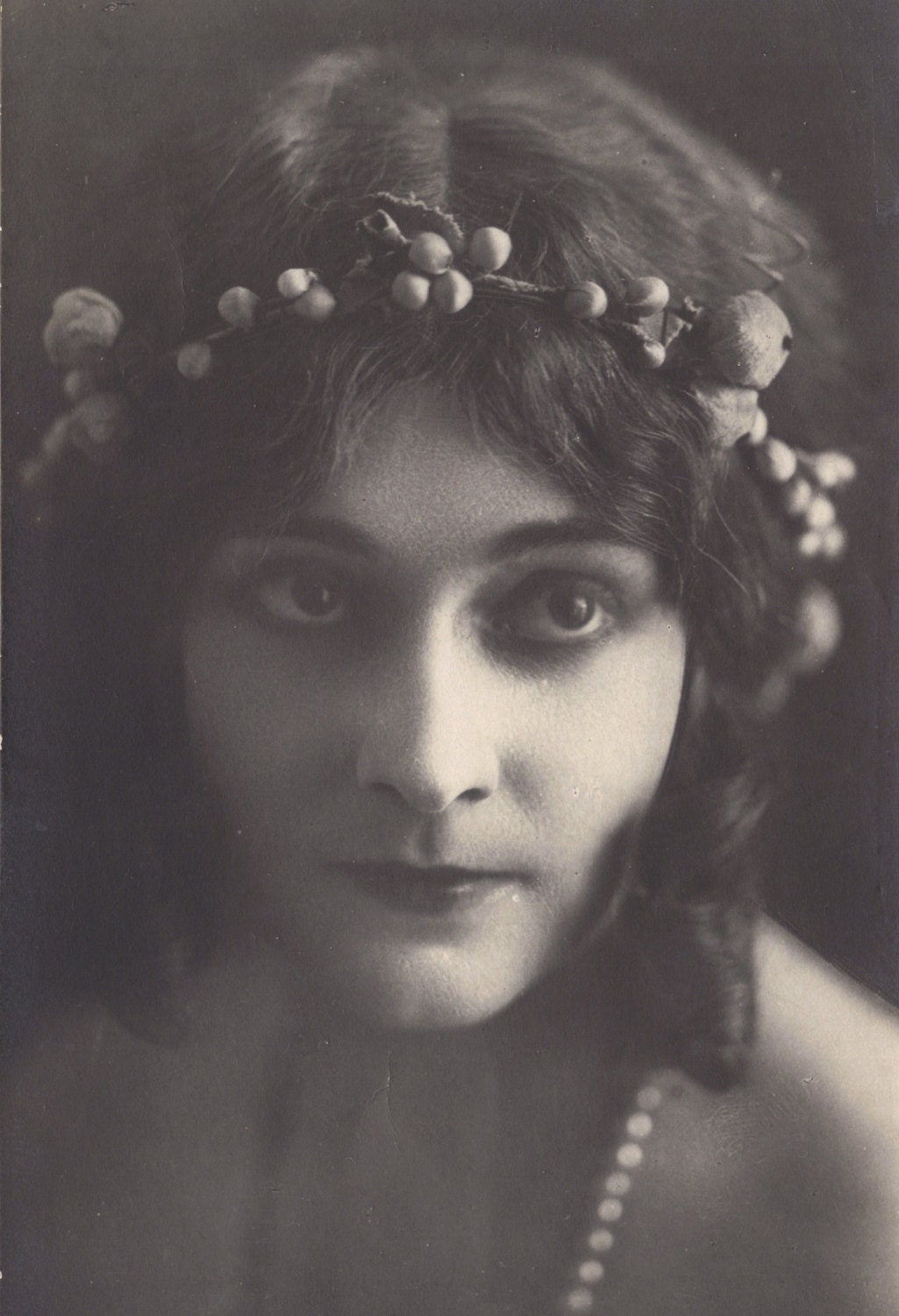
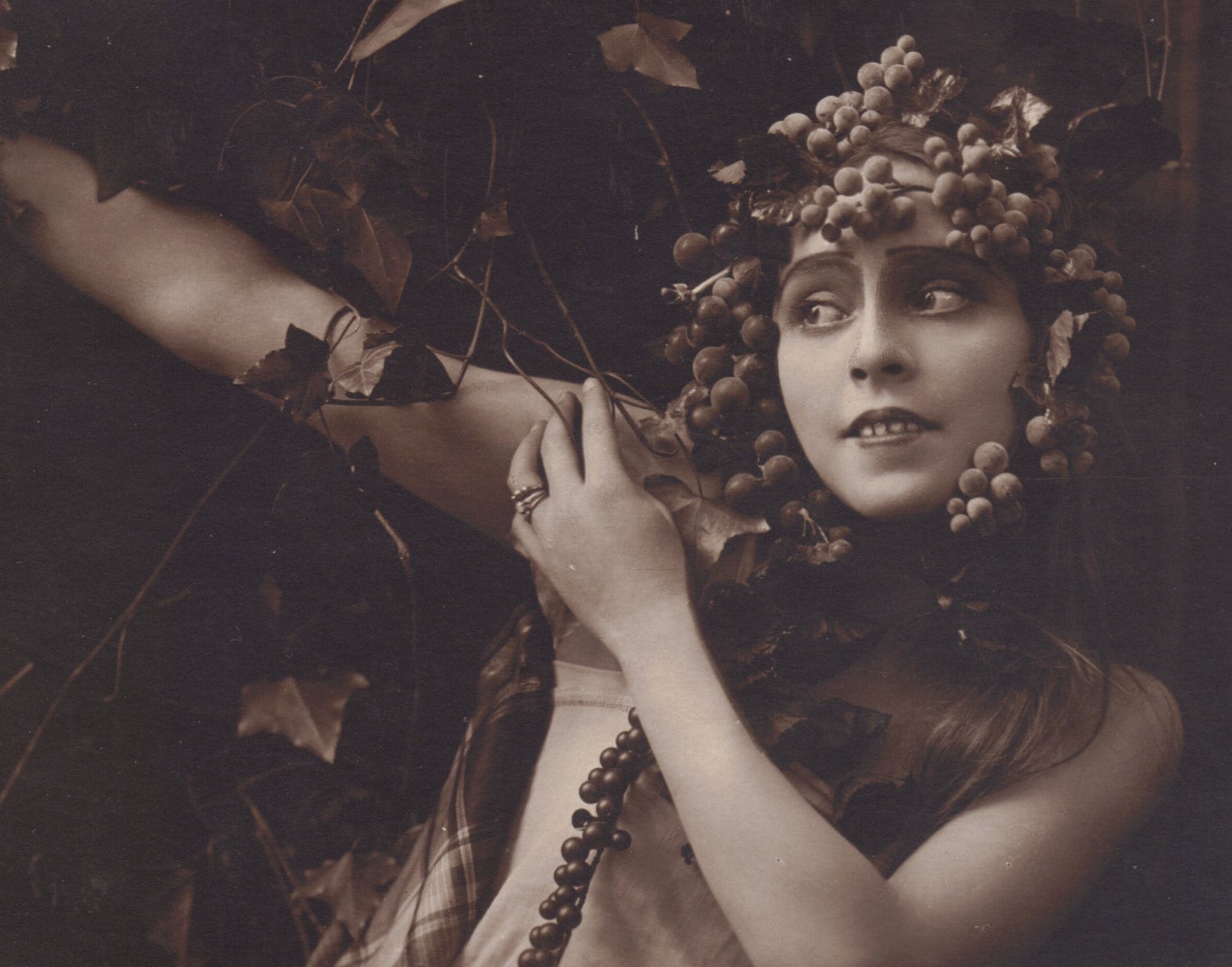
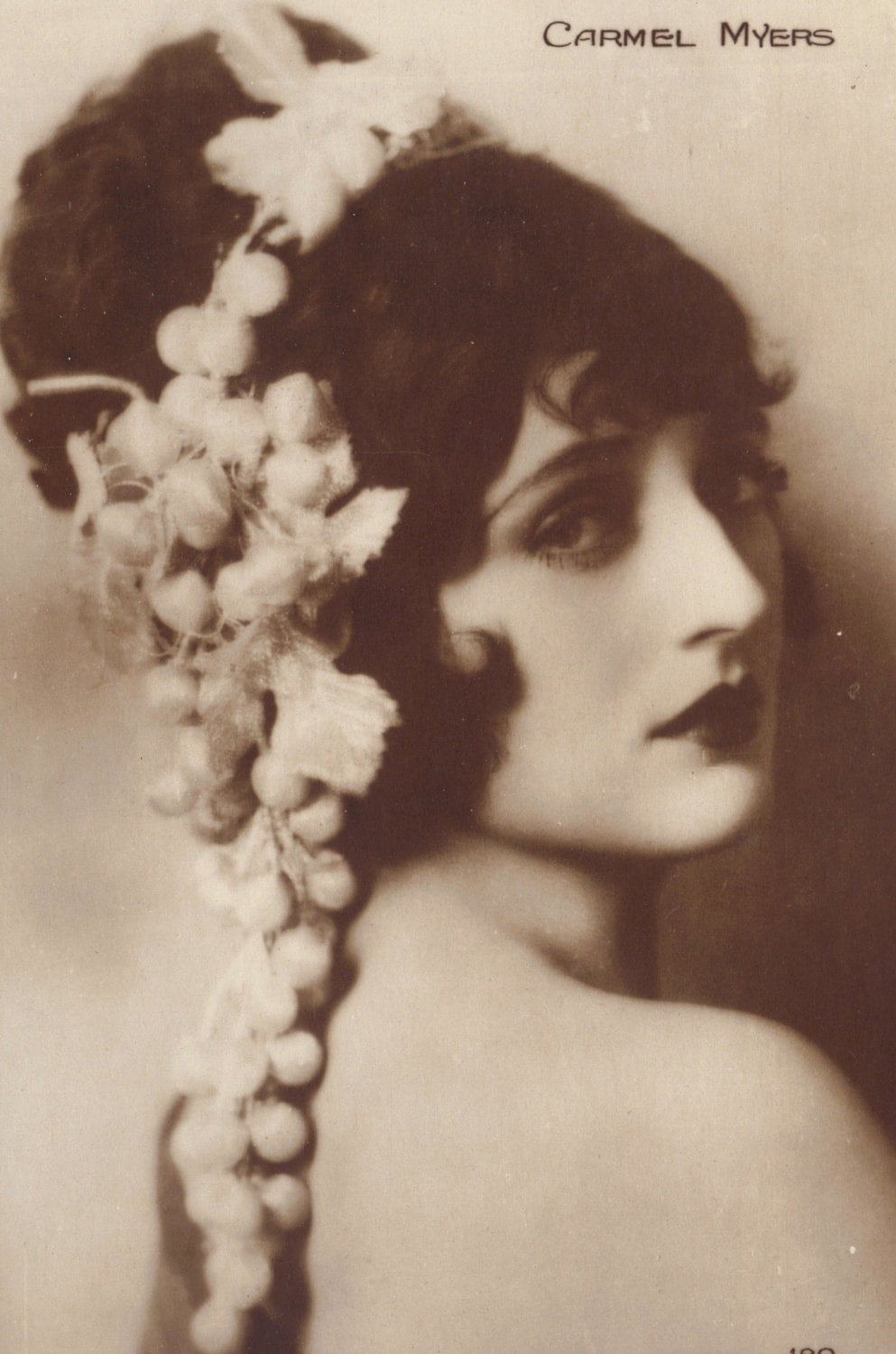
One of our favorite, and most magical, subgenres of "Lovely Lady" postcards has to be that of the Marvelous Maenads. These are somewhat idealized, and presumably toned down, versions of those wild maidens of ancient Greece, who in their worship of Dionysus, the god of wine and sensual abandon, got up to all kinds of mischief. The maenad, as an image, was practically the poster girl of La Belle Époque, expressing that rich, earthy, "joie de vivre," which has come to be seen as so expressive of that era. In our Marvelous Maenad section, we're not all that particular about whether the model is depicted as a woodland sprite, a pagan priestess, or if they're just a couple of Belle Époque chorus girls unwinding after a tough dress rehearsal. The images we list in this section might have been published anytime between the 1890s and the 1930s. Basically, if they're wearing grapes, grapevines, animal skins, or any of the other accoutrements no self-respecting maenad could do without, this is the section they'll end up in. Welcome to the Bacchanal!!! :)

AVAILABLE FOR PURCHASE Maenad in the Morning, Jugendstil Epoche Stage Performer, circa 1903
AVAILABLE FOR PURCHASE Ileana Leonidoff, Dancer and Silent Film Star, Wears Crown of Bacchus, circa 1920
AVAILABLE FOR PURCHASE Maenad Peering Through the Trees, circa 1910s/20s
SOLD Carmel Myers with Decorative Grape Headdress
The marvelous maenads featured in this post are just the first of many. We hope that you will be as enchanted with these beauties as we are.

Sunday, February 3, 2013

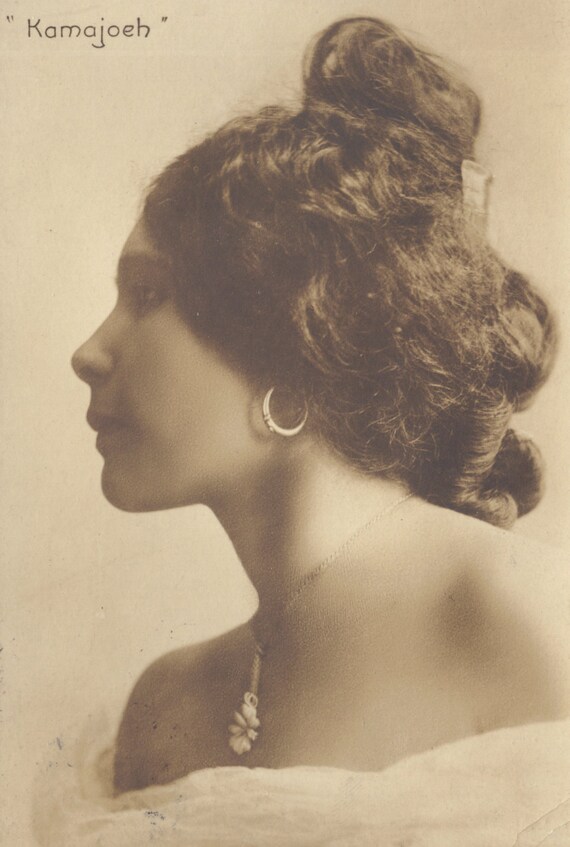
Kamajoeh, Mozambique Beauty En Voile, circa 1905

As well as being a lovely image in and of itself, this is a very interesting postcard for a number of reasons. The subject of the image, almost certainly an actress or performer, is a woman of color whose name (probably Swahili or possibly Malagasy), suggests she may have come from the Portuguese colony of Mozambique in Africa, or the French colony of Madagascar off Africa's coast. Though the postcard bears a German stamp and was probably produced in Germany, the image itself is quite probably French, as her costume, with layers of filmy material wrapped low about her shoulders, and her hair, done up in the classic chignon so popular in that period, are distinctly French European in style. 

AVAILABLE FOR PURCHASE Kamajoeh, Mozambique Beauty En Voile, circa 1905


Why do we find this so fascinating? Primarily because—although dance, music, and costume in the France of the late 19th and early 20th centuries was clearly influenced by the cultures of European colonial holdings—it is uncommon to find on postcards images of performers of color who actually come from these colonies.

Theatrical entertainment in France at that time was full of the romantic idealization of foreign cultures. Margaretha McLeod, a young Dutch woman who apparently learned Indonesian dance while locked in a terribly unhappy marriage in the Dutch East Indies, left her husband, made her way to Paris and, in the proud tradition of P.T. Barnum, changed her name to Mata Hari, billed herself as a Javanese princess, became hugely successful with her sensual dance routines, and the rest is history. There were so many others, many images of whom, from time to time, grace the cards we sell in our shop, but almost always they are white Europeans.

Still, though such images as this one are uncommon, we feel it's important to point out that the egalitarian nature of French society was such that performers of all cultural, religious, and ethnic origins made their way to Paris, where many found success and fame. After all, it was in the Paris of the 1920s that Josephine Baker, the famous African American dancer and stage performer, found a broad acceptance and venue for her talent that had not been available to her in the United States of that time.

Finally, we want to acknowledge that we are mere dabblers in history, and certainly not historians. Our focus is limited and narrow, and our short posts far from even remotely complete. So we offer our observations in the spirit of enthusiastic collectors, and hope they are welcomed by fellow enthusiasts and that our over simplifications of complex historical issues and events are forgiven by those more knowledgeable than ourselves.

Wednesday, January 9, 2013

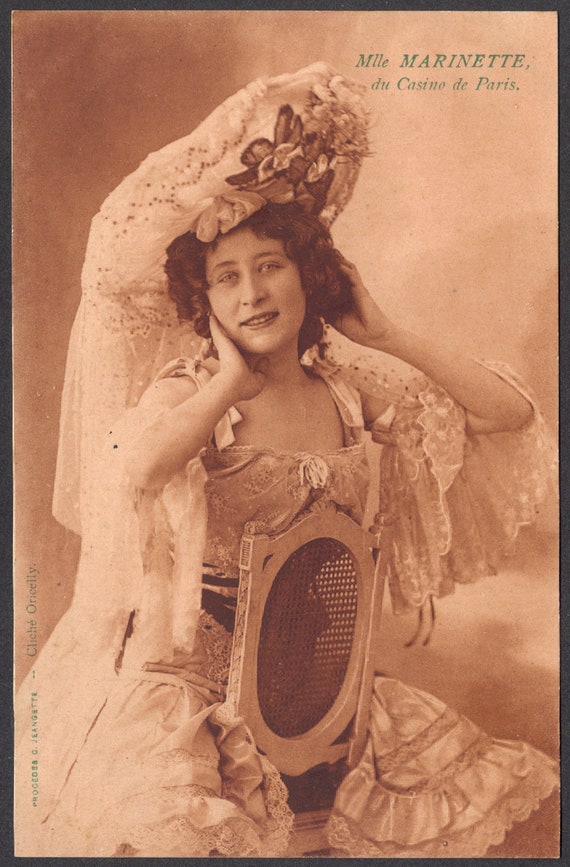
Almost Wordless Wednesday: Mlle. Marinette, du Casino de Paris

Mlle Marinette, du Casino de Paris


Marvellous image by Oricelly of Paris, of Mlle. Marinette, while she was employed at the Casino de Paris in the early 1900s. Oricelly was responsible for a number of stunning images published in sepia tones, of which this is certainly one.

Thursday, January 3, 2013

Featured Items: Beautiful Art Nouveau Images by Photographer Arjalew

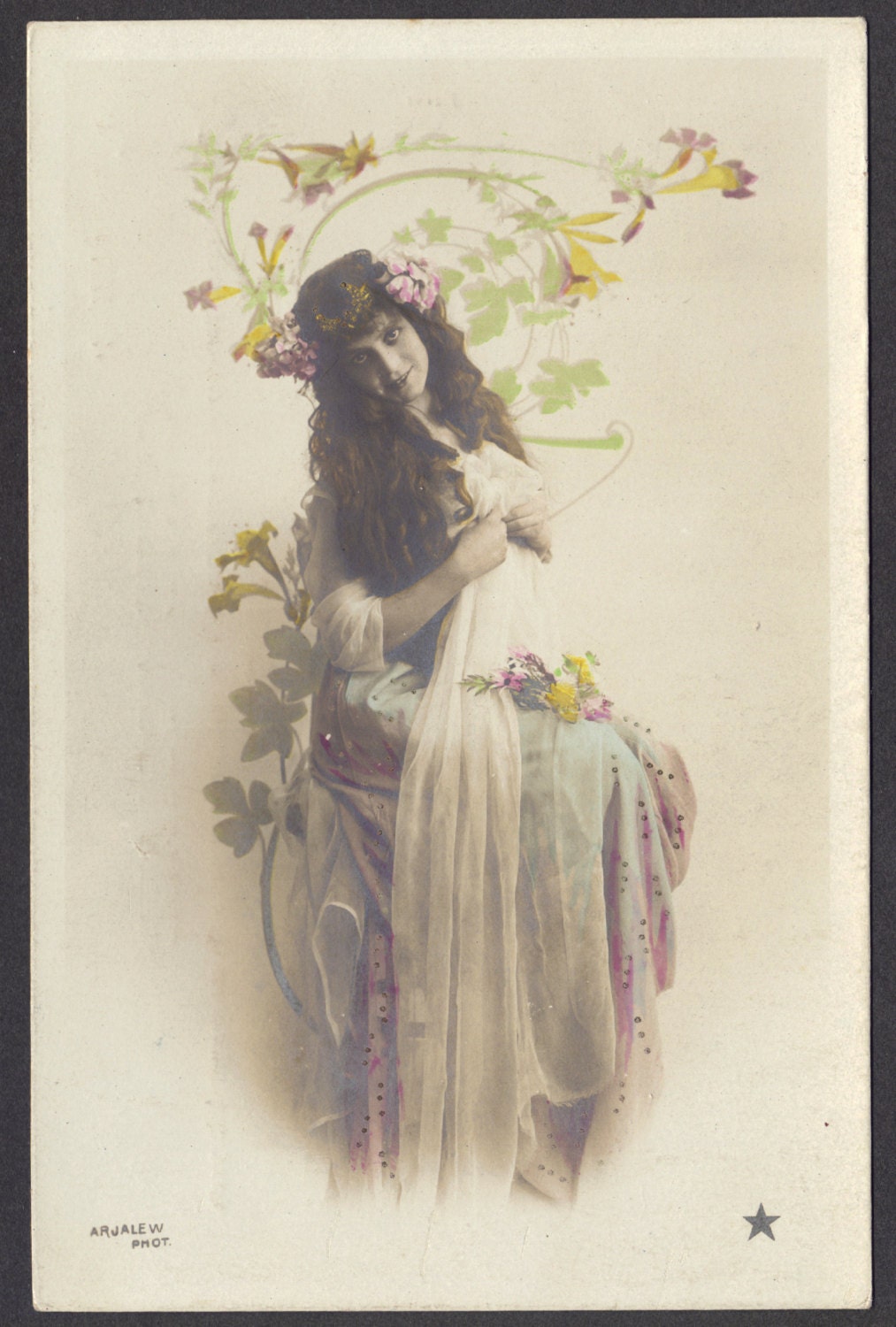
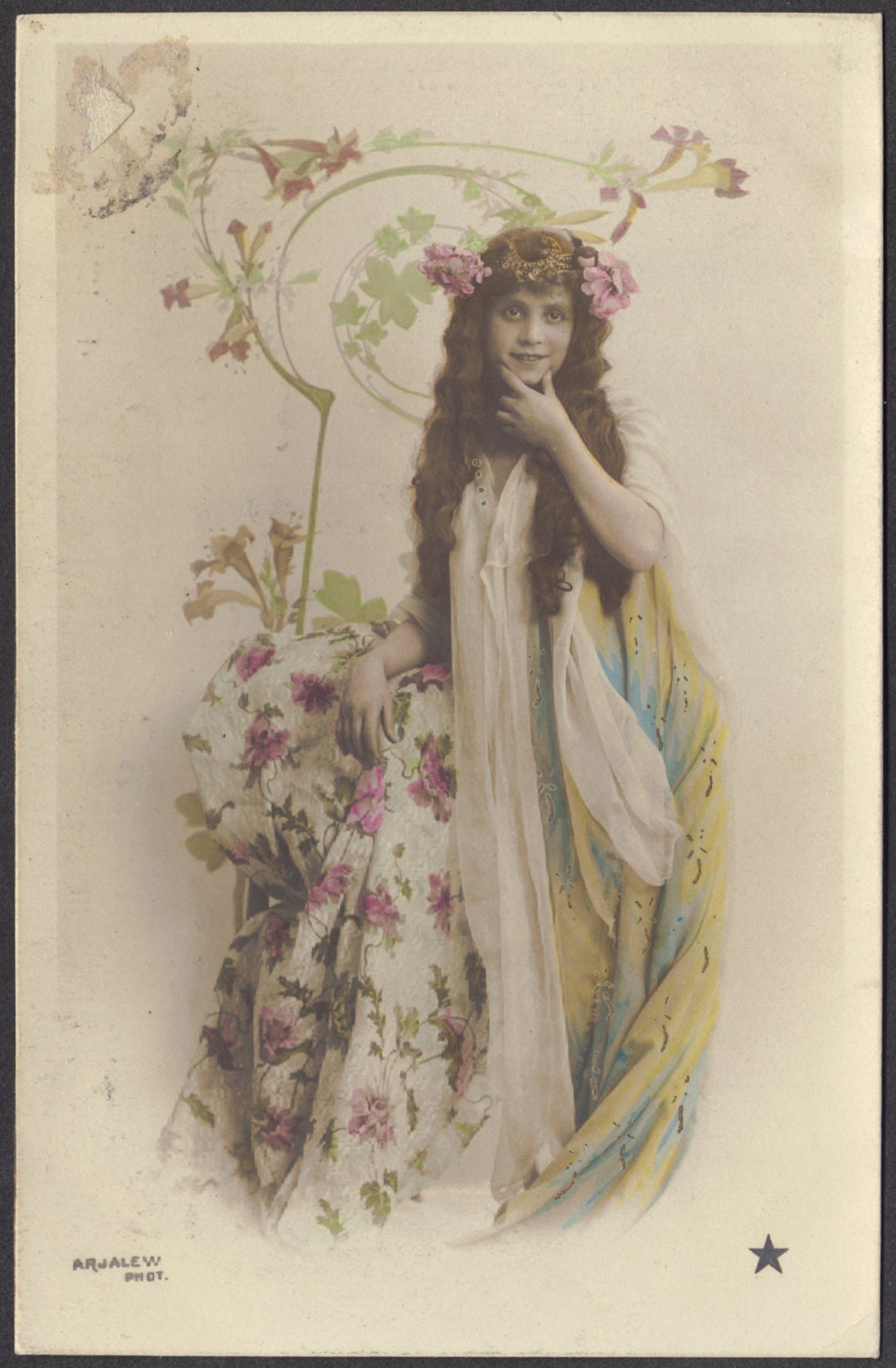
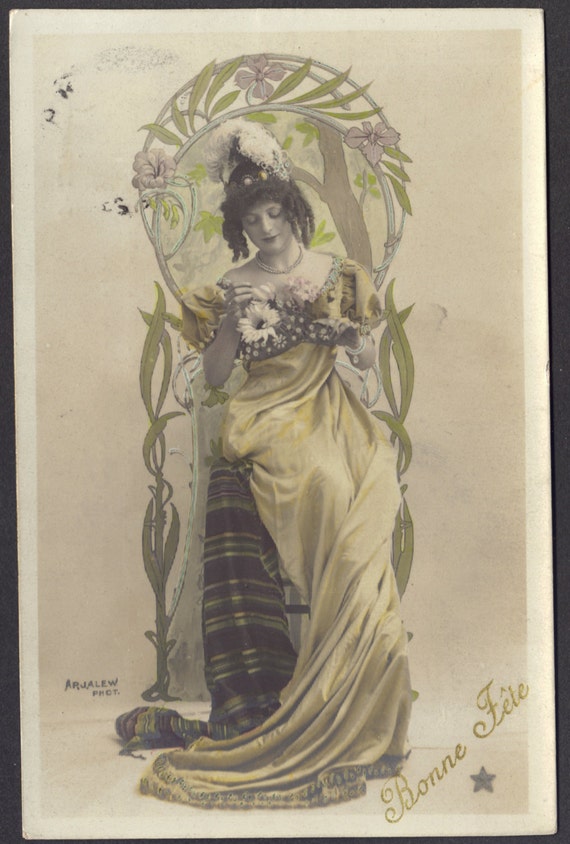
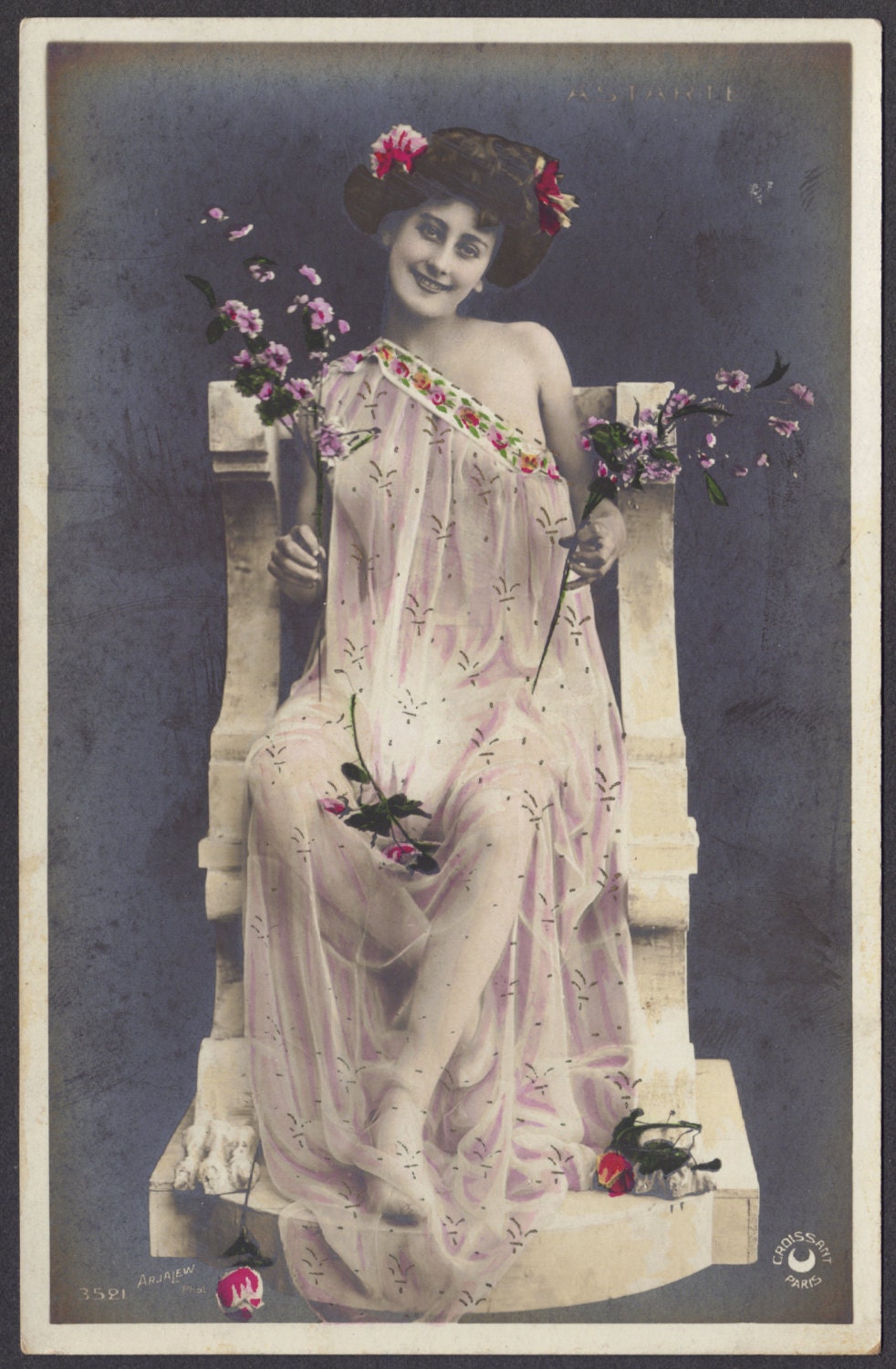
It's pretty amazing when our featured items sell so fast that we can't even get our blog post up, but that's what happened to two out of this beautiful collection of images. Fear not, you will still have the opportunity to view all four of these wonderful Art Nouveau images by the Belle Époque photographer, Arjalew (pronounced ari-ya-lev). Monsieur Arjalew was a Parisian photographer who operated a studio out of 17 Boulevard Poissoniere in Paris. His surname suggests a Polish heritage to us, but we are not experts and have been unable to find confirmation; one source, a French dealer in postcards, has listed Arjalew's work as Judaica, but we cannot confirm this, either. What we do know is that Arjalew created some really stunning Art Nouveau images, often using illustrated backgrounds with that quintessential Art Nouveau floral imagery  So, we now present to you, for your viewing pleasure, four of his lovely images, previously published as postcards.

The first two of these images are companion pieces, depicting as they do the same lovely young woman with her impish smile. She wears flowing draperies and flowers to either side of her face. In one she stands and in the other she sits, but in both the background is a wonderful design of leaves and flowers, very much like the designs found in the artwork of Alphonse Mucha. These images remind us, also, of the artwork of John R. Neill, whose portraits of Ozma and the other young ladies who inhabited Oz so often depicted them in flowing gowns and with flowers framing their faces.

AVAILABLE FOR SALE Beautiful Art Nouveau Portrait of Young Woman by Arjalew, circa 1905
AVAILABLE FOR SALE Beautiful Art Nouveau Portrait by Arjalew, circa 1905

The following image, with its annotation "Bonne Fête," may have been intended as a card to be given on a birthday, or in celebration of the feast day of one's patron saint. Once more, we see that an enchanting Art Nouveau background has been used to frame the model whose attention seems to be coquettishly focused on the flowers she holds in her hands, rather than on the photographer and the camera he points at her.

SOLD Lovely Art Nouveau Image by Arjalew, circa 1905

Our final image is of a young woman who is identified by the annotation in the top right corner as Astarte, the Greek name for a goddess whose roles encompassed fertility and sexuality and who was once "known as the deified evening star." Astarte's robes follow the Classical pattern so favored by Arjalew and other photographers of La Belle Époque, but are daringly sheer, in keeping with her roles involving sex and procreation. Unlike the other cards in this set, the background is plain, designed to disappear, so that only the model and the heavy stone throne upon which she reclines are visible. Yet this image, in keeping with the others, makes liberal use of flowers as a design element crucial to the depiction of youth and beauty, sexuality, and fertility.

SOLD Stunning Art Nouveau Astarte by Arjalew, circa 1905